Extreme Sports Travel Insurance for US Travelers: Coverage and Prices
 A. FruchardCo-Founder & Travel Insurance ExpertLast updated: October 15, 2026
Does US travel insurance cover extreme sports?
Most US travel insurance does not cover extreme sports by default: in our catalog, one plan sold to US residents covers them, through a paid adventure add-on. Getting hurt without that cover is expensive: a medical evacuation back to the United States runs 20,000 to 200,000 dollars, and Medicare pays none of it.
The exclusion is the default, not the exception. Atlas International, the Standard and Epic plans and the other US-market policies we compare all decline claims linked to high-risk activities, even when the rest of the policy applies. The European specialist plans that do include extreme sports, like Safe Extreme, are not sold to travelers departing from the United States.
What changes with the right cover: hospital bills abroad up to 250,000 dollars, repatriation up to 500,000 dollars, and an assistance line that organizes the evacuation instead of leaving you to charter one. On HelloSafe, tick the extreme sports option in the comparator: it filters straight to the plans that accept your sport.
At HelloSafe, our expert reviews policies, customer feedback and market prices every year. Independent analysis, with no commercial influence on the ratings given.
Learn moreWhat is extreme sports travel insurance?
US insurers sort activities in three tiers, and the same sport can change tier from one policy to another. What binds the insurer is never the name of the sport but the wording of your plan and its add-ons.
- Adventure tier, often covered by default: Resort skiing on marked runs, snorkeling, hiking below 8,000 ft, zip-lining.
- Extreme tier, needs the add-on: Off-piste skiing, scuba diving beyond shallow limits, skydiving, bungee, paragliding, mountaineering, class IV+ whitewater rafting.
- Conditions attached even when covered: Certification for diving, depth and altitude limits, licensed operators or instructor supervision on some activities.
- Largely uninsurable: BASE jumping, wingsuit flying and free solo climbing are declined by nearly every insurer.
- Competition and paid practice: Amateur leisure practice is the insurable scope; races and professional practice usually are not.
Which US travel insurance actually covers extreme sports?
For travelers departing from the United States, Smart Travel Protection by Faye is the plan in our catalog that covers extreme sports, as an optional adventure add-on selected at checkout. Base pricing starts at 5.16 dollars per day.
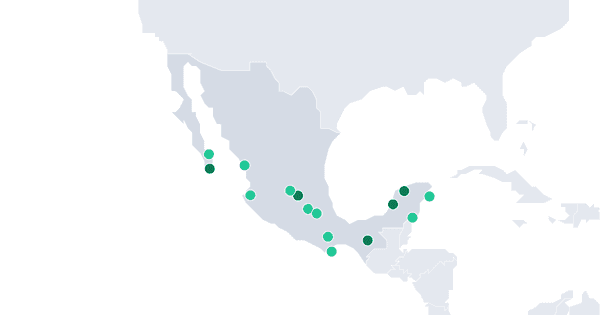
Prices for 1 traveler aged 30, 7 days in Mexico, departing from the United States. HelloSafe data, July 2026. The adventure sports add-on is priced at checkout.
HelloSafe is available as an app inside ChatGPT. Install it from ChatGPT’s Apps tab, then type @HelloSafe and pick “HelloSafe Travel Insurance”: give your destination and dates to compare travel insurance, or ask what your bank card covers.
The base plan is solid on the essentials: 250,000 dollars of medical cover abroad, repatriation up to 500,000 dollars, trip cancellation up to the trip cost with a 40,000 dollar cap, 2,000 dollars for baggage, trips up to 180 days, and enrollment at any age up to 99. The adventure add-on extends that cover to the extreme tier; its price is calculated at checkout based on your trip.
Know the plan's limits before relying on it: repatriation is capped at 500,000 dollars rather than covered at actual costs, and there is no separate search-and-rescue guarantee or personal liability line. For backcountry sports far from roads, that makes the evacuation section below worth reading twice.
On this plan, extreme sports protection only exists if the adventure add-on is part of your policy. A skydiving or off-piste claim on the base plan is refused, whatever the medical ceiling says. Tick the extreme sports option when you compare, and confirm the add-on appears on your policy before you travel.
Which sports does extreme sports travel insurance cover?
The add-on works by tier, not by an exhaustive list, so the practical question is which tier your sport falls into and which conditions attach to it. Here is how the usual suspects land for a US traveler:
Your sport | Typical treatment | What to verify |
|---|---|---|
Scuba diving | Covered with the add-on | Certification required; depth limits of 60 to 100 ft are the market norm |
Resort skiing and snowboarding | Often covered without the add-on | On-piste only; off-piste needs the extreme tier |
Off-piste and backcountry skiing | Add-on territory | Resort boundary rules; no search-and-rescue line on the US plan |
Skydiving, bungee, paragliding | Add-on territory | Licensed operator usually required; one-off jump vs regular practice |
Mountaineering and high-altitude trekking | Add-on territory | Altitude caps; guided requirements above certain elevations |
BASE jumping, wingsuit, free solo | Not insurable | Declined by nearly every insurer |
Two habits pay off whatever the sport: buy before you leave, since the add-on cannot be attached mid-trip after an accident, and keep proof of certification or operator licensing with your travel documents, because claims teams ask for them first.
Does extreme sports travel insurance cover rescue and evacuation?
A medical evacuation back to the United States costs 20,000 to 200,000 dollars depending on where you are and your condition, and neither Medicare nor most US health plans pay for care or transport outside the country. The State Department is blunt about it: the US government does not pay Americans' medical bills abroad.
In the Alps, a helicopter rescue bills 4,000 to 8,000 euros per mission at 60 to 90 euros per flight minute; Austria charges the rescued around 3,500 euros on average. France runs mountain rescue as a free public service except on ski runs in winter resorts. In much of the world, though, the bill lands on you first and gets reimbursed later, which is why an assistance line that coordinates and guarantees payment matters as much as the ceiling.
With the covered plan, evacuation and repatriation run through the insurer's assistance service up to 500,000 dollars. Without cover, you are chartering an air ambulance on your own credit.
Does your credit card cover extreme sports abroad?
Premium US credit cards carry real travel protections, but they were not built for extreme sports medicine. The Chase Sapphire Reserve, a 795 dollar a year card, covers emergency evacuation up to 100,000 dollars when it is pre-authorized through the card's benefits administrator, and emergency medical at just 2,500 dollars with a 50 dollar deductible.
Read the fine print before relying on plastic: the trip must be paid at least in part with the card, evacuation arranged without pre-authorization is not reimbursed, and 2,500 dollars of medical cover disappears in the first hour of a US-standard hospital bill abroad. Cards complement a dedicated policy; after a paragliding accident they do not replace one.
How much does extreme sports travel insurance cost in dollars?
The covered US plan starts at 5.16 dollars per day, so around 36 dollars for a week in Mexico before the adventure add-on, which is priced at checkout based on your trip length and destination. Cancellation cover up to 40,000 dollars is part of the base plan, unusually high for the US market.
Compare that to the risk it removes: one evacuation at the low end of the State Department's range, 20,000 dollars, equals more than ten years of insuring a two-week trip every year. The comparator at the top of the page prices your exact dates, destination and travelers in dollars.
How do you keep an extreme sports travel insurance claim valid?
Extreme sports claims fail on procedure more than on coverage. The sequence that keeps you covered:
- Tick the extreme sports option when you compare and buy, and confirm the adventure add-on is on your policy documents.
- Carry proof of certification where the wording requires it, diving license first.
- Call the assistance line before any non-emergency treatment or transport; unauthorized evacuations are the classic refused claim.
- Keep every document: incident report, medical report, operator details, receipts.
- For card benefits, pre-authorize the evacuation through the benefits administrator before transport is arranged.
Extreme sports travel insurance: your questions
Usually not. Most US-market plans exclude claims linked to high-risk activities. In our catalog, Smart Travel Protection by Faye covers them through an optional adventure add-on selected at checkout.
No. Medicare does not pay for medical care outside the United States, and it does not pay to fly you home by air ambulance. Most private US health plans have the same gap.
20,000 to 200,000 dollars back to the United States, depending on distance and your condition, per the State Department. The covered plan handles evacuation and repatriation up to 500,000 dollars through its assistance service.
From 5.16 dollars per day, about 36 dollars for a week in Mexico before the adventure add-on, which is priced at checkout. Trip cancellation up to 40,000 dollars is included in the base plan.
With the adventure add-on, recreational diving is the classic covered case, usually within depth limits and with certification required. Confirm your maximum depth with the insurer before buying.
Almost never insurable. BASE jumping, wingsuit flying and free solo climbing are declined by nearly every insurer, including the plans compared here.
Rarely. The Chase Sapphire Reserve caps emergency medical at 2,500 dollars and requires pre-authorized evacuation; the trip must be paid with the card. Cards work as a complement, not a replacement.
Plans like Safe Extreme or SafeTrip Tourism are only sold to travelers departing from their supported countries, which do not include the United States. The comparator only shows plans valid for your departure country.
No. Smart Travel Protection carries no separate search-and-rescue line; locating and evacuation run through the assistance service within the repatriation cover. In some regions, like parts of the Alps, local rescue services bill separately.
No. The adventure add-on must be part of the policy before departure, and buying cover after an incident never works. Some US plans allow extensions of an existing policy mid-trip, but not adding the extreme tier retroactively.
On the same topic

Cheapest Asian Countries to Visit in 2026
Oct 24, 2026

The most visited countries in Africa in 2026
Oct 25, 2026
The most visited countries in Europe in 2026
Oct 25, 2026