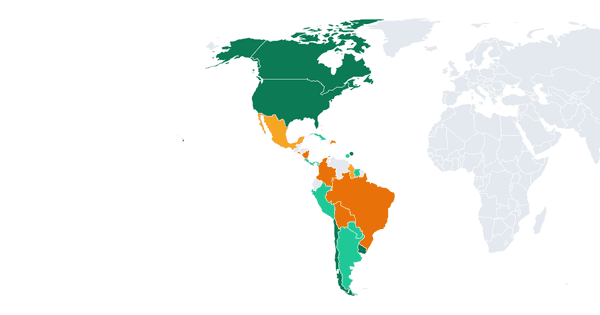
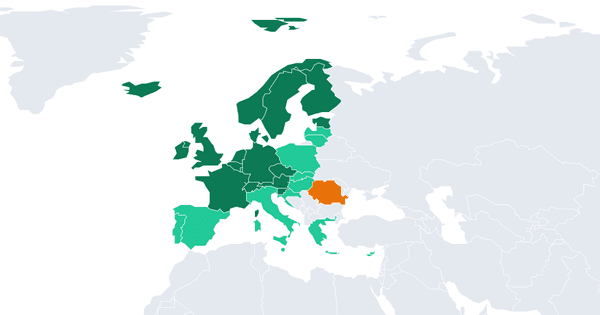
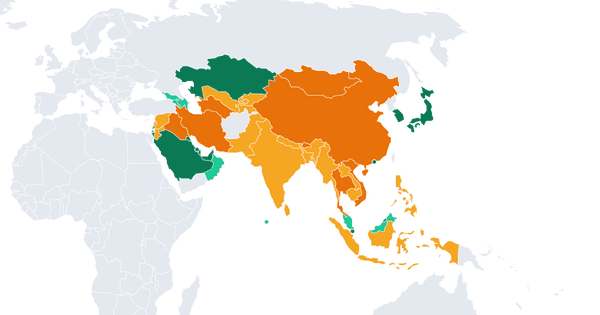
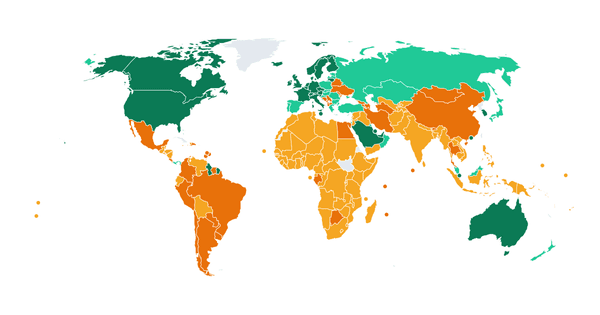
Countries that require travel insurance: the checked 2026 list
- ⚡️ Instant Certificate
- 🆘 24/7 Assistance without upfront costs
- 🔐 Secure Payment
 P. LauroreCo-founder & Travel and Credit Card Insurance ExpertLast updated: October 16, 2026
Which countries require travel insurance in 2026, and who actually checks?
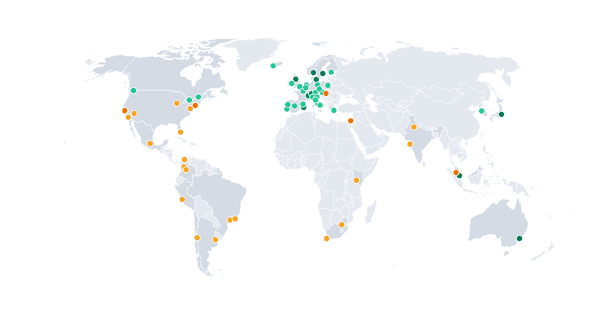
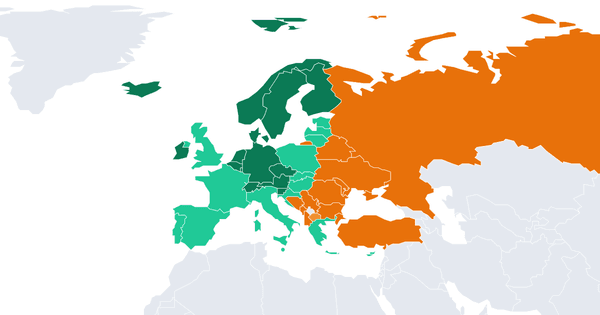
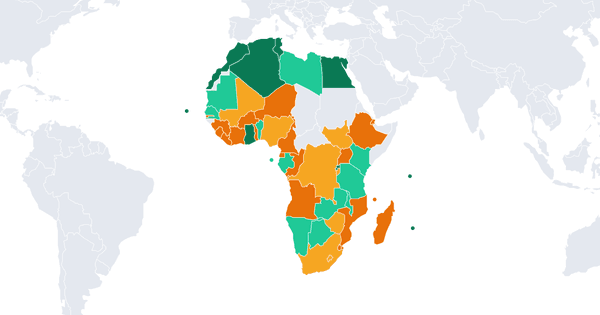
About twenty countries require travel insurance in 2026, in three different ways: a check on foreign travelers at entry, with a few exemptions (Georgia, Cuba, Zanzibar, mainland Tanzania, Kenya, Belarus), a document inside a visa file (Schengen, Türkiye, Russia, Iran), or a condition attached to one visa category (Super Visa, OSHC, J-1).
The trigger matters more than the list. A rule enforced at passport control means you can be turned around at the airport. A rule that lives in a visa file is checked weeks earlier by a consular officer who compares your certificate line by line with a legal text. And a rule attached to a visa category follows the visa, not the country, so it can apply to a Canadian grandparent, an Australian student and an American exchange visitor on three different continents.
Most published lists of countries that require travel insurance are two years out of date. They still name mainland Ecuador and Fiji, which repealed their pandemic-era rules, and they miss Georgia, which introduced a real one on January 1, 2026. This page separates the three triggers, states the legal minimum each country actually sets, and names the plans that clear it. Every threshold on this page is cleared by the cheapest plan in our comparator, which quotes $39.41 for eight days with a medical ceiling of about $354,600 (HelloSafe data, September 2026).
Every year, our experts audit each plan against its binding policy wording: coverage, limits and exclusions, cross-checked with real customer feedback and live market prices. The analysis is fully independent, with zero paid placements and no insurer able to pay to influence a rating. We compare travel insurance across every country and currency, using the plans, prices and coverage actually offered in your country, not a single guide translated.
Learn moreWhich countries require travel insurance from every traveler at the border?
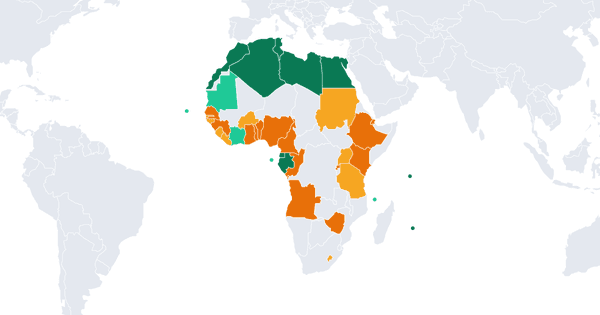
Six countries and territories require travel insurance from foreign travelers at entry, whether or not you need a visa and whatever your nationality, apart from the few exemptions the table below names: Georgia, Cuba, Zanzibar, mainland Tanzania since October 1, 2026, Kenya since October 6, 2026, and Belarus. Qatar requires it only for stays longer than 30 days. Argentina wrote it into a decree but does not apply it today, and no current official source confirms the requirement often attributed to Ukraine. Proof can be asked for at the border, and in several of them a local policy is sold on the spot if you arrive without one.
Country | Who it applies to | Minimum coverage the law sets | Where it is checked |
|---|---|---|---|
Since January 1, 2026 | Every foreign visitor | 30,000 GEL, about $11,000 | Air, land and sea borders; paper or electronic, in Georgian or English |
Argentina Decree 366/2025 | Every non-resident foreigner, on paper | $20,000 under the decree, including emergency evacuation and repatriation | Not applied today: according to Argentina's foreign ministry, the implementing rules have not been issued and the sworn statement is not being requested. Hospitals run by the national government only treat foreigners who show insurance or pay in advance, except in an emergency (Health Ministry Resolution 1066/2026) |
Resolution 168/2010 | Every foreign visitor | $10,000 of medical coverage, valid for the whole stay | Immigration; without proof you buy a Cuban policy on the spot |
Since October 1, 2024 | Every foreign visitor, adults and children | The state Zanzibar Insurance Corporation (ZIC) inbound policy, $44 per person for 90 days | On arrival, in addition to any policy you already hold |
Tanzania (mainland) Since October 1, 2026 | Every foreign visitor except residents of East African Community (EAC) and Southern African Development Community (SADC) partner states | The state inbound policy from the National Insurance Corporation (NIC), $44 per person, valid up to 92 days | Land borders, seaports and airports; bought on the NIC portal before departure or on arrival |
Kenya Since October 6, 2026 | Every foreign visitor applying for the Electronic Travel Authorization (ETA) | The state policy, about $44 per person, required to complete the ETA. A foreign certificate cannot be uploaded | Online, during the ETA application. The scheme has been challenged in the High Court: one petition was dismissed in Marsabit on October 7, 2026, another is pending in Nairobi (Milimani) |
| Requirement not confirmed | No amount confirmed by a current official source: the €30,000 often quoted does not appear in France's foreign ministry travel advice of September 15, 2026 | France's foreign ministry advises against all travel to Ukraine, whatever the reason | |
| Every foreign national except nine listed nationalities | €10,000, on a named certificate covering medical expenses and repatriation | Border control; a Belarusian policy is sold at Minsk airport and at land crossings | |
| Visitors staying more than 30 days | Health insurance from an insurer approved by Qatar's Ministry of Public Health, or proof of a policy valid in Qatar | Bought online before departure, including by visa-exempt travelers |
The nine nationalities exempt in Belarus are Armenia, Kazakhstan, Kyrgyzstan, Moldova, Tajikistan, Uzbekistan, Ukraine, Russia and Turkmenistan. Everyone else needs a policy worth at least €10,000, and the figure is a legal floor rather than a sensible level of coverage: a single night in a European emergency department typically costs $3,000 to $8,000.

Zanzibar does not accept your own policy in place of the state one. Since October 1, 2024, every foreign visitor must buy the Zanzibar Insurance Corporation inbound policy at $44 per person, adults and children alike, covering 90 days and roughly $50,000 of emergency medical care. Your own travel insurance still matters, because $50,000 is thin for an air evacuation off the island, but it does not exempt you from the $44.
Which countries require travel insurance as part of the visa application?
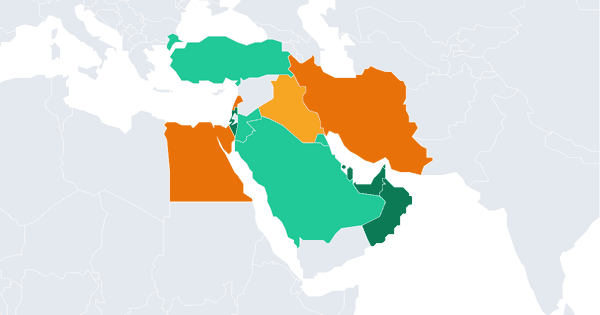
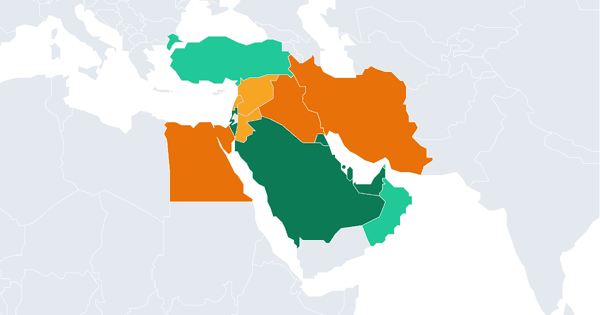
Seven destinations require travel insurance inside the visa file rather than at the border: the 29 Schengen states, Türkiye, Russia, Iran, Saudi Arabia, the United Arab Emirates and Algeria. Bhutan and Nepal, often added to this list, appear in the table below to show that they do not ask for it: Bhutan withdrew the requirement from its visa in April 2024, and Nepal does not require it for entry. Here the certificate is a document a consular officer reads before your visa is granted, so its wording matters more than the price you paid.
Visa | What the file must contain | Minimum | What trips people up |
|---|---|---|---|
29 states | Travel medical insurance valid in every Schengen state | €30,000 | The certificate must name medical repatriation and repatriation of remains (EU Regulation 810/2009) |
Türkiye sticker visa Consulate application* | Travel health insurance covering the whole stay | €30,000 or the equivalent | The e-visa does not ask for it; only the consulate sticker visa does |
Medical insurance valid for the whole stay | Medical expenses and emergencies | The policy must be valid in Russia, which some plans exclude | |
An Iranian policy issued electronically during the visa process | Set by the scheme | Foreign policies are usually refused | |
Saudi Arabia e-visa | Insurance bundled into the visa fee | Included in the fee | Nothing separate to buy for the visa itself |
UAE visit visa | Medical coverage valid in the UAE | Set by the Cabinet scheme | Usually bundled by the sponsor or the airline, with low caps |
Algeria visa | A travel insurance certificate covering the stay | Set by the consulate | Requirements vary between consulates, so read the local checklist |
Bhutan | No insurance required: Bhutan's Department of Tourism withdrew the requirement from its visa in April 2024 | None | Insurance is still strongly advised for medical costs and evacuation |
Nepal trekking permits | No insurance required for the visa or for entry | None at entry | Regulations require it for mountaineering expeditions, and trekking agencies often ask for rescue and helicopter evacuation coverage |
Türkiye is the single most misreported entry on every competing list. Turkish consulates require travel health insurance for a short-stay sticker visa, with a minimum underwriting limit of €30,000 or the equivalent, covering treatment of sudden illness, transfer to the nearest suitable facility, transfer home after treatment and repatriation of remains. The online e-visa, which is what most tourists actually use, asks for no insurance document at all. Being told to buy a policy for an e-visa is the classic upsell.
Which visas require travel insurance whatever the country you enter?
Seven visa categories require travel or health insurance as a condition of the visa itself, independently of any border rule: the Canadian Super Visa, the Australian student visa, the American J-1, the Thai O-A long stay, the Canadian working holiday, the Spanish non-lucrative visa and Irish student permission. An eighth entry in the table below, the UK student visa, is there precisely because it does not require insurance at all.
Visa | Who it is for | What the insurance must do | Minimum or note |
|---|---|---|---|
Parents and grandparents of Canadians | Emergency medical, hospitalization and repatriation, running one year from the date of entry | CAD 100,000, from a Canadian insurer or one authorized by OSFI, Canada's federal insurance regulator | |
Subclass 500 | International students | Overseas Student Health Cover for the whole stay, visa condition 8501 | Set by the OSHC scheme, and it must never lapse |
Exchange visitors and their J-2 dependents | Medical benefits, repatriation of remains and medical evacuation | $100,000 medical, $25,000 repatriation, $50,000 evacuation | |
Thailand O-A long stay | Retirees aged 50 and over | Health insurance the embassy accepts | THB 40,000 outpatient and THB 400,000 inpatient baseline; many embassies ask for THB 3,000,000 inpatient |
Young workers and working holidaymakers | Medical care, hospitalization and repatriation for the whole stay | An officer can shorten your permit to the end date of your policy | |
Spain non-lucrative visa | Non-working residents | Private health coverage from an insurer authorized in Spain, full coverage, no co-payment | For the whole year of the permit |
Non-EEA | Non-EEA students | Accident and disease coverage for the first year | €25,000 |
International students | No insurance requirement at all | The £776-a-year Immigration Health Surcharge is a tax that buys NHS access, not a travel policy |
The working-holiday rule is the one that costs people days of their trip. On the International Experience Canada program, the border officer can issue a work permit that expires on the same day as your insurance certificate, and the permit cannot be extended afterwards to match a longer policy bought later. Buy coverage for the full 12 or 24 months before you fly, not for the first three.
Which countries no longer require travel insurance, despite the lists that say they do?
Seven entries appear on most lists of countries that require travel insurance and should not: mainland Ecuador, Fiji, the Galápagos Islands, the Schengen area for visa-exempt travelers, Seychelles, Rwanda and a cluster of destinations (Israel, Palestine, Laos, Brunei, Uruguay) for which no current legal requirement could be confirmed. Copying a repealed rule is not a harmless error: it sends readers to buy the wrong product for the wrong reason.
- Mainland Ecuador: The pandemic-era insurance requirement was repealed. Insurance is strongly advisable, and it is not required to enter.
- Fiji: The travel medical insurance requirement was lifted along with the testing rules. Nothing to show at the border.
- Galápagos Islands: The $20 Transit Control Card and the national park fee are mandatory. Insurance is not, although cruise and tour operators very often make it a condition of booking, which is where the confusion comes from.
- The Schengen area for visa-exempt travelers: The €30,000 rule attaches to a visa application. If you enter Schengen without needing a visa, no border officer asks you for a policy.
- Israel, Palestine, Laos, Brunei and Uruguay: Widely listed as mandatory. We could not confirm a current legal requirement for any of them, so we do not list them. If your consulate tells you otherwise in writing, follow the consulate.
- Seychelles: The official Travel Authorisation portal says it in as many words: Seychelles does not require visitors to have health or travel insurance before travelling, however it is highly recommended. The only insurance condition in Seychelles law attaches to the Workcation remote-worker permit, which does ask for proof of medical and travel coverage, and that is a permit rule, not an entry rule.
- Rwanda: Neither the Rwanda entry requirements published by the UK Foreign, Commonwealth and Development Office (FCDO) nor the Canadian government travel advice lists insurance among the conditions of entry, and nothing is sold compulsorily on arrival: both only recommend coverage. The myth comes from affiliate blogs that confuse Rwanda with Zanzibar, where a compulsory inbound state policy genuinely does exist.
ETIAS is the second source of confusion. The European travel authorization for visa-exempt visitors is regularly described as a new insurance rule. It is not one. ETIAS is a pre-travel authorization, it has been delayed again with no launch date published, and nothing in it obliges you to hold travel insurance. Our ETIAS travel authorization guide explains what it does change.
Thailand is the third. From September 15, 2026, the visa exemption drops from 60 days to 30 days for around 60 nationalities, including the United States, the United Kingdom, Canada and Australia, following Royal Gazette announcements published on August 31, 2026. One 30-day extension remains possible, and anyone who enters before September 15 keeps the 60 days granted at entry. That is a length-of-stay change, not an insurance rule. The Thai visa that genuinely carries an insurance condition is the O-A long-stay visa.
Which travel insurance satisfies the countries that require it?
Any plan with a medical ceiling above about $35,000, repatriation written into the certificate and dates covering your whole stay satisfies every country on this page. In our comparator the cheapest such plan is WorldSecure Basic at $39.41 for eight days, with around $354,600 of medical coverage, which is roughly 32 times the minimum Georgia sets.

The cheapest compliant plan works everywhere on this page except Russia and Belarus
You do not need an expensive policy to satisfy a border officer: you need the right one. WorldSecure Basic gets you into hospital abroad without advancing a cent, because direct billing is included, and it hands you a dated certificate within minutes of paying. Its medical ceiling of about $354,600 is far above Georgia’s 30,000 GEL, Belarus’s €10,000, Cuba’s $10,000 and the €30,000 the Schengen Visa Code sets, and it is the cheapest plan in the comparison. For Russia and Belarus, though, its sanctions clause (United Nations resolutions, European Union or United States law) can stand in the way of a claim, so we do not suggest it for those two countries.
If you are heading somewhere with a genuinely expensive health system, or a long way from a hospital that can treat you, move up to Safe Start, at roughly twice the price, where the ceiling roughly doubles to $591,000 and search and rescue is covered up to about $5,900. Its territory is worldwide, which makes it the plan to look at for Russia and Belarus, but its cancellation coverage does not pay out simply because France’s foreign ministry advises against the destination. Between those two sits the mid-priced WorldSecure Platinum, the plan in this shortlist with the largest refund for a canceled trip, up to about $10,600. The cards below show today’s price for your dates.
Included coverage
Personalized quote · no obligation
Included coverage
Personalized quote · no obligation
Included coverage
Personalized quote · no obligation
Real quotes captured on 4 September 2026 for one traveller aged 34, 8 days in Georgia (the flagship 2026 border rule), departing 2 November 2026, resident in the United Kingdom, shown in US dollars. HelloSafe data. Every plan listed carries a medical ceiling well above the minimum any country on this page asks for. These are pan-European policies: prices and cover limits are shown in US dollars, converted at the live exchange rate. The comparator re-prices for your own country of residence and currency, and the plan list itself changes with it.
HelloSafe is available as an app inside ChatGPT. Install it from ChatGPT’s Apps tab, then type @HelloSafe and pick “HelloSafe Travel Insurance”: give your destination and dates to compare travel insurance, or ask what your bank card covers.
How much does travel insurance cost for the countries that require it?
Travel insurance for the countries that require it costs between $39.41 and $351.38 depending on your age, your destination and how long you stay, on real quotes captured on September 4, 2026. A visa-compliant Schengen policy for a month starts at $46.11, a family of four in Cuba starts at $153.63, and three months in Thailand starts at $156.32, which works out at $1.74 a day.
Traveler profile | Budget | Average | Premium | Key point |
|---|---|---|---|---|
Border-check tourist 1 traveler aged 34, 8 days in Georgia | $39.41 | $68.90 | $86.83 (Go Explore +) | The cheapest plan already carries about $354,600 of medical coverage, roughly 32 times Georgia's legal minimum |
Schengen visa applicant 1 traveler aged 34, 30 days in France | $46.11 | $60.30 | $130.06 (Schengen Start) | Every Schengen plan is built to the €30,000 floor, so compare the repatriation wording, not the ceiling |
Family at a border-rule destination 2 adults and 2 children, 10 days in Cuba | $153.63 | $236.16 | $331.30 (Safe Start) | One policy covers all four, but Cuba can ask each traveler for proof, so print four copies |
Senior on a Gulf visit visa 1 traveler aged 68, 14 days in the UAE | $82.84 | $96.87 | $118.91 (Go Explore +) | Only four plans still quote at 68, and the cheapest of them is the one with the $591,000 ceiling |
Long-trip backpacker 1 traveler aged 26, 90 days in Thailand | $156.32 | $294.31 | $351.38 (Go Explore +) | $1.74 a day for about $354,600 of medical coverage across three months |
Real HelloSafe quotes captured on September 4, 2026, resident in the United Kingdom, shown in US dollars.
Two things move that price far more than the destination does. Age is the first: at 68 the plan list shrinks from six quotes to four, and the entry price doubles from $39.41 to $82.84 for a comparable trip. Duration is the second, and it is not linear: eight days costs $4.93 a day while ninety days costs $1.74 a day on the same plan. Our page on how much travel insurance costs breaks the drivers down further, and travel insurance for seniors covers the age question in detail.
What do the countries that require travel insurance not tell you about the fine print?
A policy can satisfy every country that requires travel insurance and still fail you at the moment you claim, because the legal minimum only ever names a ceiling. The conditions that decide whether you are actually paid sit in the policy wording: prior approval before any repatriation, a deductible on every medical claim, an exclusion for pre-existing conditions, and a sanctions clause that can void coverage in four of the countries listed above.
Four terms are worth defining once. A ceiling is the maximum the insurer will pay for a guarantee. A deductible, also called an excess, is the slice of every claim you pay yourself. A waiting period is the delay between buying the policy and being entitled to benefits. Direct billing, sometimes called no upfront payment, means the insurer settles the hospital directly instead of reimbursing you afterwards.
- A medical ceiling well above the legal floor: Georgia asks for 30,000 GEL, Belarus €10,000, Cuba $10,000 and the Schengen Visa Code €30,000. The cheapest plan in our comparator carries about $354,600, so clearing the threshold is rarely the difficult part.
- Repatriation of remains named in the certificate: The Schengen Visa Code requires the words, and Belarus asks for a named medical and repatriation certificate. WorldSecure Basic's terms cover organizing and paying for transport of the body to the international airport nearest your home address, including the cost of the coffin, up to the amount in the schedule of cover.
- Direct billing, so you never advance a hospital bill: All six plans in our shortlist include it. Read our repatriation insurance guide for how the assistance service actually works once you call it.
- Dates that cover the whole stay, with a margin: A border officer compares the policy dates with your ticket. A certificate that ends the morning of your return flight fails the check.
- Prior approval before any repatriation: WorldSecure Basic's terms require you to contact the 24/7 assistance service and obtain its prior approval before taking any step or incurring any expense, and the decision sits with the assistance doctor alone. A medical transfer you organize yourself is not reimbursed.
- Pre-existing and chronic conditions: The same terms exclude expenses consequent to accidents or illnesses that occurred before the policy start date, plus congenital disability, hereditary diseases and chronic illnesses. If that is your situation, start with pre-existing condition travel insurance.
- A deductible applied to every medical claim: World Travel applies a fixed deductible of about $59 to medical expenses in all cases, whatever the size of the bill.
- A sanctions clause that can switch the coverage off: WorldSecure Basic's terms state the insurer will not pay any claim where doing so would expose it to a sanction, prohibition or restriction under United Nations resolutions or under European Union, United States or other law. That clause matters for Cuba, Iran, Russia and Belarus, four of the countries on this page, which is why we do not suggest this plan for Russia or Belarus; for the others, confirm in writing that your destination is covered.
- A waiting period with no stated length: WorldSecure Basic defines a waiting period between purchase and entitlement without giving its duration anywhere in the document. Buy well before departure and ask the insurer to confirm the delay in writing.
Cuba and Belarus both sell a local policy to travelers who turn up without one. Zanzibar requires its state policy from every foreign visitor, mainland Tanzania from every foreign visitor except residents of East African Community (EAC) and Southern African Development Community (SADC) partner states, and Kenya from every traveler applying for the Electronic Travel Authorization (ETA). You pay the counter price, you get the counter product, and you have no time to read what it excludes. Comparing before you fly costs $39.41 for eight days and takes about two minutes.
What does a certificate need to show in countries that require travel insurance?
A certificate for the countries that require travel insurance has to state five things: the insured traveler's name, the exact policy dates, the territory covered, the medical ceiling, and repatriation. Georgia accepts it on paper or on a screen, in Georgian or English; the Schengen consulates want it printed and stamped with the insurer's details.
- The traveler's full name, exactly as on the passport: A mismatched middle name is the most common reason a consulate returns a file.
- Start and end dates covering the whole stay: Schengen consulates check them against your itinerary; border officers check them against your return ticket.
- The territory covered: For a Schengen visa the certificate must say it is valid in all Schengen states, not only in the country you are flying to.
- The medical ceiling, in figures: State the amount, not just the word “covered”. Consular officers compare a number with a legal minimum.
- Repatriation, named explicitly: Medical repatriation and repatriation of remains are both required by the EU Visa Code, and Belarus asks for a medical and repatriation certificate. A certificate that only mentions medical expenses is refused.
- Enter your real dates, destination and travelers in the comparator, since a quote for approximate dates produces a certificate with the wrong dates on it.
- Check the plan's medical ceiling against the legal minimum for your country in the tables above.
- Buy online and download the certificate, which is issued immediately.
- Print one copy per traveler and keep a copy on your phone, because a border queue is a poor place to discover the terminal has no signal.
Does a credit card count in the countries that require travel insurance?
A credit card almost never counts in the countries that require travel insurance. The coverage built into premium US cards caps emergency medical treatment at $2,500 or excludes it entirely, which is below Georgia's 30,000 GEL floor (about $11,000) and nowhere near the €30,000 the Schengen Visa Code sets, and no card issues the dated certificate a border officer or a consulate asks for.
Card | Emergency medical abroad | Evacuation | Trip cancellation* | Why it fails an entry rule |
|---|---|---|---|---|
Sapphire Reserve | $2,500 cap, $50 deductible, secondary to your own health plan | $100,000, pre-authorization mandatory | $10,000 per person, 13 covered reasons | $2,500 is under a quarter of Georgia's floor, and secondary coverage may pay nothing at all |
Sapphire Preferred | No coverage | No coverage; the assistance line arranges logistics only | $10,000 per person, 14 covered reasons | There is nothing to declare on a form and nothing to claim in a hospital |
Sapphire Reserve Business | $2,500, $50 deductible, reimbursement only, no direct payment to hospitals | $100,000, pre-authorization mandatory, trips of 5 to 60 days only | $10,000 per person, $20,000 per trip | The same cap, plus a trip-length window that a long stay breaks |
Two gaps deserve naming. Card cancellation coverage looks generous at $10,000 per person, but it runs on a short closed list of covered reasons and excludes any pre-existing condition treated in the 60 days before booking, which is the single most common reason a card claim is refused. Card medical coverage, where it exists, is reimbursement only: you advance the bill yourself, then claim, whereas every plan in our shortlist bills the hospital directly. Our guide to credit card travel insurance sets out what each network really includes.
Students are the one group where a card is beside the point anyway, because the requirement attaches to the visa and names a scheme: OSHC in Australia, €25,000 in Ireland, a federal minimum for the J-1. Our student travel insurance page covers those, and the wider travel insurance hub covers everything else.
What else do travelers ask about the countries that require travel insurance?
About twenty. Six require it from foreign travelers at entry (Georgia, Cuba, Zanzibar, mainland Tanzania since October 1, 2026, Kenya since October 6, 2026, and Belarus), with a few exemptions: nine nationalities in Belarus, residents of EAC and SADC partner states in mainland Tanzania, and in Kenya the rule only covers travelers applying for the ETA. Qatar requires it for stays longer than 30 days, seven require it inside a visa file (the 29 Schengen states, Türkiye, Russia, Iran, Saudi Arabia, the UAE and Algeria), and a further seven visa categories require it whatever country you enter.
Yes. EU Regulation 810/2009, the Visa Code, requires travel medical insurance of at least €30,000 valid in all 29 Schengen states, and the certificate must name medical repatriation and repatriation of remains. It applies to the visa application only: if you are visa-exempt, no one asks for a policy at the border.
Yes, since January 1, 2026. Under the Law on Tourism every foreign visitor must hold health and accident insurance for the whole stay, worth at least 30,000 GEL, about $11,000. It can be shown on paper or on a screen, in Georgian or English, and it can be issued by a Georgian or a foreign insurer. Checks happen at Tbilisi, Kutaisi and Batumi airports and at land and sea borders.
No. The online e-visa asks for no insurance document. Travel health insurance of at least €30,000 or the equivalent is required only for the sticker visa applied for in person at a Turkish consulate, and it must cover treatment of sudden illness, transfer to the nearest facility, transfer home after treatment and repatriation of remains.
WorldSecure Basic, at $39.41 for a traveler aged 34 spending eight days abroad, quoted on September 4, 2026. It carries about $354,600 of emergency medical coverage with direct billing, so it clears every legal minimum on this page, and the certificate is issued as soon as you pay.
Almost never. Premium US cards cap emergency medical treatment abroad at $2,500 with a $50 deductible, or exclude it entirely, which is below Georgia’s 30,000 GEL minimum (about $11,000) and far below the €30,000 the Schengen Visa Code sets. Cards also issue no dated certificate naming repatriation, which is the document a border officer or consulate actually asks for.
No. Mainland Ecuador repealed its pandemic-era requirement and Fiji lifted its own. Both still appear on many published lists, which is why those lists should be treated with caution. For the Galápagos the $20 Transit Control Card and the national park fee are mandatory, but insurance is not, even though most cruise and tour operators require it as a booking condition.
No. ETIAS is a pre-travel authorization for visa-exempt visitors to Europe, not an insurance rule, and it has been delayed again with no launch date published. Nothing in the ETIAS process obliges you to buy a travel policy.
No. The change taking effect on September 15, 2026, cuts the visa exemption from 60 days to 30 days for around 60 nationalities, including the United States, the United Kingdom, Canada and Australia, following Royal Gazette announcements published on August 31, 2026. A single 30-day extension remains possible and travelers who enter before September 15 keep the 60 days granted at entry. Insurance is a condition of the O-A long-stay visa, not of the exemption.
It depends on the country. Cuba and Belarus sell a local policy at the border, so you pay the counter price and travel on. Zanzibar requires its own state policy at $44 per person regardless of what you already hold. Mainland Tanzania sells its state policy before departure or on arrival, and Kenya requires its own to complete the Electronic Travel Authorization. Georgia can refuse entry outright. In Argentina the requirement written into the decree is not applied today, but hospitals run by the national government only treat foreigners who show insurance or pay in advance, except in an emergency.
Only where the law says so. Iran requires an Iranian policy issued during the visa process; Zanzibar, mainland Tanzania and Kenya require their state policy; Qatar requires, for stays longer than 30 days, coverage from an insurer approved by its Ministry of Public Health or proof of a policy valid in Qatar; Spain requires an insurer authorized in Spain; and Canada’s Super Visa requires a Canadian or OSFI-authorized insurer. Everywhere else a foreign policy that meets the stated minimum is accepted.
As early as you can. Coverage for cancellation only works if you buy before the event that stops you traveling, and policies define a waiting period between purchase and entitlement whose length is not always stated in the wording. Buying at the moment you book the trip removes both problems, and the certificate is issued immediately either way.
Updated October 16, 2026. Yes, for mainland Tanzania. The Inbound Travel Insurance Regulations for Foreign Visitors Entering Mainland Tanzania, Government Notice (GN) No. 256 of 2026, published on September 4, 2026, have been in force since October 1, 2026, a date confirmed by Tanzania’s Ministry of Finance. They require foreign visitors entering mainland Tanzania by land, sea or air to hold a state inbound policy costing the equivalent of $44 (about TZS 116,000). Which insurer depends on where you land: the National Insurance Corporation (NIC) for entry through mainland Tanzania, whose policy is valid for up to 92 days from arrival and good for multiple entries inside that period (a stay beyond 92 days needs a new policy), and the Zanzibar Insurance Corporation (ZIC) for entry through Zanzibar, whose policy covers 90 days. The $44 on this page is therefore no longer a Zanzibar-only charge. What it covers is narrow: emergency medical treatment, emergency medical evacuation, emergency repatriation and loss of luggage. You buy it on the NIC portal before departure, which emails an electronic certificate carrying a QR code, or on arrival. Read the scope carefully: the regulations define a foreigner in a way that excludes residents of East African Community and Southern African Development Community partner states, so those travelers fall outside the rule. Supervision sits with the Tanzania Insurance Regulatory Authority (TIRA). As on Zanzibar, the state policy does not replace your own travel insurance, because $44 buys a thin emergency floor rather than an air evacuation off a safari circuit.
On the same topic

Cheapest Countries to Visit in 2026
Oct 15, 2026
The safest cities in Mexico in 2026
Oct 15, 2026
The safest cities in Europe in 2026
Oct 19, 2026