Rwanda travel insurance: what the rules really say, and what coverage costs
- ⚡️ Instant Certificate
- 🆘 24/7 Assistance without upfront costs
- 🔐 Secure Payment
 A. FruchardCo-Founder & Travel Insurance ExpertLast updated: September 21, 2026
Is travel insurance really required to enter Rwanda?
No. Rwanda travel insurance is not an entry requirement. The Rwanda Directorate General of Immigration and Emigration lists no insurance condition on its visitor's visa page, and neither the UK nor Canada lists one in its Rwanda advice. You should still buy coverage, because medical evacuation is the bill that ruins trips here.
We re-checked this in September 2026 because the opposite claim is everywhere. Dozens of insurance affiliates and tour blogs state that Rwanda demands proof of insurance from every visitor and that anyone arriving without it must buy a policy on the spot before immigration stamps their passport. We went looking for the law, the ministerial order or the immigration notice behind that sentence. There is none that we could find.
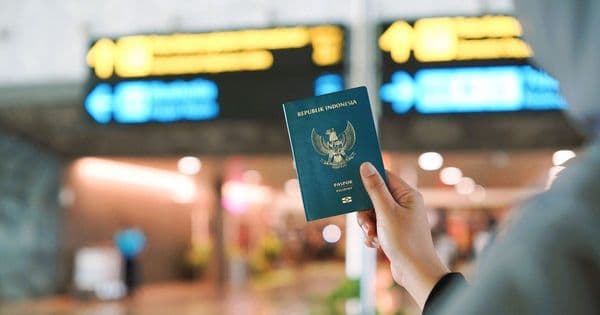
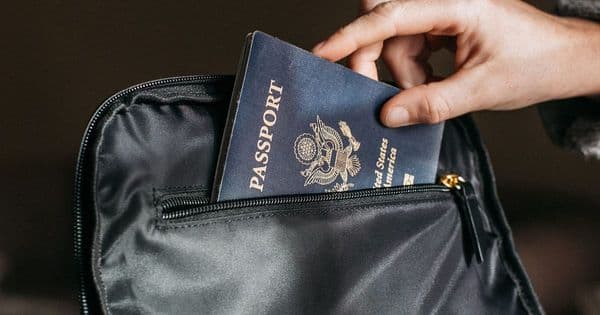
What Rwanda does require is documented and short: a passport valid at least six months with a blank page, a visa (free on arrival for Commonwealth and several other nationalities, otherwise from $50), and a yellow fever certificate if you are arriving from a country where yellow fever is a transmission risk. Insurance appears nowhere in that list. Sources: Rwanda Directorate General of Immigration and Emigration, the UK Foreign Office Rwanda entry requirements and the Government of Canada Rwanda advisory, all read on September 17, 2026.
That sounds like good news and mostly is not. A border officer who never asks for your policy is not the reason to buy one. The reason is that Rwanda's best wildlife is in places where a helicopter, not an ambulance, is the way out, and nobody is going to stop you at Kigali airport to point that out. Compare what is on offer through our travel insurance comparator before you go, not after.
We could not confirm it from any Rwandan government source. A compulsory buy-on-arrival scheme of exactly that kind does exist in the region, but it is Zanzibar’s, not Rwanda’s. If an official Rwandan rule is introduced later, it would be announced by the Directorate General of Immigration and Emigration, and we will update this page. Check the immigration site yourself before you fly.
Every year, our experts audit each plan against its binding policy wording: coverage, limits and exclusions, cross-checked with real customer feedback and live market prices. The analysis is fully independent, with zero paid placements and no insurer able to pay to influence a rating. We compare travel insurance across every country and currency, using the plans, prices and coverage actually offered in your country, not a single guide translated.
Learn moreWhat do Rwanda and foreign ministries actually ask you for?
Four things decide whether you board and clear immigration for Rwanda, and insurance is not one of them. The table below is what three official sources say, read on the same day.
Requirement | Status | What it means in practice |
|---|---|---|
Passport Validity and blank pages | Required | Valid at least six months beyond arrival, with at least one blank page for the entry stamp. |
Visa Tourist entry | Required | A 30-day visa is available on arrival or in advance through the Irembo platform. Commonwealth citizens get it free. A holiday visa is $50 single entry, $70 multiple; the East African Tourist Visa is $100. |
Yellow fever certificate Conditional | Only if arriving from a risk country | Required if you are traveling from a country listed as a yellow fever transmission risk, including many overland routes into Rwanda. |
Travel or medical insurance | Not an entry requirement | No Rwandan government source lists it. No proof is requested at the border, and there is no official policy sold on arrival. |
One nuance worth keeping: visa rules and health rules change faster than insurance rules. The yellow fever condition in particular depends on where you have been in the days before arrival, not just your nationality, so travelers combining Rwanda with Uganda, Tanzania or the Democratic Republic of the Congo should check the current list rather than assume.
Which policies actually pay out on a Rwandan trip?
Because no rule dictates a minimum, the question is not which policy satisfies Rwanda but which one covers the way you will actually get hurt there. On the trip we priced, only two plans in our panel returned a genuine calculated quote for a Rwandan destination, and both are built around medical costs and getting you out.
Why we put Go Explore + at the top for Rwanda
If something goes wrong on a trekking trail in the Virungas, the coverage you will lean on is not baggage or delay, it is the one that pays for a doctor to decide you need to leave and then pays for the aircraft. Both Go Explore and Go Explore + repatriate and evacuate at actual cost, with no ceiling, and both settle hospital bills directly so you are not advancing thousands of dollars on a card in Kigali.
Go Explore + earns the top spot on one number that matters here: it roughly doubles the emergency medical ceiling, to about $584,000 against $292,000, and it lifts search and rescue fees to about $7,010. On a trip where the nearest serious hospital may be hours away and the route out may be a chartered flight, the higher ceiling is the part you cannot add later. It costs more than Go Explore, and for a Kigali city break that extra is hard to justify. For gorilla trekking, it is the version I would buy.
Be clear-eyed about what neither one does: there is no trip cancellation coverage in either plan, and a gorilla permit is a lot of money to leave unprotected. Read the section below before you decide that is acceptable.
Included coverage
Personalized quote · no obligation
Included coverage
Personalized quote · no obligation
Real quotes captured on hellosafe.com on 17 September 2026 for 1 traveler aged 34, a 10-day trip to Rwanda (15 to 25 October 2026), residence in the United States, shown in US dollars. Only Go Explore and Go Explore + return a calculated quote for this trip. Epic Plan, Atlas International and Atlas International Premium display the partner's fixed starting price, which does not change with your dates, your age or the number of travelers; your real premium is worked out on the partner's own site. Go Explore and Go Explore + are priced in euros by the insurer and converted to dollars at the live exchange rate, so their cover limits are shown in dollars too. Rwanda does not require any of these policies for entry. They are bought for medical evacuation and emergency care, not to satisfy an immigration rule.
HelloSafe is available as an app inside ChatGPT. Install it from ChatGPT’s Apps tab, then type @HelloSafe followed by your destination and dates to compare travel insurance.
A warning about the other cards you will see. Several partner plans in our comparator display a fixed "from" price rather than a quote for your trip. We tested it: Smart Travel Protection, Atlas International, Atlas International Premium, Epic Plan and Standard Plan each returned exactly the same figure for a 10-day trip, a 35-day trip, a couple, a family of four and a 68-year-old traveler. A price that does not move when the trip changes is a floor, not a cost. Treat those numbers as a starting point and get the real premium on the partner's own site.
What does covering a Rwanda trip cost, traveler by traveler?
Coverage for a 10-day Rwandan trip starts at $64.70 for a solo traveler in their thirties, and the single biggest cost driver is how long you stay, not how old you are. Every figure below is a quote we pulled on September 17, 2026 from the two plans that genuinely price a Rwandan destination.
Traveler | Go Explore | Go Explore + | Key point |
|---|---|---|---|
Solo traveler, 34 10 days, gorilla trek and safari | $64.70 | $85.83 | Medical costs are reimbursed from the first dollar on both plans. |
Couple, 34 and 36 10 days, two permits | $124.12 | $166.37 | Each traveler carries the full limit; it is not a shared pot between you. |
Family, two adults and two children 10 days | $151.85 | $207.31 | Children under 15 cannot trek gorillas, so their coverage is really for the safari and transfer legs. |
Traveler aged 68 10 days | $96.39 | $117.52 | Accepted up to age 80. The premium rises with age, the coverage does not shrink. |
Solo traveler, 34 35-day overland trip | $167.69 | $235.03 | Duration is the strongest price driver: 3.5 times the days, roughly 2.6 times the premium. |
Real quotes captured on hellosafe.com on September 17, 2026, residence United States, destination Rwanda, in US dollars.
Two things stand out. Age is gentler than travelers expect: the 68-year-old pays about 49% more than the 34-year-old for the same 10 days, not double or triple, and the ceiling is unchanged. Duration is brutal by comparison. If you are combining Rwanda with Uganda or Tanzania over five weeks, budget for the long-stay price, and if you travel more than twice a year look at whether an annual policy beats buying trip by trip. Older travelers can read our dedicated guide to travel insurance for senior citizens for how age limits and medical questionnaires work.
Why is getting out of Rwanda the expensive part?
Medical evacuation is the single coverage that justifies insuring a Rwandan trip, because serious cases are moved out of the country rather than treated in it. The Government of Canada states plainly that access to health care is limited outside Kigali and that "serious medical problems may require air evacuation to a neighbouring country".
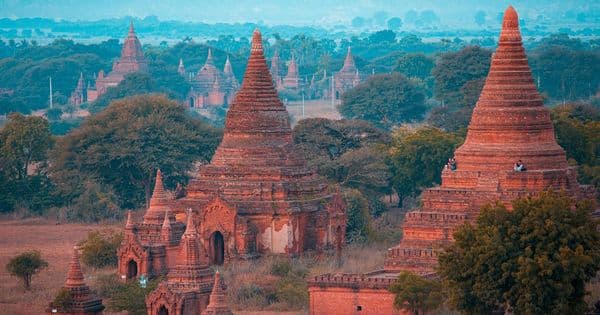
Put that next to where you will actually be. Gorilla trekking happens in Volcanoes National Park, on the forested slopes of the Virunga volcanoes in the far north. Nyungwe Forest, the other headline park, is in the southwest. Both are hours of mountain road from Kigali, and the last stretch of a trek is on foot, off any road at all. The chain that follows an injury there is a stretcher team, then a vehicle, then possibly a chartered aircraft, and only then a hospital.
This is why the ceiling on the evacuation line matters more than the headline medical number. Both Go Explore and Go Explore + cover repatriation and medical transport at actual cost with no cap, and both decide the route through the insurer's own doctors, who choose the destination hospital. Search and rescue costs, the part that gets you off the mountain in the first place, are capped separately: about $5,840 per person on Go Explore and about $7,010 on Go Explore +, within roughly $11,690 per event. Our guide to repatriation insurance explains who makes that call and when the insurer can refuse.
You do not choose your own evacuation. On both plans the insurer’s medical team decides whether you are moved, by what means and to which hospital. Organizing a private air ambulance yourself and claiming afterwards is the classic way to end up paying for it: call the 24/7 assistance line first, from the trailhead if you have signal, and let them authorize it.
What happens to a $1,500 permit if you fall ill?
Nothing, on either plan we quote here, and this is the honest weak point of the shortlist. A Rwandan gorilla tracking permit costs $1,500 per person per day according to the Rwanda Development Board, and neither Go Explore nor Go Explore + includes any trip cancellation or trip interruption coverage at all.
For most destinations that gap is an annoyance. For Rwanda it is the largest single number in the trip for many travelers, larger than the flights for some. Two people trekking on two days is $6,000 of permits before a bed is booked. The Rwanda Development Board also sets a minimum age of 15 for tracking, which quietly rules out younger children and reshapes family itineraries.
- Trip cancellation before departure: Not covered by either plan. If illness, a visa refusal or a family emergency stops you traveling, the permit is not refunded through your insurance.
- Trip interruption after arrival: Not covered. If you are hospitalized in Kigali on day two and miss your trekking day, the permit is simply lost.
- Being turned away on health grounds: Not covered. Trekking is refused to visibly ill visitors to protect the gorillas from human respiratory infections, and no insurance line pays for that.
- Bad weather or a closed sector: Not covered. Park operational decisions are not an insured event on these plans.
If the permits are a material part of your budget, do not solve this by hoping. Either buy a separate policy that includes cancellation, or check whether your tour operator's own terms allow a date change, which several Rwandan operators do more readily than the insurance market does. Our guide to travel cancellation insurance sets out which reasons are genuinely covered and which are not, on the plans that do include it.
What will these policies refuse to pay for?
We read the Go Explore and Go Explore + policy wordings rather than the sales sheets. The ceilings below are the contractual ones, converted from euros at the rate the comparator uses, and the last column is the condition that decides whether a claim is actually paid.
Guarantee | Go Explore | Go Explore + | The condition that decides the claim |
|---|---|---|---|
Emergency medical and hospital Care abroad | Up to about $292,000 | Up to about $584,000 | Pre-existing conditions are covered, except any treated or hospitalized in the six months before departure, and any unstable condition at risk of worsening. |
Medical evacuation and repatriation The flight out | Actual cost, no cap | Actual cost, no cap | The insurer's doctors decide the transport and the destination hospital. Self-organized evacuations are the common refusal. |
Search and rescue Reaching you off-road | Up to about $5,840 | Up to about $7,010 | Capped at roughly $11,690 per event whatever the number of people. Searches in desert terrain are excluded outright. |
Direct billing No money to advance | Included | Included | Works through the assistance network. Outside it you pay and claim back, so call before you are admitted. |
Trip cancellation and interruption | Not covered | Not covered | Absent from both contracts. Your permits and lodge deposits are not protected. |
Extreme sports | Not covered | Not covered | Ordinary hiking and trekking count as covered sports. Technical mountaineering and any sport practiced professionally are excluded. |
Baggage and camera gear | Up to about $292 | Up to about $584 | Electronics are sub-limited to about $117 and valuables and sports equipment to the same, with a deductible of about $29 per claim. Safari camera kit is effectively uninsured. |
Emergency dental | About $351 illness | About $351 illness | Rises to about $701 if the damage is accidental. No deductible applies. |
Maximum age at purchase | Up to 80 | Up to 80 | Drops to 65 if the same trip also includes the United States or Canada. |
Pregnancy | To week 36 | To week 36 | Only unforeseeable complications are covered. Routine care and anything after week 36 are excluded. |
Two of those rows deserve emphasis for this destination. The six-month pre-existing condition rule is the most common reason an otherwise valid medical claim collapses, and it is worth reading against your own last half-year rather than assuming. And the baggage sub-limits make these plans a poor answer for anyone carrying a serious telephoto lens on safari: about $117 of electronics coverage will not replace it, and a specialist equipment policy or a household contents extension is the sane route.
- An uncapped evacuation line: For Rwanda this matters more than the headline medical ceiling. Look for repatriation at actual cost, not a fixed sum.
- Direct settlement with hospitals: Avoids advancing several thousand dollars on a card in Kigali while you are unwell.
- A medical ceiling of at least $250,000: Enough to absorb stabilization plus an air transfer to Nairobi or Johannesburg if it comes to that.
- Search and rescue as a named guarantee: Not every plan includes it, and off-road retrieval in the Virungas is exactly the scenario it exists for.
- Cancellation, if your permits are booked: Neither of these two plans offers it, so it means buying a separate policy, and $1,500 a permit is a large sum to carry yourself.
Why do so many sites say East Africa forces you to buy insurance?
Because one East African destination genuinely does force it, and the rule has been copied onto its neighbors. Since October 1, 2024, every foreign visitor to Zanzibar must hold a Compulsory Inbound Travel Insurance policy for stays up to 92 days, costing $44, and it can only be bought from the Zanzibar Insurance Corporation. A policy from your own insurer, however comprehensive, is not accepted there.
That is a real, verifiable scheme, confirmed by the U.S. Embassy in Tanzania and by Tanzanian diplomatic missions. It is also the template for the sentence you keep reading about Rwanda. Aggregator articles list "Tanzania, Zanzibar, Kenya, Uganda and Rwanda" as countries implementing mandatory travel insurance, and insurance affiliates repeat it because it sells policies. None of them cites a Rwandan legal instrument.
Rwanda | Zanzibar | |
|---|---|---|
Insurance required to enter | No | Yes |
Must buy from a designated insurer | No such scheme | Zanzibar Insurance Corporation only |
Cost imposed at the border | None | $44 for up to 92 days |
Is your own policy accepted | Nothing to accept | No, it does not satisfy the rule |
The practical consequence: if your itinerary includes both, budget the $44 for Zanzibar as a separate compulsory charge on top of whatever travel insurance you buy, and do not let anyone sell you a Rwandan equivalent that does not exist.
What treatment can you actually get in Kigali and beyond?
Kigali is the only place in Rwanda where a serious medical problem can be handled locally, and even there the Government of Canada describes public facilities as "adequate for routine procedures" rather than comprehensive. Private clinics in the capital are better equipped and more expensive, which is precisely where direct billing earns its place.
Outside Kigali the picture thins quickly. District hospitals handle primary care and stabilization, not complex surgery or intensive care. This is the structural reason the evacuation guarantee, rather than the size of the medical ceiling, is the line to compare when you are choosing a policy for a trekking or safari itinerary.
One more thing American readers should not assume away: domestic US health plans and Medicare generally do not follow you abroad, and a plan that does pay overseas will still want you to pay first and claim later. That is a different product from what is described here. Our guide to travel medical insurance covers the distinction, and if Rwanda is one leg of a longer African trip, the travel insurance for South Africa page covers the region's other main medical hub.
Rwanda travel insurance, answered
No. Rwanda travel insurance is not an entry requirement. The Rwanda Directorate General of Immigration and Emigration does not list insurance among its visitor visa conditions, and neither the UK Foreign Office nor the Government of Canada lists it as a Rwandan entry requirement. The requirements are a passport valid six months, a visa, and a yellow fever certificate if you arrive from a transmission-risk country.
We found no official Rwandan source describing a compulsory purchase on arrival, and no government advisory warns travelers to expect one. The scheme people are thinking of is Zanzibar’s, where since October 2024 every visitor must buy a $44 policy from the Zanzibar Insurance Corporation. Rwanda has no equivalent. If that changes it would be announced by the immigration directorate.
On quotes we captured on September 17, 2026, a 10-day trip for a solo traveler aged 34 costs $64.70 with Go Explore or $85.83 with Go Explore +. A couple pays $124.12 or $166.37, a family of four $151.85 or $207.31, and a traveler aged 68 pays $96.39 or $117.52. A 35-day overland trip rises to $167.69 or $235.03.
Trekking is treated as an ordinary covered sport on both Go Explore and Go Explore +, so an injury on the trail is a normal medical claim. What is not covered is extreme or technical mountaineering, and sport practiced professionally. The permit itself is a separate matter: neither plan includes trip cancellation, so a lost trekking day is not reimbursed.
Nothing through either plan quoted here, because neither includes trip cancellation or interruption coverage. A Rwandan gorilla tracking permit costs $1,500 per person per day according to the Rwanda Development Board. If the permits are a large part of your budget, buy a policy that includes cancellation or check your operator’s date-change terms.
Yes, and this is the strongest part of both plans. Go Explore and Go Explore + both cover medical repatriation and evacuation at actual cost with no ceiling. Search and rescue is capped separately at about $5,840 per person on Go Explore and about $7,010 on Go Explore +, within roughly $11,690 per event. The insurer’s doctors must authorize the transport.
Because they are showing a starting price rather than a quote. We tested five plans in our panel across a 10-day trip, a 35-day trip, a couple, a family and a 68-year-old traveler, and each returned an identical figure every time. A price that does not move with the trip is a floor. Only Go Explore and Go Explore + calculated a real premium for a Rwandan destination.
Only if you are arriving from a country listed as a yellow fever transmission risk. It is not required of every traveler. Because it depends on your route rather than your nationality, travelers combining Rwanda with Uganda, Tanzania or the Democratic Republic of the Congo should check the current list before departure.
Not really. Baggage coverage is about $292 on Go Explore and about $584 on Go Explore +, but electronics, valuables and sports equipment are sub-limited to roughly $117 with a deductible of about $29 per claim. A telephoto lens is worth far more than that. Insure serious photographic kit separately or through a household policy extension.
Both plans cover pre-existing conditions in principle, with an important exception: anything treated or hospitalized in the six months before departure is excluded, as is any unstable condition carrying a risk of worsening. This six-month window is the most common reason a medical claim is refused, so check it against your own recent history before buying.
Last updated on September 17, 2026. Entry requirements were re-checked against the Rwanda Directorate General of Immigration and Emigration, the UK Foreign Office and the Government of Canada on that date, and all prices were captured the same day.
On the same topic
The safest countries in Africa in 2026
Oct 8, 2026

Travel insurance Reddit advice: what travelers agree on, checked against the policies
Oct 8, 2026

Travel insurance for Spain: real quotes from $27.12 for a week
Oct 5, 2026