Seychelles travel insurance: what the eTA really asks for, and real quotes from $124.12 for two
- ⚡️ Instant Certificate
- 🆘 24/7 Assistance without upfront costs
- 🔐 Secure Payment
 A. FruchardCo-Founder & Travel Insurance ExpertLast updated: September 21, 2026
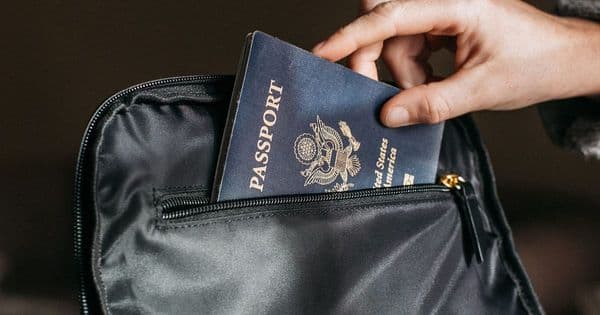
Does the Seychelles eTA actually ask for travel insurance?
No. Seychelles travel insurance is not a condition of the Travel Authorisation. The official eTA portal says in its own FAQ that the country does not require visitors to hold health or travel insurance before traveling, only that it strongly recommends it. Buy coverage for the islands, not for immigration.
We checked this in September 2026 because the opposite claim is repeated almost everywhere, usually in the form that you must hold a health policy before departure as part of the eTA application. We went looking for the rule behind that sentence on the government system that actually issues the authorisation. It says the reverse.
The Seychelles Electronic Border System, the official platform at seychelles.govtas.com, answers the question directly: "Seychelles does not require visitors to have health or travel insurance before travelling, however it is highly recommended." Nothing in the portal's own list of things you must supply mentions a policy, a minimum amount or a certificate.
That is genuinely good news for the paperwork and genuinely bad news for anyone who takes it as permission to travel uninsured. As a visitor you pay for every bit of medical treatment you receive in the Seychelles, and the country's geography turns an ordinary injury into a transport problem. Compare what is actually on offer through our travel insurance comparator before you book, not after something happens.
We could not confirm it from any current Seychelles government source, and the portal that issues the eTA states the opposite. There is a real insurance requirement in the Seychelles, but it attaches to the Workcation remote-worker permit, not to the tourist Travel Authorisation. If the tourist rule ever changes it will be announced through the Electronic Border System, and we will update this page. Check the portal yourself before you fly.
Every year, our experts audit each plan against its binding policy wording: coverage, limits and exclusions, cross-checked with real customer feedback and live market prices. The analysis is fully independent, with zero paid placements and no insurer able to pay to influence a rating. We compare travel insurance across every country and currency, using the plans, prices and coverage actually offered in your country, not a single guide translated.
Learn moreWhat changed since Seychelles really did demand Covid cover?
The claim is not invented out of nothing. For a period during the pandemic the Seychelles really did require every visitor to arrive insured, and the document that said so is still sitting on a government website with no banner explaining that it has expired.
The Immigration and Civil Status Department published its conditions for entry on September 25, 2020. That text states that "all visitors are also required to have travel and health insurance cover for Covid-19 related quarantine and medical care". The same publication also demands a negative PCR test taken within 72 hours, a "Health Travel Authorisation", stays limited to approved establishments, daily health monitoring and a ban on public buses. None of that applies in 2026.
That page is the single richest source of the confusion. It is genuine, it is governmental, it is indexed, and it is six years out of date. Content farms and insurance affiliates quote its insurance line without its date and without the pandemic conditions that surrounded it, which is how a temporary health measure became a permanent-sounding entry rule.
There is a second reason the idea sticks. The official eTA portal sells travel insurance inside the application flow, as an optional add-on from a local insurer, alongside SIM cards and airport services. Applicants who meet an insurance step while filling out a government form reasonably conclude that the government is requiring insurance. It is not; the portal treats those products as optional purchases you may make to save time on arrival.
Open the Travel Authorisation portal, go to the FAQ section and search for the word insurance. The answer is one sentence long and it is unambiguous. Do the same for any destination where a blog tells you insurance is compulsory: the issuing authority’s own FAQ is worth more than fifty articles, and it takes less time to read than one of them.
Which policies are built for a trip spread across 115 islands?
Because no rule sets a minimum, the useful question is not which policy satisfies the Seychelles but which one handles the way a trip here actually goes wrong: in the water, or on an island that has no hospital. On the trip we priced, only two plans in our panel returned a real calculated quote for a Seychelles destination.
Why we put Go Explore + at the top for the Seychelles
The Seychelles is a place where the distance between you and a doctor is measured in boat rides, not minutes. Both Go Explore and Go Explore + settle hospital bills directly, so you are not advancing thousands of dollars on a card in Victoria, and both cover medical repatriation at actual cost with no ceiling.
Go Explore + takes the top spot on the number that matters once you leave Mahé: it roughly doubles the emergency medical ceiling, to about $584,000 against $292,000, and lifts search and rescue to about $7,010 per person. For a resort week on Mahé the cheaper plan is perfectly rational. For a liveaboard, an outer-island stay or a dive-heavy itinerary, the higher ceiling is the part you cannot add once you are in the water.
Be clear about what neither plan does, because it matters more here than in most destinations. Neither includes any trip cancellation coverage, and neither covers sea evacuation as a named guarantee. Read the two sections below before you decide that is acceptable for a honeymoon.
Included coverage
Personalized quote · no obligation
Included coverage
Personalized quote · no obligation
Real quotes captured on hellosafe.com on 17 September 2026 for two travelers aged 31 and 29, a 10-day trip to the Seychelles (16 to 26 November 2026), residence in the United States, shown in US dollars. Only Go Explore and Go Explore + return a calculated quote for a Seychelles destination. Smart Travel Protection, Atlas International, Atlas International Premium, Epic Plan and Standard Plan display the partner's fixed starting price, which does not move with your dates, your age or the number of travelers; your real premium is worked out on the partner's own site. Go Explore and Go Explore + are priced in euros by the insurer and converted to dollars at the live exchange rate, so their cover limits are shown in dollars too. The Seychelles does not require any of these policies to obtain a Travel Authorisation. They are bought for medical care, evacuation and watersports cover, not to satisfy an entry rule.
HelloSafe is available as an app inside ChatGPT. Install it from ChatGPT’s Apps tab, then type @HelloSafe followed by your destination and dates to compare travel insurance.
A warning about the other cards you will see in that comparison. Several partner plans display a fixed "from" price instead of a quote for your trip. We tested it against a Seychelles destination: Smart Travel Protection, Atlas International, Atlas International Premium, Epic Plan and Standard Plan each held one flat figure across a 7-day trip, a 21-day trip, a solo traveler and a couple. A price that does not move when the trip changes is a floor, not a cost. Treat those numbers as a starting point and get your real premium on the partner's own site.
What does Seychelles travel insurance cost for a honeymoon or a dive week?
A honeymoon couple insuring ten days in the Seychelles pays $124.12 on the cheaper of the two plans that genuinely quote, and the strongest price driver is how many of you are traveling, not how long you stay. Every figure below is a quote we captured on September 17, 2026.
Who is traveling | Go Explore | Go Explore + | Key point |
|---|---|---|---|
Honeymoon couple, 31 and 29 10 days, Mahé and Praslin | $124.12 | $166.37 | Each traveler carries the full medical limit. It is not a shared pot between the two of you. |
Solo diver, 34 10 days, dive-focused trip | $64.70 | $85.83 | Recreational diving is treated as a covered sport. Dive gear is not, beyond a small baggage sub-limit. |
Family, two adults and two children 10 days | $151.85 | $207.31 | Children are priced as travelers in their own right and carry the same ceilings as the adults. |
Couple aged 68 and 66 10 days | $183.54 | $225.79 | Accepted up to age 80. The premium rises with age, the coverage does not shrink. |
Solo traveler, 34 30-day island-hopping stay | $88.47 | $122.80 | Tripling the trip length adds about 37% to the premium, because these plans price in duration bands. |
Real quotes captured on hellosafe.com on September 17, 2026, residence United States, destination Seychelles, in US dollars.
Two patterns are worth planning around. Duration is unusually cheap here: these plans price in bands rather than per day, so a three-day trip and a ten-day trip cost the same, and stretching a stay from ten days to thirty adds well under half again. Age is the harsher variable, with the couple in their late sixties paying about 48% more than the honeymoon couple for an identical trip, though their ceilings are untouched. If you travel more than twice a year, price an annual policy against buying trip by trip before you settle.
Is scuba diving covered, or treated as an excluded sport?
Recreational diving is covered on both plans as an ordinary sport, which is the answer most divers are hoping for. What is not covered is anything the contract classes as an extreme sport, or any sport practiced professionally, and that boundary is where dive trips get into trouble.
In practice the split is about how you dive rather than whether you dive. A guided recreational dive within normal depth limits on a standard certification is a covered activity, and an injury on it is a normal medical claim. Technical diving, cave or wreck penetration, anything requiring mixed gas, and instructing or divemastering for payment all sit outside these contracts. If your itinerary includes any of that, our guide to extreme sports travel insurance covers the plans built for it.
- Recreational diving as a covered sport: Named as included on both Go Explore and Go Explore +, so a decompression incident or an ear injury is handled as a normal medical claim.
- Direct settlement with the treating facility: The reason this matters for diving is chamber treatment, which is expensive and billed immediately.
- A medical ceiling you will not test: About $292,000 on the cheaper plan and about $584,000 on the other, against a hyperbaric course that runs into five figures.
- Search and rescue as a named guarantee: About $5,840 per person on Go Explore and about $7,010 on Go Explore +, within roughly $11,690 per event.
- Your dive equipment: Sports equipment sits inside the baggage guarantee with a sub-limit of about $117, against regulators and computers worth many times that. Insure serious kit separately.
- Underwater camera gear: Electronics carry the same sub-limit of roughly $117, with a deductible of about $29 per claim. A housing alone costs more.
- Professional or technical diving: Excluded on both plans, as is any sport practiced for payment. Instructors and divemasters need a different product.
- Diving against medical advice or the dive tables: Standard exclusion. A claim following a dive outside your certification or the operator's briefing is the one insurers refuse most readily.
What happens if you need a hospital and you are not on Mahé?
This is the section that justifies insuring a Seychelles trip at all, and it is the one the entry-requirement debate distracts from entirely. The Seychelles is an archipelago of about 115 islands, and serious medicine is concentrated on one of them.
According to the UK Foreign Office, the main hospital is at Mont Fleuri in Victoria on Mahé, with an accident and emergency department and scanning facilities, while the rest of the country is served by local health centers and private clinics offering mostly general practice. The same source is blunt about the money: as a tourist, you must pay for medical treatment.
Put those two facts together and the shape of the risk is obvious. If something serious happens on Praslin, La Digue, an outer island or a liveaboard, the treatment you need is on Mahé, and getting there is a boat or a light aircraft. If it is beyond what Victoria can handle, the next step is a flight out of the country altogether. Neither leg is something you want to be negotiating and paying for yourself.
Guarantee | Go Explore | Go Explore + | The condition that decides the claim |
|---|---|---|---|
Emergency medical and hospital Care abroad | Up to about $292,000 | Up to about $584,000 | Pre-existing conditions are covered in principle, but anything treated or hospitalized in the six months before departure is excluded, as is any unstable condition. |
Medical repatriation and transport The flight out | Actual cost, no cap | Actual cost, no cap | The insurer's own doctors decide whether you move, by what means and to which hospital. Arranging it yourself is the classic refusal. |
Sea evacuation Rescue from a boat | Not a named guarantee | Not a named guarantee | Neither contract lists it. Transfer by sea would have to be authorized under medical transport, which is the assistance team's decision, not yours. |
Search and rescue Reaching you in the first place | Up to about $5,840 | Up to about $7,010 | Capped around $11,690 per event whatever the number of people involved. |
Direct billing No money to advance | Included | Included | Works through the assistance network. Outside it you pay and claim back, so call before you are admitted. |
Recreational sports Diving, snorkeling, kayaking | Included | Included | Extreme sports and anything practiced professionally are excluded on both plans. |
Trip cancellation and interruption | Not covered | Not covered | Absent from both contracts. Deposits and pre-paid nights are not protected. |
Baggage and equipment | Up to about $292 | Up to about $584 | Valuables, electronics and sports equipment are sub-limited to roughly $117, with a deductible of about $29 per claim. |
Emergency dental | About $351 illness | About $351 illness | Rises to about $701 if the damage is accidental. No deductible applies. |
Maximum age at purchase | Up to 80 | Up to 80 | Drops to 65 if the same trip also includes the United States or Canada. |
Neither plan carries sea evacuation as a named guarantee. That does not mean a rescue at sea is automatically refused, because medical transport is covered at actual cost and the assistance team can authorize a sea transfer under it. It does mean the decision belongs to the insurer’s doctors and not to you or your skipper. Call the 24/7 assistance line before anything is chartered, from the boat if you have signal. A self-organized evacuation billed afterwards is the single most common way to end up paying for it yourself. Our guide to repatriation insurance explains who makes that call and when an insurer can refuse.
Why does no plan here protect a honeymoon deposit?
Neither of the two plans that actually quote for the Seychelles includes any trip cancellation or trip interruption coverage at all. For most destinations that is an annoyance. For a destination where the average booking is a honeymoon or a milestone anniversary, paid months ahead and largely non-refundable, it is the biggest uninsured number in the trip.
It is worth being precise about the size of the exposure. Seychelles resorts commonly take substantial deposits at booking and move to full pre-payment weeks before arrival, and inter-island flights and transfers are bought in advance. A couple who cancel for a covered medical reason would be reimbursed for nothing through either of these contracts, because the guarantee simply is not in them.
- Cancelling before departure: Not covered by either plan. Illness, a family emergency or a work crisis that stops you traveling leaves the deposit with the resort.
- Cutting the trip short: Not covered. If you are hospitalized on day two, the unused nights are not refunded through your insurance.
- A missed inter-island connection: Not covered. Transport delay is absent from both contracts, so a missed onward flight to Praslin is your problem.
- Weather closing a crossing: Not covered. Operational decisions by ferries and airlines are not insured events on these plans.
If the deposits are a material part of your budget, and on a Seychelles honeymoon they usually are, do not solve this by hoping. Either buy a policy that includes the guarantee, or check whether your resort's own terms allow a date change, which several island properties handle more generously than the insurance market does. Our guide to travel cancellation insurance sets out which reasons are genuinely covered and which are not, on the plans that do include it.
What can immigration ask you for when you land?
There is one nuance that separates an honest page from a lazy one. Insurance is not part of the eTA application, but that does not mean the word can never come up at the border.
The UK Foreign Office, under a heading about checks at border control rather than about the authorisation itself, notes that when you arrive you may need to show proof you have travel insurance and are covered for any potential health costs. That is a discretionary spot-check an officer may make, not a documented condition of entry, and it sits alongside the conditions that are documented: a valid return or onward ticket, proof of confirmed accommodation and sufficient funds for the length of your stay.
The practical answer is undramatic. Keep your policy certificate on your phone, the way you already keep your accommodation confirmation, and the question costs you nothing if it is ever asked. What you should not do is buy an expensive policy you do not otherwise want purely to satisfy a check that may never happen. Buy the coverage for the reasons in the sections above, and let it double as the answer at the desk.
The other assumption worth retiring: domestic health plans in the United States, Medicare included, generally do not follow you to the Indian Ocean, and a plan that does pay overseas will still want you to pay first and claim back. That is a different product from what this page describes. Our guide to travel medical insurance covers the distinction.
Seychelles insurance questions travelers actually ask
No. The official Travel Authorisation portal states that the Seychelles does not require visitors to have health or travel insurance before traveling, and that it is highly recommended rather than required. Insurance appears nowhere in the eTA application. The one exception is the Workcation remote-worker permit, which does require proof of medical and travel insurance.
It does not. The Travel Authorisation asks for your passport photo page, a recent photo of you, contact and trip information, an airline or cruise booking showing arrival and departure dates, an accommodation confirmation for each place you stay, health and customs answers, and payment. There is no insurance field and no minimum amount to meet.
You might be, as a discretionary check rather than a condition. The UK Foreign Office notes that on arrival you may need to show proof of travel insurance covering potential health costs. It is not part of the eTA and there is no documented refusal for lacking it, but keeping your certificate on your phone makes the question a non-event.
On quotes captured on September 17, 2026, ten days for a solo traveler aged 34 costs $64.70 with Go Explore or $85.83 with Go Explore +. A couple in their late twenties and early thirties pays $124.12 or $166.37, a family of four $151.85 or $207.31, and a couple aged 68 and 66 pays $183.54 or $225.79. A 30-day stay for one person is $88.47 or $122.80.
Recreational diving is treated as a covered sport on both Go Explore and Go Explore +, so an injury or a decompression incident on a normal guided dive is handled as an ordinary medical claim. Technical diving, mixed gas, cave or wreck penetration and any diving done professionally are excluded, as is any sport practiced for payment.
The main hospital with an accident and emergency department and scanning facilities is at Mont Fleuri in Victoria on Mahé, according to the UK Foreign Office. Other islands are served by local health centers and private clinics offering mostly general practice. A serious case means a transfer to Mahé, which is why the medical transport guarantee matters more here than the headline ceiling.
Medical repatriation and transport are covered at actual cost with no ceiling on both plans, which is their strongest feature. Sea evacuation is not listed as a named guarantee on either contract, so a transfer by boat would have to be authorized by the insurer’s assistance team under medical transport. Call them before anything is chartered.
Because they are displaying a fixed starting price rather than a quote. We tested five plans in our panel against a Seychelles destination across a 7-day trip, a 21-day trip, a solo traveler and a couple, and each one held its own figure flat every time. A price that does not move with the trip is a floor. Only Go Explore and Go Explore + calculated a real premium.
Not either of the two that quote for this destination. Neither Go Explore nor Go Explore + includes trip cancellation or interruption coverage of any kind, so deposits and pre-paid nights are unprotected. Given how far ahead Seychelles resorts are paid, this is the largest gap on the shortlist and it needs a separate policy or a flexible booking to close.
Yes, and this is the one place where Seychelles insurance is genuinely compulsory. The Workcation program lists proof of valid medical and travel insurance policies among its eligibility requirements, alongside a passport valid for six months, proof of employment or business ownership, proof of sufficient income, an onward ticket and confirmed accommodation.
Last updated on September 17, 2026. Entry requirements were re-checked against the Seychelles Electronic Border System, the Seychelles Immigration and Civil Status Department and the UK Foreign Office on that date, and every price on this page was captured the same day.
On the same topic
The safest countries in Africa in 2026
Oct 8, 2026

Travel insurance Reddit advice: what travelers agree on, checked against the policies
Oct 8, 2026

Travel insurance for Spain: real quotes from $27.12 for a week
Oct 5, 2026