Travel insurance for Australia: what two weeks of cover really costs, from $49.10
- ⚡️ Instant Certificate
- 🆘 24/7 Assistance without upfront costs
- 🔐 Secure Payment
 A. FruchardCo-Founder & Travel Insurance ExpertLast updated: October 24, 2026
Is travel insurance for Australia worth buying, and what does it have to cover?
Travel insurance for Australia is worth buying because Australia's public health system is closed to visitors from most countries, the United States included, and a medical flight home from there crosses an ocean. We priced two weeks of coverage on October 17, 2026: from $49.10.
That $49.10 is the cheapest of six plans our comparison returns for a 14-day Australian trip booked from a United States residence. The dearest is $93.03. What separates them is not really the price. It is the search and rescue line, the shape of the repatriation coverage, and whether a hospital in Cairns bills the assistance service or bills you.
We read the binding policy wordings behind those six plans rather than their sales pages, and three facts drive everything below. Australia's Medicare is open to visitors from eleven countries and no others. Emergency care there is expensive enough that our own destination record flags it as a permanent risk. And a repatriation from Australia is one of the costliest evacuations an assistance service has to organize, because the country sits a long way from the nearest specialist hubs.
For that reason our destination record sets the recommended emergency medical floor for Australia at about $550,000, well above what we recommend for most of Europe. Exactly one of the six plans reaches it.
<em>Last updated: October 2026.</em>
Every year, our experts audit each plan against its binding policy wording: coverage, limits and exclusions, cross-checked with real customer feedback and live market prices. The analysis is fully independent, with zero paid placements and no insurer able to pay to influence a rating. We compare travel insurance across every country and currency, using the plans, prices and coverage actually offered in your country, not a single guide translated.
Learn moreWho can use Australia's Medicare, and who pays the whole bill?
Only visitors from eleven countries can use Australia's Medicare, and the United States is not one of them. Everybody else is treated as a private patient and pays the full cost of care.
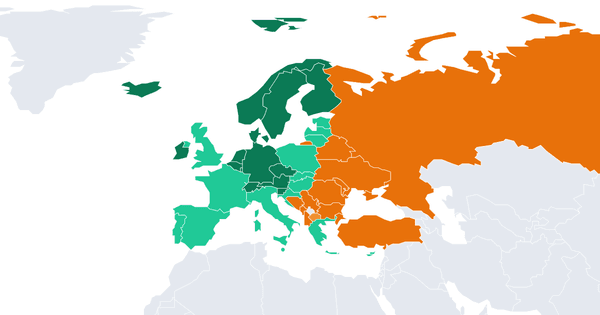
Australia runs Reciprocal Health Care Agreements with Belgium, Finland, Ireland, Italy, Malta, the Netherlands, New Zealand, Norway, Slovenia, Sweden and the United Kingdom. According to Services Australia, they give access to medically necessary care as a public patient in a public hospital, plus some prescription medicines at the subsidized rate. Two of them are narrower than they look: Ireland and New Zealand get public hospital care only, with no coverage for a doctor's appointment outside a hospital, and Italy and Malta are limited to six months from each arrival.
Even for the eleven, an agreement is not a policy. It stops at the edge of the public system, and the gaps it leaves are the ones that cost money on a long-haul trip.
- Ambulance transport: Medicare does not pay for it for anyone, and in most states and territories the ride is billed to the patient.
- Anything planned before you arrived: Care you arranged in advance, or traveled to Australia to receive, sits outside the agreement.
- Care that is not clinically essential: Non-urgent treatment and cosmetic procedures are excluded.
- Private hospital treatment: The agreement covers you as a public patient in a public hospital, and nothing beyond that.
- The journey home: The agreements are about treatment inside Australia, so a medically supervised flight home is never part of them.
Which limits do the plans sold for an Australian trip actually carry?
Emergency medical runs from $250,000 to about $550,000 across the six plans we can quote for Australia, and only Go Explore + reaches the $550,000 floor our destination record recommends for the country. The spread on everything else is wider still.
Guarantee | Go Explore + | Smart Travel Protection | WorldSecure Platinum | World Travel | Go Explore | WorldSecure Basic |
|---|---|---|---|---|---|---|
Emergency medical Hospital and surgery abroad | ≈$550,000 | $250,000* | ≈$330,000 | ≈$330,000 | ≈$270,000 | ≈$330,000 |
Direct billing The hospital bills the insurer, not you | Included | Included | Included | Included | Included | Included |
Repatriation Medically supervised flight home | Actual cost | $500,000 | Actual cost | Actual cost | Actual cost | Actual cost |
Search and rescue Outback, bush and coastal rescue | ≈$6,600 | Not covered | ≈$5,500 | ≈$5,500 | ≈$5,500 | ≈$3,300 |
Maritime evacuation Lift from a boat at sea | Not covered | Not covered | Not covered | Not covered | Not covered | Not covered |
Emergency dental | ≈$330 | $750 | ≈$330 | ≈$220 | ≈$330 | ≈$330 |
Trip cancellation | Not covered | Trip price, max $40,000 (option) | Trip price, max ≈$9,900 (option) | ≈$1,600 | Not covered | Not covered |
Trip interruption | Not covered | $10,000 | Not covered | Not covered | Not covered | Not covered |
Baggage and possessions | ≈$550 | $2,000 | ≈$2,200 | ≈$1,100 | ≈$270 | ≈$1,300 |
Travel delay | Not covered | $2,100 | ≈$160 | ≈$330 | Not covered | Not covered |
Personal liability | ≈$1,600,000 | Not covered | ≈$4,900,000 | ≈$2,200,000 | ≈$1,600,000 | ≈$4,900,000 |
Pre-existing conditions | Not covered | Included | Not covered | Not covered | Not covered | Not covered |
Extreme sports | Not covered | Not covered | Paid option | Not covered | Not covered | Not covered |
Age limit | 80 | 99 | 65 | 84 | 80 | 39 |
Longest trip insured | 365 days | 180 days | 365 days | 365 days | 365 days | 364 days |
Search and rescue and maritime evacuation decide a bad day in Australia more often than the headline medical ceiling does. Not one of the six plans carries a maritime evacuation line, so a lift off a dive boat is settled under the medical and assistance coverage rather than a dedicated one. Search and rescue tops out at about $6,600, on Go Explore +, and Smart Travel Protection does not carry it at all.
Two limits are worth reading in the other direction as well. Repatriation at actual cost, which five of the six carry, is a better shape than a capped amount when the flight home is a long-haul medical transfer. And direct billing, which all six include, is what keeps a hospital from asking you to advance the bill, as long as the assistance service agrees the admission first. If you want the mechanics of those guarantees in detail, our travel medical insurance page goes through them line by line.
Which plans can you buy today for a trip to Australia?
Nine of the 58 public plans in our comparison accept Australia as a destination for a traveler resident in the United States, and six of them return a computed price. The three that do not, Elite Plan, Select Plan and Nomad Plus, are quoted on request and carry emergency medical ceilings of $75,000, $25,000 and $50,000, well under the rest of the field.
Australia has a large domestic insurance market of its own, and we review its plans one at a time, including 1Cover travel insurance and Cover-More travel insurance. The six compared here are the ones our comparison returns for a trip booked from a United States residence. Budget Direct travel insurance has a review of its own as well.
Why we would start with Go Explore + for Australia
You land knowing that if you end up in a public hospital in Cairns or Perth the assistance service settles the bill directly instead of asking you to advance it, and that a medically supervised flight home is organized and paid at actual cost rather than against a ceiling. That is the shape Australia asks for. Go Explore + is the only plan in this shortlist whose emergency medical coverage, about $550,000, reaches the floor our destination record recommends for the country, and it carries the highest search and rescue line of the six at about $6,600, which is the line that pays in the outback and off the coast. It is mid-priced here, not the cheapest, and it carries no cancellation coverage at all. If what you need to protect is a non-refundable long-haul fare, or a condition you already have, Smart Travel Protection is the one to read instead: it is the only plan here whose cancellation can be taken up to the full trip price, and the only one that does not exclude pre-existing conditions. The cards below show today’s price for your own dates and country of residence.
Included coverage
Personalized quote · no obligation
Included coverage
Personalized quote · no obligation
Included coverage
Personalized quote · no obligation
Real quotes captured on October 17, 2026 for one traveler aged 34, 14 days in Australia, departing December 15, 2026, resident in the United States, shown in US dollars. Smart Travel Protection publishes a per-day starting rate; the other plans return the computed price for the whole trip. HelloSafe data. The comparator re-prices automatically for your own country of residence and currency, and the plan list changes with it.
HelloSafe is available as an app inside ChatGPT. Install it from ChatGPT’s Apps tab, then type @HelloSafe and pick “HelloSafe Travel Insurance”: give your destination and dates to compare travel insurance, or ask what your bank card covers.
What does two weeks of cover for Australia cost, profile by profile?
Two weeks in Australia costs from $49.10 to $93.03 to insure for one traveler aged 34, and from $148.58 for a family of four, on real quotes captured on October 17, 2026. Age and length of stay move those figures far more than the destination does.
Who is traveling | Budget | Average | Premium plan | Key point |
|---|---|---|---|---|
Solo traveler, 34 14 days | $49.10 | $75.97 | $83.98 (Go Explore +) | All six plans quote. The cheapest, WorldSecure Basic, stops accepting travelers at 39. |
Couple, 34 and 33 14 days | $98.19 | $151.94 | $162.79 (Go Explore +) | Prices scale almost exactly with the number of travelers at these ages. |
Family of four, 38, 36, 8 and 5 14 days | $148.58 | $202.85 | $202.85 (Go Explore +) | The cheapest family quote is Go Explore, not the plan that is cheapest for one adult. |
Traveler aged 68 14 days | $93.03 | $94.32 | $114.99 (Go Explore +) | Only three plans quote at all: WorldSecure Basic stops at 39 and Platinum at 65. |
Long stay, 34 90 days | $201.55 | $334.63 | $339.80 (Go Explore +) | Ninety days multiplies the cheapest quote by four and the dearest by about three and a half. |
Real quotes captured October 17, 2026, trip to Australia departing December 15, 2026, traveler resident in the United States. Same figures as the table above.
Three drivers explain the whole table. Age removes plans before it raises prices: at 68, two of the six will not quote at all, so the cheapest available quote jumps from $49.10 to $93.03. Duration is close to linear with a premium at the top end, with 90 days running from $201.55 to $380.54. And the destination itself barely moves the needle compared with those two, which is why our travel insurance cost guide is worth reading alongside this one. For the full United States plan set across every destination, see our travel insurance for US travelers page.
Which Australian visas make health cover a condition of the visa?
A student visa does. Subclass 500 carries visa condition 8501, which requires the holder to keep Overseas Student Health Cover for the whole stay, and the Department of Home Affairs checks it when the application is made.
A visitor visa and the eVisitor carry no health-cover condition, so a tourist trip to Australia is insured by choice rather than by rule. Home Affairs still publishes guidance on adequate health insurance for visa holders, and it recommends coverage that includes out-of-hospital services, hospital treatment, pharmaceuticals and ambulance. Ambulance is in that list for the reason set out above: nobody's Medicare pays for it.
Overseas Student Health Cover is a domestic Australian health product bought for the length of a course, and it is written around treatment inside the country. Our Overseas Student Health Cover page sets out what it includes. A travel policy answers the other half of the question, the one about the journey: the canceled flight, the lost bag, the ride home. A working holiday has conditions of its own, and our Australia working holiday visa insurance page covers what a 417 or 462 stay needs.
What will a policy refuse to pay for in Australia?
Five refusals account for most declined claims on this destination: a condition you already had, a sport the wording names, an evacuation by sea, a cancellation nobody bought, and a bill you settled yourself without calling the assistance line first.
- A condition you already had: Five of the six plans exclude pre-existing conditions outright. Smart Travel Protection is the only one that includes them.
- A sport the wording names: Extreme sports are excluded on five plans and sit behind a paid option on WorldSecure Platinum.
- Evacuation by sea: No plan in our comparison carries a maritime evacuation line, on any destination.
- A cancellation you did not buy: Go Explore, Go Explore + and WorldSecure Basic carry no cancellation coverage at all, and World Travel caps it at about $1,600.
- A trip cut short: Only Smart Travel Protection pays trip interruption, up to $10,000. The other five pay nothing for the days you lose.
Against that, the criteria worth checking before you buy for Australia specifically:
- Emergency medical of about $550,000: The floor our destination record sets for the country, because care is costly and the nearest specialist hubs are far away.
- Repatriation at actual cost: A capped repatriation is the wrong shape for a long-haul medical transfer. Five of the six plans pay the real cost.
- Direct billing: All six include it, which is what stops a hospital asking you to advance the bill.
- Search and rescue of at least $5,500: The line that pays for a rescue in the bush or off the coast, and the one Smart Travel Protection leaves out.
- Personal liability of about $550,000: Our destination record recommends it for Australia because the legal system is common law and so much of the trip happens outdoors.
The procedural trap is simpler than any of these and costs more claims. Direct billing only works if the assistance service agrees the admission, so the order of events matters:
- Call the 24-hour assistance number on your certificate before you are admitted, not after.
- Let the assistance service deal with the hospital directly, which is what triggers the no-upfront-payment coverage.
- Keep every invoice, the discharge summary and the prescriptions.
- File the claim within the deadline the wording sets, with the carrier or police report attached for anything involving baggage.
Cancellation has its own timing rule: it only answers for a reason that arises after the policy is bought, which is why trip cancellation insurance is worth adding at the moment the flights are booked rather than the week before departure.
Are diving, surfing and a rescue in the bush covered?
Recreational diving and surfing are covered as leisure sport on all six plans, but only WorldSecure Platinum offers an extreme sports option, and none of the six carries a line for evacuation by sea.
The distinction that decides a claim is the one between leisure sport and the activity the wording calls extreme or competitive. A guided reef dive at recreational depth usually sits on the first side of that line and a technical dive, a competition or an organized adrenaline activity on the other. Where the second is a real part of the trip, the option on WorldSecure Platinum is the only switch available in this plan set, and our extreme sports travel insurance page explains how the option changes the wording.
Inland, the number to look at is search and rescue. It runs from about $3,300 on WorldSecure Basic to about $6,600 on Go Explore +, with three plans at about $5,500 in between, and Smart Travel Protection carries none. That is the line that answers when somebody has to come and find you a long way from a road.
Seasonally, our destination record flags wildfire as a recurring disruption to roads and flights in Australia, with travel delay as the guarantee it touches. Only three of the six plans pay anything there: Smart Travel Protection up to $2,100, World Travel about $330 and WorldSecure Platinum about $160. The other three pay nothing for a delay, however long it runs.
Is your travel card's medical cover enough for Australia?
No. The highest-scoring United States travel card in our card database, Chase Sapphire Reserve at $795 a year, caps emergency medical abroad at $2,500 and applies a $50 deductible to it. Set that against the $550,000 our destination record recommends for Australia.
It gets thinner higher up the fee table. Amex Platinum, at $895 a year, carries no emergency medical coverage abroad at all, and neither does Citi Prestige at $495 or Bank of America Premium Rewards Elite at $550. Where premium cards are genuinely useful is trip cancellation, where Sapphire Reserve pays up to $10,000 per person, but the cancellation benefit on a card answers a named list of reasons and never fills the medical gap beside it. Our credit card travel insurance page goes card by card through what is actually in the benefit guides.
For Australia the arithmetic is blunt. A $2,500 ceiling covers an evening in an emergency room. It does not cover an admission, a transfer to a larger hospital, or the flight home.
Which travelers need more than an entry-level plan for Australia?
Four groups should not take the cheapest quote on this destination, and our own price runs show why.
- Travelers over 65
At 68 only three of the six plans quote, from $93.03 for two weeks, because WorldSecure Basic stops at 39 and WorldSecure Platinum at 65. Our senior travel insurance page covers the age caps plan by plan. - Families
$148.58 insures two adults and two children for two weeks, and the cheapest family plan is not the cheapest solo plan. See family travel insurance. - Long stays and working holidays
Ninety days runs from $201.55, and the age caps bite harder the longer the stay. Start with Australia working holiday visa insurance if that is the trip. - Anyone with a medical history
Only Smart Travel Protection includes pre-existing conditions, and it is sold in bundles, so read our review of the plan before buying on price alone.
Students are a separate case: the visa condition comes first, and student travel insurance sits alongside it rather than replacing it. Everyone else can start from the travel insurance comparison and change the dates, the ages and the country of residence to get their own quotes rather than ours.
Your questions about insuring a trip to Australia
Not for a tourist trip. A visitor visa and the eVisitor carry no health-cover condition. A student visa is different: subclass 500 carries condition 8501, which requires Overseas Student Health Cover for the whole stay, and Home Affairs checks it at application.
Only visitors from the eleven countries that hold a Reciprocal Health Care Agreement with Australia: Belgium, Finland, Ireland, Italy, Malta, the Netherlands, New Zealand, Norway, Slovenia, Sweden and the United Kingdom. The United States is not among them, so a traveler from there pays the full cost of care as a private patient.
From $49.10 for two weeks for one traveler aged 34, rising to $93.03 for the dearest of the six plans that quote, on prices captured on October 17, 2026, for a departure from the United States. A family of four starts at $148.58 and 90 days starts at $201.55.
About $550,000. That is the emergency medical floor our destination record sets for Australia, because care is expensive and the country is far from the nearest specialist hubs. Of the six plans that quote for the destination, only Go Explore + reaches it; the rest sit between $250,000 and about $330,000.
No. Medicare does not pay for ambulance transport for anyone, residents included, and in most states and territories the trip is billed to the patient. It is explicitly outside the reciprocal health care agreements, so a policy with an assistance line is the only thing that answers for it.
Recreational diving is covered as leisure sport on all six plans that quote for Australia. What is not covered is the activity the wording calls extreme or competitive, excluded on five plans and available as a paid option only on WorldSecure Platinum. None of the six carries a maritime evacuation line, so a lift from a boat is handled under the medical and assistance coverage.
Yes, under the search and rescue guarantee, which runs from about $3,300 on WorldSecure Basic to about $6,600 on Go Explore +, with three plans at about $5,500 between them. Smart Travel Protection carries no search and rescue line at all, which is the gap to check if the trip goes inland.
Yes, but the field narrows. Go Explore and Go Explore + accept travelers up to 80, World Travel up to 84 and Smart Travel Protection up to 99. WorldSecure Basic stops at 39 and WorldSecure Platinum at 65, so both drop out well before 70.
Not to any useful level for medical care. The highest-scoring United States travel card in our card database, Chase Sapphire Reserve, caps emergency medical abroad at $2,500 with a $50 deductible, and several cards costing more than that a year carry no medical coverage abroad at all. Card cancellation benefits are stronger, at up to $10,000 per person on that card.
It satisfies the visa, which is its job. It is a domestic Australian health product bought for the length of a course and built around treatment inside the country, so it is not written around the journey: the canceled flight, the lost bag and the trip home are a separate question.
As soon as the flights are booked if cancellation matters, because a cancellation guarantee only answers for a reason that arises after the policy starts. On timing alone, four of the six plans quote with no notice at all, while Go Explore and Go Explore + must be bought at least one day before departure.
On the same topic

Cheapest Asian Countries to Visit in 2026
Oct 24, 2026

The most visited countries in the world in 2026
Oct 24, 2026

Cheapest European Countries to Visit in 2026
Oct 23, 2026