Travel insurance to Australia: from $3.56 a day, and the hospital night that costs $2,363
- ⚡️ Instant Certificate
- 🆘 24/7 Assistance without upfront costs
- 🔐 Secure Payment
 A. FruchardCo-Founder & Travel Insurance ExpertLast updated: November 10, 2026
Is travel insurance to Australia worth it when the country is this safe?
Travel insurance to Australia starts at $3.56 a day for a traveler of 34, and the reason to buy it is not danger: a public hospital bills a patient who is not eligible for Medicare $2,363 for a single night on an ordinary ward, before any doctor has billed at all.
Australia reads like a low-risk destination, and on most measures it is. The trap is the billing rule, not the country. Australia's Medicare pays for residents and for visitors from eleven countries that signed a reciprocal health agreement. The United States is not among them, so a visitor arriving on a US passport is charged the overseas-visitor tariff, which is the highest rate the hospital has.
We priced the whole market for this trip on November 9, 2026: five plans quote for a 14-day stay leaving the United States, from $49.83 to $94.42. We then read what each one promises in its binding policy wording rather than its brochure, and found a clause that switches search and rescue off in exactly the part of Australia where you would need it. That clause, the hospital schedule and the diving question below are the whole of this page. Updated November 9, 2026.
Every year, our experts audit each plan against its binding policy wording: coverage, limits and exclusions, cross-checked with real customer feedback and live market prices. The analysis is fully independent, with zero paid placements and no insurer able to pay to influence a rating. We compare travel insurance across every country and currency, using the plans, prices and coverage actually offered in your country, not a single guide translated.
Learn moreWho does Australia's reciprocal health agreement actually cover?
Eleven countries, and the United States is not one of them. Australia's Reciprocal Health Care Agreements cover visitors from the United Kingdom, Ireland, New Zealand, the Netherlands, Belgium, Finland, Norway, Sweden, Slovenia, Italy and Malta. Everyone else pays the overseas-visitor tariff in full.
The agreement is narrower than its name suggests even for the people it does cover. Services Australia limits it to medically necessary treatment and excludes ambulance travel, private hospital care, public hospital care taken as a private patient, and any treatment you traveled to Australia to receive. Italy and Malta are covered only for the first six months after each arrival, and visitors from Ireland and New Zealand are not enrolled in Medicare at all: they get public hospital care and some subsidized medicines, nothing more.
Where you are traveling from | Coverage under the reciprocal agreement | What you still pay yourself |
|---|---|---|
United States The reference market for the prices on this page | No agreement | Every line of the hospital's overseas-visitor schedule, plus the ambulance, pathology and pharmacy |
United Kingdom, Netherlands, Belgium, Finland, Norway, Sweden, Slovenia Agreement in force | Medically necessary care only | Ambulance, private hospital care, care as a private patient, anything you traveled for |
Italy, Malta Agreement limited in time | First six months after each arrival | The same exclusions, and everything after six months |
Ireland, New Zealand Agreement without Medicare enrollment | Public hospital care and some medicines | Doctor visits outside hospital, ambulance, private care |
Even where it applies, the agreement stops at medically necessary public treatment. It pays nothing toward an ambulance, nothing toward a flight home and nothing toward a trip you have to abandon. Those three are what a policy is for, and they are the three biggest bills Australia can produce.
What is our Australia monitor flagging right now?
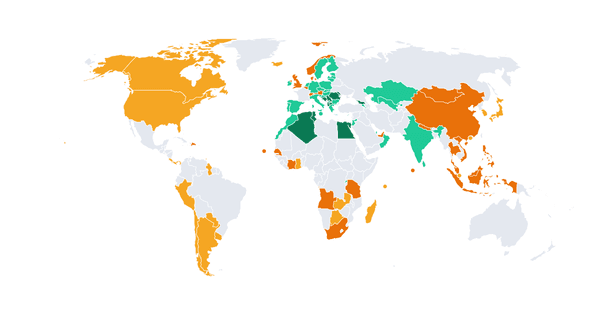
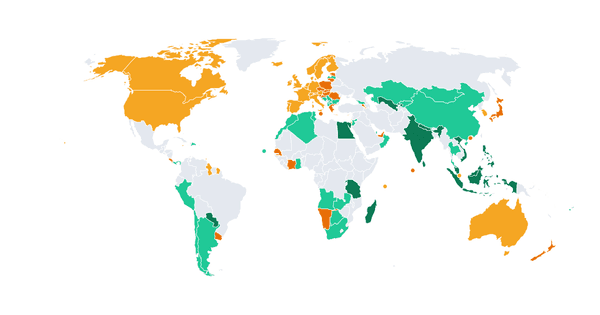
All three signals are lit. Our destination monitor last refreshed Australia on October 29, 2026 and records wildfires active since October 20, with transport disruption from the same fires, and the cost of care for non-residents as the standing medical risk.
Signal | Status | What our monitor records |
|---|---|---|
Climate Fires, storms, floods | Orange, active event | Forest fires active in Australia since October 20, 2026. Ongoing wildfires may disrupt travel, close roads or force evacuations. Source: Global Disaster Alert and Coordination System (GDACS), wildfire event 1033274. |
Transport Flights, roads, public transport | Orange | Wildfire-related disruption: flight delays, road closures and public transport interruptions, from the same fires. |
Medical Cost of care for non-residents | Orange | Very high medical costs for non-residents, requiring significant out-of-pocket expenses. A structural signal, not an event. |
The same monitor ranks the coverage worth prioritizing for Australia, in this order: emergency hospital and medical costs with a floor around $560,000, then medical repatriation around $168,000, then trip cancellation around $8,960, then baggage around $1,680, then personal liability around $560,000. The sections below work through the ones that decide an Australian claim, with what the plans that actually quote for this trip pay.
Which plans quote travel insurance to Australia, and what separates them?
Five plans quote for a 14-day trip to Australia leaving the United States, from $49.83 to $94.42. What separates them is not the headline medical ceiling, which three of the five share, but the age they stop at, whether scuba diving is named, and whether search and rescue still works in the outback.
Three of the five carry the same emergency medical ceiling, about $330,000, so the choice is decided elsewhere. Two things decide it on this destination: the age limit, which runs from 39 to 84 across the shortlist, and the small print on sport and rescue, which is where Australia differs from every other long-haul destination we price.
Plan | Emergency medical | Repatriation | Search and rescue | Scuba diving | Personal liability | Age limit |
|---|---|---|---|---|---|---|
Go Explore + The highest ceiling | about $560,000 | Actual cost | about $6,700 desert searches excluded | Named as leisure diving | about $1,700,000 $168 deductible | 80 |
WorldSecure Platinum The one with a diving option | about $330,000 | Actual cost | about $5,600 only when life is in danger | Tanks only with the high-risk option | about $5,000,000 $112 deductible | 65 |
Go Explore The mid plan | about $280,000 | Actual cost | about $5,600 desert searches excluded | Named as leisure diving | about $1,700,000 $168 deductible | 80 |
World Travel The one that still quotes at 80 | about $330,000 $56 deductible | Actual cost | about $5,600 not after a dangerous sport | Not named | about $2,200,000 $168 deductible | 84 |
WorldSecure Basic The entry price | about $330,000 | Actual cost | about $3,300 only when life is in danger | Named in standard leisure sport | about $5,000,000 $112 deductible | 39 |
Why Go Explore + is our pick for Australia
For Australia the plan to beat is Go Explore +. It is the only one on this shortlist whose emergency medical ceiling, about $560,000, reaches the floor our destination monitor sets for the country, and the hospital is billed directly, so nothing leaves your own account at the admissions desk. It names diving and surfing in its standard leisure sports, which counts for more here than almost anywhere, and it carries the largest search and rescue line of the five, about $6,700. It is one of the pricier plans on our shortlist rather than the cheapest, and it buys roughly twice the medical ceiling of the plan just below it. Two caveats are real. Its search coverage excludes desert areas, so a trip built around the outback is better served by WorldSecure Platinum or WorldSecure Basic, and it carries no trip cancellation at all. The cards below show today’s price for your own dates and party.
Included coverage
Personalized quote · no obligation
Included coverage
Personalized quote · no obligation
Included coverage
Personalized quote · no obligation
Included coverage
Personalized quote · no obligation
Included coverage
Personalized quote · no obligation
Prices for 1 traveler aged 34, 14 days in Australia, departing from the United States, shown in US dollars. HelloSafe data, quotes captured on 9 November 2026. Your own dates, age and party change the price.
HelloSafe is available as an app inside ChatGPT. Install it from ChatGPT’s Apps tab, then type @HelloSafe and pick “HelloSafe Travel Insurance”: give your destination and dates to compare travel insurance, or ask what your bank card covers.
How much does travel insurance to Australia cost at 34, at 68 and for a family?
Two weeks of coverage costs from $49.83 for a traveler of 34, from $94.42 at 68 and from $150.81 for a family of four. Age is what moves the price on this destination, and it also decides how many plans agree to quote at all.
Who is traveling | Budget | Average | Premium | Key point |
|---|---|---|---|---|
Solo traveler, 34 Two weeks | $49.83 | $77.10 | $85.24 Go Explore + | All five plans quote, the widest choice of the four profiles. |
Family of four, 38, 36, 9 and 6 Two weeks, party total | $150.81 | $205.88 | $205.88 Go Explore + | Four people cost about three times one adult: children are priced well below adults. |
Traveler of 68 Two weeks | $94.42 | $95.73 | $116.72 Go Explore + | Only three plans still quote. The two WorldSecure plans stop at 39 and at 65. |
Backpacker, 25 Three months | $204.58 | $339.65 | $344.90 Go Explore + | Six times the stay for about four times the two-week price. |
The same quotes as the table above, captured November 9, 2026. The family bar is the total for the party.
Two readings matter. Age moves the price harder than party size: one traveler of 68 pays nearly twice what a traveler of 34 pays for the same two weeks, and loses two of the five plans while doing it, which is the argument our senior travel insurance page makes in detail. Duration, by contrast, is cheap, which is why a long Australian road trip is rarely the expensive case. Prices behave the same way across our travel insurance comparison; what is specific to Australia is the size of the bill they keep off your account.
What does an Australian public hospital bill a patient it cannot put on Medicare?
$2,363 for one night on a ward and $2,253 for a same-day admission, with specialists billing separately at $159 to $795 each. Those are the 2026 to 2027 fees published by a Western Australian health service for patients who are not eligible for Medicare.
These are not estimates. Australian public hospitals publish a schedule for overseas patients, and the one below is the 2026 to 2027 schedule of the Sir Charles Gairdner Osborne Park Health Care Group in Perth, which also sets the fees at King Edward Memorial and Graylands hospitals. Pathology, pharmacy and prostheses are billed on top of every line in it, and so is the ambulance that brought you in.
What you are billed for | Fee |
|---|---|
Inpatient, overnight Per night | $2,363 |
Inpatient, same day Observation ward included | $2,253 |
Outpatient consultation Per occasion, telehealth included | $274 |
Consultant specialist and physician fees | $159 to $795 |
Computed tomography | $152 to $3,018 |
MRI study, up to three contiguous regions | $1,457 to $2,959 |
PET whole-body study | $2,181 to $2,976 |
X-ray | $120 to $3,812 |
What those line items add up to is on the public record too. NSW Health published four case studies on January 31, 2019: an uninsured visitor who went into cardiac arrest ran up close to $121,000 across two episodes of care, and another spent almost six weeks in intensive care for more than $187,000. New South Wales alone treats about 16,000 patients a year who are not eligible for Medicare. Set against those figures, the smallest ceiling on our shortlist, about $280,000, buys roughly 118 nights on a ward.
Does search and rescue still work once you leave the coast?
Not on every plan. Both Go Explore plans cover search and rescue on private ground as well as public, then exclude searches in desert areas in the same clause, which takes out most of the interior of the continent.
The desert exclusion is the clause to read twice before an Australian trip. Red Centre drives, Kimberley tracks and remote national parks are exactly where a search costs real money, and exactly what those two plans carve out. The five split three ways on how their rescue coverage is written:
- WorldSecure Basic and WorldSecure Platinum: About $3,300 and about $5,600, triggered whenever the event puts your life in danger, with no geographical carve-out. Only costs billed by an approved rescue body are reimbursed.
- Go Explore and Go Explore +: About $5,600 and about $6,700, the largest lines on the shortlist, on private ground as well as public, but searches in desert areas are excluded and a cap applies per person and per event.
- World Travel: About $5,600, and the search must follow an accident the policy covers. If you are found unharmed the payout is halved, and a search connected with a dangerous sport or with a breach of the site operator's safety rules is excluded.
Read that against the itinerary you are actually planning. A coastal run between Sydney, Byron Bay and Cairns never touches the exclusion. A loop through Uluru, the Pilbara or the Nullarbor does, and on that trip the entry-priced WorldSecure Basic covers rescue more reliably than the two plans carrying bigger rescue ceilings.
Is scuba diving on the Great Barrier Reef inside your policy?
On three of the five plans, and only as leisure diving. WorldSecure Basic names scuba diving in its standard leisure sports, both Go Explore plans name diving and surfing, and WorldSecure Platinum covers tanks only if you add its high-risk sports option before you buy.
Diving is the single activity most likely to decide an Australian claim, because the reef is why a large share of visitors fly there in the first place. What trips people up is not whether diving is covered but which guarantee covers it, and when you have to say so:
- The high-risk option cannot be added later: WorldSecure Platinum's wording is explicit: the option is chosen when you take out the policy and cannot be added afterwards. Book the dive after you buy the policy and the tanks are outside it.
- Personal liability does not follow you underwater on the Go Explore plans: Their medical coverage treats diving as leisure sport, but their personal liability excludes scuba diving outright. Free diving to less than 50 meters stays covered.
- World Travel does not name diving at all: It covers amateur leisure sport in general terms and excludes searches connected with a dangerous sport, which is the weakest combination of the five for a reef trip.
- No plan covers competition or professional diving: All five exclude competitions run by a sports federation and the training for them, and any sport practiced professionally.
If your trip is built around the reef, or around anything an insurer files under high risk, compare on the sport clause first and the price second. Our page on extreme sports travel insurance goes through which activities each plan names. Ticking the extreme sports option in the comparator is the declaration: there is no separate form to send the insurer.
Do you need a visa for Australia, and what does it cost?
Yes, though it is a travel authorization rather than a visa as such. A US passport holder needs an Electronic Travel Authority, subclass 601: no visa application charge, a service charge of about $14, up to three months per entry and as many entries as you like across twelve months.
The Australian Embassy in the United States is blunt about how to get one: the ETA can only be applied for through the official Australian ETA app, and any site charging more than the official service charge is not legitimate. Three more things the border expects:
- A yellow fever certificate, in one case only
Required from the age of one if you are arriving from, or have transited more than 12 hours in, an at-risk country. Nothing else is compulsory. - Vaccines recommended, not required
Hepatitis B, rabies for anyone whose plans bring them close to animals, Japanese encephalitis for the Torres Strait Islands and the Murray River between December and May, and mpox. - Duty-free and cash rules from the age of 18
2.25 liters of alcoholic drinks and 25 cigarettes or 25 grams of tobacco. Any sum of 10,000 Australian dollars or more, foreign currency and bearer instruments included, must be declared on arrival and on departure.
Australia asks for no proof of coverage at the border, and that is the trap: nobody mentions the overseas-visitor tariff until a hospital reception desk does. The ETA settles your entry and nothing else. The coverage compared above is what settles the bill.
Which conditions decide whether an Australian claim is paid?
Four, and the first refuses more claims than the other three together: every plan on this shortlist excludes conditions you already knew about before leaving, and four of the five stretch that exclusion to assistance and repatriation as well.
- Pre-existing conditions are excluded on all five: The wording defines a covered illness as a sudden, unforeseeable deterioration in health. The Go Explore and WorldSecure plans go further and exclude assistance and repatriation for any condition that put you in hospital, day cases included, in the six months before departure.
- Buying after you have left costs you five days: Go Explore + states that a five-day waiting period may apply if you take the policy out once the trip has already started, and that any hospital admission must be reported within 24 hours of the date on the admission form.
- Electronics sit under a tiny sub-limit: Laptops and phones are capped at about $110 inside the baggage guarantee on both Go Explore plans, covered only in a safe or carried on you, and not at all once they are handed to a carrier. A flight to Australia is a long time in a hold.
- The deadlines are short and they are strict: 48 hours to report a theft on the Go Explore and WorldSecure plans, 24 hours to the authorities and the carrier then 10 days to the insurer on World Travel, and nothing arranged without the assistance service's prior agreement is reimbursed.
All five plans pay a medical repatriation at actual cost, which matters on a route this long. What the wording also says is that the assistance doctor decides the date, the means of transport and the hospital you are taken to, after speaking to the doctor treating you locally. Refusing the solution they propose ends the assistance coverage, and anything you organize yourself is not reimbursed. Call the assistance line before you book a flight home.
Cancellation is the thinnest guarantee on this route. World Travel includes it as standard, up to about $1,700, and reimburses the transport ticket only, not your accommodation, provided you declare the cancellation within 48 hours. WorldSecure Platinum's cancellation is an option whose wording restricts it to travelers living in France, so it is not the answer on a trip starting in the United States. If a prepaid Australian trip is what worries you most, read our page on travel cancellation insurance before choosing on medical ceilings alone.
How much of an Australian hospital bill does a US travel card pay?
Less than one night of it. The strongest emergency medical benefit on a mainstream US travel card is $2,500 with a $50 deductible, against a ward night of $2,363 with specialists billing on top, and even that benefit pays only after your own health plan has.
The Chase Sapphire Reserve is the best of them and it still falls short. Its $2,500 emergency medical benefit carries a $50 deductible, is secondary to any other valid insurance, and excludes conditions advised on or treated in the 60 days before the trip. Its exclusion list names scuba diving outright, which is exactly what many travelers fly to Australia to do. Its evacuation benefit, $100,000, is real, but it has to be pre-authorized before the transport is arranged.
Below that card the picture thins fast. The Citi Prestige has carried no travel insurance at all since September 22, 2019: no emergency medical, no evacuation, no baggage, no cancellation. Across the US cards we analyze, only four score 3.5 or more, and the best medical benefit among them is the same $2,500. Where the cards are genuinely strong is cancellation and delay, not medicine: the Sapphire Reserve pays up to $10,000 per person across 13 covered reasons, more than any plan on our shortlist. So split the job. Pay for the trip with a good travel card and keep its cancellation and baggage benefits, then buy a policy for the hospital. For the detail on your own card, see what US credit cards really pay.
What else do travelers ask before flying to Australia?
No. Australia sets no insurance requirement for a tourist entry and nobody checks for a policy at the border. What makes coverage necessary is the bill afterwards: a public hospital charges a patient who is not eligible for Medicare $2,363 for one night on an ordinary ward, under the 2026 to 2027 overseas-patient schedule we read.
Our destination monitor puts the floor around $560,000 for Australia. Three of the five plans that quote carry about $330,000, Go Explore reaches about $280,000, and only Go Explore + meets the floor at about $560,000. Even the smallest of those ceilings buys roughly 118 nights on a ward at the published tariff.
No. US Medicare generally pays nothing outside the United States, and Australia’s own Medicare is open to residents and to visitors from the eleven reciprocal-agreement countries, which do not include the United States. Both doors are shut, which is why the overseas-visitor tariff applies in full.
Not by the reciprocal agreement, which excludes ambulance travel, and not by Australia’s Medicare for a visitor. Australian states charge for ambulances separately. It falls under the emergency medical guarantee of your policy, which is one more reason the medical ceiling is the figure to compare on this destination.
They move cancellation and delay up the list. Our monitor has recorded fires active since October 20, 2026 and flags road closures and flight disruption from them. On this route World Travel is the plan carrying both as standard: cancellation of the transport ticket up to about $1,700, and delay coverage from four hours.
Before you leave, and for the sports option, before you buy the policy itself. Go Explore + states that a five-day waiting period may apply if you take the policy out once the trip has started, and WorldSecure Platinum’s high-risk sports option cannot be added after enrollment.
It pays the hospital. All five plans that quote for Australia include direct billing, so you are not advancing a five-figure sum at an admissions desk and claiming it back weeks later. Their 24/7 assistance line arranges it, and that line runs with no cap on all five.
WorldSecure Basic stops at 39, WorldSecure Platinum at 65, both Go Explore plans at 80 and World Travel at 84. At 68 only three of the five still quote, from $94.42 for two weeks, which is nearly twice what a traveler of 34 pays for the same trip.
From $204.58 for a traveler of 25, against $49.83 for two weeks. Six times the stay costs about four times the price, so length is the cheap variable on this destination and age is the expensive one.
Four things above all: conditions you knew about before leaving, laptops and phones handed to a carrier, which sit under a sub-limit of about $110 on the Go Explore plans, searches in desert areas on those same two plans, and scuba diving with tanks on WorldSecure Platinum unless the high-risk option was taken at enrollment.
On the same topic
The most expensive cities in the world in 2026
Nov 9, 2026

The strongest passports in the world in 2026
Nov 10, 2026
Cheapest Asian Countries to Visit in 2026
Nov 4, 2026