World Nomads Epic Plan 2026: review, prices and coverage
- 🕵️♂️ Independent expert
- 📊 Over 90 formulas compared
- 🏆 Best alternatives
 P. LauroreCo-founder & Travel and Credit Card Insurance ExpertLast updated: October 15, 2026
What does the Epic Plan add to the Standard plan, benefit by benefit?
This World Nomads Epic Plan review is built on the plan's own documents, form F400P: $250,000 of emergency medical expense, $700,000 of evacuation and repatriation, and trip cancellation worth up to 100% of a trip costing as much as $15,000, which is six times the ceiling on the Standard plan.
Epic is the upper of the two World Nomads plans a US resident can reach on hellosafe.com. The lower one is the Standard plan, form F400B. We read both sets of plan documents side by side for this review, so every comparison below comes from the two Schedules of Benefits themselves and not from a marketing page. Reviewed on September 11, 2026.
We score the Epic Plan 3.5 out of 5. It earns that score on the money you have already spent rather than on the hospital: the cancellation and interruption ceilings, the $5,000 trip delay allowance, the $3,000 baggage benefit and the optional 75% cancel-for-any-reason upgrade are all well above what the Standard plan offers. It loses points for a medical maximum of $250,000 that is modest for a US traveler, for a clause that makes the whole plan pay second behind your own health insurance, and for a rule that stops the benefits adding up once one large claim is paid.
One thing to know before you read further: check that you are reading the right documents. The first page of the plan documents says Product: Epic Plan, Plan #: F400P, which is the plan this page reviews, while the Standard plan is form F400B.
World Nomads sells two plans to US residents under different form numbers, so the plan documents are the only reliable way to know which one you are buying. Ask World Nomads for the F400P plan documents before you pay, and check that the first page names Plan #: F400P.
Every year, our experts audit each plan against its binding policy wording: coverage, limits and exclusions, cross-checked with real customer feedback and live market prices. The analysis is fully independent, with zero paid placements and no insurer able to pay to influence a rating. We compare travel insurance across every country and currency, using the plans, prices and coverage actually offered in your country, not a single guide translated.
Learn moreWhich benefits does the upgrade actually multiply?
Moving from the Standard plan to the Epic Plan multiplies twelve ceilings and leaves four untouched. The largest jump is trip cancellation and trip interruption, which go from $2,500 to $15,000, a six-fold increase. The smallest is the passport replacement benefit, which stays at $100 on both.
Benefit | Standard plan (F400B) | Epic Plan (F400P) | What the upgrade changes |
|---|---|---|---|
Trip cancellation* Before you leave | $2,500 | $15,000 | 6x |
Trip interruption* Once you are away | $2,500 | $15,000 | 6x |
Trip delay Per day, and in total | $250 a day, max $1,000 | $500 a day, max $5,000 | 5x the total |
Accident and sickness medical expense Treatment abroad | $125,000 | $250,000 | 2x |
Dental sublimit Inside the medical benefit | $750 | $1,000 | +$250 |
Medical evacuation and repatriation of remains Getting you home | $400,000 | $700,000 | 1.75x |
Political, security and natural disaster evacuation Getting you out | $25,000 | $50,000 | 2x |
Baggage and personal effects Lost, stolen, damaged | $1,000 | $3,000 | 3x |
Per-article baggage limit The most one item can claim | $500 | $1,000 | 2x |
Baggage delay Buying what you need meanwhile | $150 a day, max $750 | $250 a day, max $1,250 | 1.7x the total |
Accidental death and dismemberment 24 hour benefit | $7,500 | $12,500 | 1.7x |
Baggage return Shipping your bags home | $1,000 | $1,000 | Unchanged |
Traveling companion hospitalization Staying with someone admitted | $150 a day, 5 days | $150 a day, 5 days | Unchanged |
Passport, visa and travel document replacement | $100 | $100 | Unchanged |
Credit card charges and interest | $100 | $100 | Unchanged |
The five money benefits where the two plans differ most, in US dollars. Figures copied from the table above, read from forms F400B and F400P on September 11, 2026.
The medical column is the one worth pausing on. Doubling from $125,000 to $250,000 sounds decisive, and for a broken leg in Portugal it is. For a week in an intensive care unit in a country where you are treated as a private patient, $250,000 is a real ceiling rather than a theoretical one, and this plan has no option to buy a higher one.
Which benefits do not exist on the lower tier at all?
Six benefits appear on the Epic Plan schedule and nowhere on the Standard plan schedule. They are the reason the upgrade is not simply a set of bigger numbers: several of them cover events the lower plan does not recognize as a loss at all.
- Optional cancel for any reason, up to 75%: You must add it when you enroll, pay the extra plan cost, buy within seven days of your first trip deposit, and cancel no later than two days before departure.
- Missed connection, $5,000: Pays if you miss your departure because your arrival is delayed three consecutive hours or more by a documented carrier delay, documented bad weather, quarantine, hijacking, a strike, a natural disaster, terrorism or civil disorder.
- Rental car damage, $50,000: Starts when you sign the rental agreement and take possession of the car, provided the plan cost was paid on the contracted departure date.
- Trip exchange, up to 50% of trip cost to a maximum of $5,000: Covers the price difference and the change fees when you move your trip instead of canceling it. It cannot be combined with trip cancellation or trip interruption.
- Travel inconvenience, $250 an event to a maximum of $750: Covers a closed ski resort, a tarmac delay of two hours, a cruise that skips a port, or arriving home two or more days late and missing work.
- Pet kennel, $400: Extra boarding costs when a delay on the way home leaves your animal in kennels longer than booked.
The cancel-for-any-reason option is the one most people are shopping for, and the 75% refund it offers is the market standard rather than a World Nomads quirk. If that is what brought you here, our guide to cancel for any reason travel insurance compares the plans a US resident can buy it on, and the deadlines each one sets.
Which medical maximum will actually be paid?
The Epic Plan pays a maximum of $250,000 of accident and sickness medical expense, and that is the figure this page uses everywhere. It is the ceiling the Schedule of Benefits sets, and if you see a higher medical figure for this plan anywhere, the plan documents decide what a claim pays.
What it is | Good to know | What form F400P says | Status |
|---|---|---|---|
Accident and sickness medical expense The headline medical number | Includes a $1,000 dental sublimit | $250,000 | No higher option |
Medical evacuation and repatriation The air ambulance number | Separate from the medical maximum | $700,000 | Separate ceiling |
Trip delay The daily allowance | $500 a day | $500 a day to a maximum of $5,000 | Per day and in total |
Trip cancellation and interruption | Up to 100% of non-refundable trip cost | $15,000 each | Capped per traveler |
Baggage and personal effects | Per-article limit of $1,000 | $3,000 | Per traveler |
Rental car damage | Starts when you take possession of the car | $50,000 | Epic only |
Accidental death and dismemberment | 24 hour benefit | $12,500 | Per traveler |
Baggage delay | Buying what you need meanwhile | $250 a day to $1,250, plus $50 to expedite | Included |
Missed connection | After a delay of three hours or more | $5,000 | Epic only |
Political, security and natural disaster evacuation | Getting you out | $50,000 | Included |
Skiing | Seasonal dates and resort altitude apply | Covered in three separate places | Covered |
If you see a higher medical figure for this plan anywhere, check it against the plan documents. The Schedule of Benefits of form F400P sets accident and sickness medical expense at $250,000 with a $1,000 dental sublimit, and no option exists to buy a higher maximum. A US traveler who wants a larger medical backstop needs a different plan, not a different version of this one.
Does your own US health plan pay before this one?
Yes. The Epic Plan is secondary coverage across the whole contract, not only on medical bills. The General Provisions section says it plainly: insurance provided by this policy shall be in excess of all other valid and collectible insurance or indemnity, and where other coverage exists the insurer is liable only for the excess over it.
For an American traveler that sentence decides what this plan is for. If your employer health plan, your marketplace policy or your credit card already covers part of a foreign hospital bill, the Epic Plan pays what is left after they have paid, not the whole bill. If nothing else of yours travels, it pays from the first dollar, because there is no deductible and no coinsurance split anywhere in the Schedule of Benefits. Both are worth checking before you buy: a plan that pays second on top of a policy that pays nothing abroad is, in practice, a plan that pays first.
The excess insurance clause says the plan pays behind everything else you hold. Elsewhere, the medical benefit promises advance payment: if you need to be admitted to a hospital, the assistance provider arranges payment directly to the facility, up to the maximum benefit amount, provided you agree to repay anything later found not to be covered. Both are in force. The advance is a cash-flow service, not a promise to pay first, and it can be withdrawn if the insurer confirms the claim is not covered. Read the plan as secondary, and treat the advance as the thing that stops you handing over a credit card at the admissions desk.
The plan is also not health insurance and is not a substitute for it. It covers a sickness that first shows itself or an injury that happens during a trip of 180 days or less, and nothing incurred after you get home. If what you actually need is medical coverage abroad rather than protection for the money you spent on the trip, our guide to travel medical insurance for US travelers compares the plans built for that job.
Why do these benefits stop adding up after the biggest one?
The Epic Plan carries a limitation on multiple benefits that most summaries never mention. If one covered unforeseen event triggers several benefits at once, the total paid across all of them cannot exceed the single largest maximum benefit amount among them.
The clause names about twenty benefits, including trip cancellation, trip interruption, missed connection, trip delay, cancel for any reason, trip exchange, medical expense, medical evacuation, accidental death, baggage, baggage delay, rental car damage, travel inconvenience and pet kennel. In other words, nearly the whole plan.
Worked through: a serious accident abroad that produces a $180,000 hospital bill, a $90,000 air ambulance and a $15,000 interrupted trip adds up to $285,000 on paper. Because all three come from the same unforeseen event, the plan pays up to the largest single ceiling that applies, $700,000 for medical evacuation, so in this example everything is still paid. Reverse the shape and it bites: a $4,000 baggage loss and a $3,000 delay claim caused by the same event share the $3,000 baggage ceiling, not $7,000.
Add your benefits up only when the losses come from different unforeseen events. Losses from the same event are capped at the largest single maximum benefit amount that applies to them, and the plan states that it indemnifies all such losses at that one amount. This is normal in the US travel market and it is also the reason a schedule of benefits should never be read as a running total.
What does buying within a week of your first deposit unlock?
The Epic Plan hangs four separate advantages on one deadline it calls the time sensitive period: the plan must be paid for within seven days of the date your first payment or deposit for the trip is received. Miss it and the plan still works, but four benefits quietly stop applying.
- The pre-existing medical condition waiver: The exclusion is waived only if the plan cost arrives inside the seven days and a physician's assessment finds you medically able and not disabled from travel when you pay.
- The optional cancel for any reason upgrade: It can only be added inside the same seven-day window, and it refunds up to 75% of what you cannot get back.
- The ski lift ticket benefit: The prorated refund of prepaid lift tickets when the slopes close is only available if you bought inside the window.
- The travel inconvenience benefits: Closed attractions, tarmac delays, cruise diversions and missing work are all conditioned on the plan being purchased inside the window.
The pre-existing condition rule behind that first line is worth reading closely. The look-back runs 90 days before your trip cancellation effective date, and it catches any illness or condition for which you, a traveling companion, a business partner or a family member booked to travel with you received or were recommended a test, examination or treatment, or took or were prescribed medication. A condition controlled by a stable prescription across the whole 90 days does not count, and neither does a switch between a brand name and a generic at comparable dosage, nor an insulin or anticoagulant adjustment. A change of dosage because the underlying condition worsened does count.
Which activities does this wording actually push outside coverage?
Three, and the list is far shorter than an adventure brand's reputation suggests. The Epic Plan defines adventure or extreme activities as B.A.S.E. jumping and any activity materially similar to it, and excludes that. The two other activity exclusions are diving without certification and without a divemaster present, and competing in an organized athletic contest or stunt for a salary or agreed compensation.
- B.A.S.E. jumping and anything materially similar: This is the entire definition of adventure or extreme activities in the wording. Nothing else is named.
- Diving when you are not certified and no divemaster is present: Certified divers, and uncertified divers under a divemaster, stay inside coverage.
- Paid professional competition: Competing under contract for a salary or agreed compensation. Athletes competing for a scholarship or tuition are explicitly not caught by this.
Skiing is a clearer case still, and one that is easy to get wrong. Nothing in the exclusions removes it, and the plan documents cover it in three separate places: trip cancellation pays if at least 50% of the trails or slopes at your destination close before departure for lack of snow, weather, a natural disaster or trail conditions; trip interruption refunds the prorated value of prepaid lift tickets for each lost day when 50% or more of the trails close for at least eight consecutive hours during the trip; and travel inconvenience pays $250 when a resort shuts all or part of its facilities for a day.
The lift ticket refund only runs from December 15 to March 30 in the northern hemisphere and June 15 to September 30 in the southern. At least half the trails must have been open the day you arrived. Season passes and night skiing are excluded. The resort must sit above 3,000 feet if it has snowmakers, or above 4,500 feet if it does not. And the plan must have been bought within the seven-day time sensitive period.
Which travelers can a quote price and the contract still refuse?
Two boundaries in the Epic Plan are set more tightly in the plan documents than a quote may suggest, and the plan documents decide. Eligibility is determined when you claim, not when you buy, and a traveler found ineligible has the claim denied and the plan cost refunded.
Rule | What form F400P says | Good to know | Status |
|---|---|---|---|
Age At the time of the claim | Coverage is only available for persons under age 69 | Eligibility is checked when you claim, not when you buy | Under 69 only |
Trip length Definition of a trip | A scheduled trip of 180 days or less | The medical benefit repeats the 180 day limit | Six months maximum |
Residence | US residents only | Sold for trips departing the United States | US residents |
Distance from home Definition of a trip | 100 miles or more from your primary residence | A short trip close to home does not count as a trip | Check before a domestic trip |
Travelers per policy | Not restricted in the wording | Benefits are paid per insured traveler | No limit in the wording |
Do not buy this plan on the strength of a quote alone. The wording restricts coverage to travelers under 69 and defines a trip as 180 days or less, and eligibility is assessed when you claim rather than when you pay, so a quote can still be issued outside both boundaries. A traveler aged 69 or over, or away for more than 180 days, should choose a plan whose own documents say yes.
How much of a trip can a $15,000 cancellation ceiling really insure?
Up to $15,000 of non-refundable trip cost per traveler, and not a dollar more. Trip cancellation and trip interruption each pay up to 100% of what you cannot get back, capped at $15,000, so the plan insures the whole of a $9,000 trip and 60% of a $25,000 one. That cap, rather than the medical maximum, is what decides whether the Epic Plan fits the trip you are booking.
It also tells you what moves the price. This plan rates on the trip cost you declare and on your age, which is how every trip-cost plan in the US market works, and it is why the same traveler sees a different number for a $2,000 road trip and a $14,000 safari. Any starting price you see for this plan, such as $12.50 a day against $6.50 for the Standard plan, is a reference figure rather than a quote: it does not move with the destination, the dates, the age or the trip cost.
Treat it as a label saying this is the more expensive of the two World Nomads plans, and nothing more. It is not a quote, it does not move with your trip, and on a short cheap trip it will overstate the cost while on a long expensive one it will understate it. The plan cost also becomes non-refundable once the ten-day review period ends, so the real number to compare is the one World Nomads shows you at checkout with your trip cost entered.
If the trip cost is the reason you are shopping at all, our guide to travel cancellation insurance sets out which refundable reasons the US market actually pays on, and what each plan caps.
Which of the four companies on this plan pays your claim?
Four different companies appear on the Epic Plan, and only one of them carries the risk. The plan documents state that the travel insurance benefits of this plan are underwritten by United States Fire Insurance Company. World Nomads is the brand that sells it, not the insurer.
Who | What they do | When you deal with them |
|---|---|---|
United States Fire Insurance Company The insurer | Underwrites the travel insurance benefits and pays covered claims | Named on the policy. You rarely contact them directly |
World Nomads The brand | Sells and markets the plan to travelers | At purchase, and if you want to extend coverage |
Trip Mate The program administrator | Handles customer service and the ten-day satisfaction guarantee return | Customer service 1-844-207-1930 |
Generali Global Assistance The assistance provider | Medical, legal and travel assistance, 24 hours a day, 365 days a year, and the hospital advance payment | 1-877-289-0968 in the US and Canada, 1-954-334-8143 collect worldwide |
Claims are presented to the program administrator, not to World Nomads. You have 20 days after a loss to give notice, or as soon as is reasonably possible, and 90 days from the date of loss to send proof. No action can be brought on the policy until 60 days after written proof of loss, and none after three years. Those three deadlines are the part of a travel insurance contract most often missed, and they are the same on both World Nomads plans.
Our wider review of the brand across its US range sits on our World Nomads travel insurance USA page, with separate reviews for World Nomads in the UK and World Nomads in Canada, where the plans and the underwriter are not the same.
What do US travelers ask about the Epic Plan?
United States Fire Insurance Company. The plan documents for form F400P state that the travel insurance benefits of this plan are underwritten by United States Fire Insurance Company. World Nomads is the brand selling it, Trip Mate is the program administrator and Generali Global Assistance provides the 24 hour assistance.
$250,000 of accident and sickness medical expense, with a $1,000 sublimit for emergency dental treatment after an accidental injury to sound natural teeth. Medical evacuation and repatriation of remains is a separate $700,000. The contract figure of $250,000 is the one that governs a claim.
The Epic Plan roughly doubles the medical and evacuation ceilings, multiplies trip cancellation and trip interruption by six from $2,500 to $15,000, triples the baggage benefit to $3,000, and adds six benefits the Standard plan does not have at all: optional cancel for any reason, missed connection, rental car damage, trip exchange, travel inconvenience and pet kennel.
After. The general provisions state that insurance provided by this policy shall be in excess of all other valid and collectible insurance or indemnity, so it pays what your own coverage leaves unpaid. If nothing else of yours covers you abroad, it effectively pays from the first dollar, because the plan has no deductible and no coinsurance.
No. The Schedule of Benefits of form F400P shows no deductible against any benefit and no coinsurance split. The contract defines the word deductible, but no benefit on this plan carries one.
Yes, in three ways. Trip cancellation pays if half the trails or more close before you leave, trip interruption refunds prepaid lift tickets prorated for each lost day when half the trails close for eight hours or more, and travel inconvenience pays $250 for a closed resort. Seasonal dates, resort altitude and the seven-day purchase window all apply.
Mostly, yes. The wording defines adventure or extreme activities as B.A.S.E. jumping and anything materially similar, and excludes only that. Diving without certification and without a divemaster present is excluded, as is paid professional competition. No other activity is named anywhere in the exclusions.
Only through a waiver. The exclusion is waived if your plan cost is received within seven days of your first trip deposit and a physician’s assessment finds you medically able and not disabled from travel at that moment. The look-back period is the 90 days before your trip cancellation effective date.
Coverage is only available for persons under age 69, and eligibility is determined at the time of claim rather than at purchase. A quote issued at 69 or 70 does not change that rule. If you are 69 or over, choose a plan whose own documents accept your age.
The wording defines a trip as a scheduled trip of 180 days or less that is 100 miles or more from your primary residence, and the medical benefit repeats the 180 day limit. A longer trip falls outside that definition, even if it can be quoted.
It is rated on your declared trip cost and your age, so there is no single answer. A starting price such as $12.50 a day is a reference figure rather than a live quote, and it does not change with your dates, destination or trip cost. Get the real number at checkout with your trip cost entered.
Within ten days of receiving the plan documents, yes, provided you have not filed a claim or departed. Return them to Trip Mate and the plan payment is refunded and the documents are void from the beginning. After that ten day review period the plan cost is non-refundable.
If the Epic Plan is not the fit, what else is on our US shelf?
Below are the plans returned on hellosafe.com for a US resident on a 14-day trip to France in November 2026, captured on September 8, 2026. They are worth reading against the Epic Plan on one question: whether you are insuring the money you already spent, or the hospital bill you might face. For the wider picture before you decide, our guide to travel insurance for Americans compares the whole US shelf.

Where the Epic Plan wins, and where we would look elsewhere
Buy the Epic Plan when the trip itself is the expensive part. Up to $15,000 of non-refundable trip cost per traveler, a $5,000 trip delay allowance, $3,000 of baggage and the option to add a 75% cancel-for-any-reason refund is a genuinely strong package for a booked and paid-for trip, and the activity exclusions are narrower than any adventure brand’s reputation would suggest. If instead the hospital bill is what keeps you awake, $250,000 that pays behind your own health plan is a modest backstop for an American abroad, and Atlas International lets you choose a maximum well above it at a comparable daily rate. And if you are 69 or over, or away for more than 180 days, this plan is not built for you whatever a quote says: pick one whose own documents accept the trip you are taking.
Included coverage
Personalized quote · no obligation
Included coverage
Personalized quote · no obligation
Real quotes captured on September 8, 2026 on hellosafe.com: 1 traveler aged 34, 14 days in France (November 10 to 24, 2026), residence United States, no cancellation option, in US dollars. Atlas International, Atlas International Premium, Smart Travel Protection, Standard Plan and Epic Plan are shown at their per-day starting rate, which their partners return unchanged whatever the trip length, the age or the destination. Go Explore and Go Explore + are the two plans that price the trip itself, so their figures are the full cost of these 14 days.
HelloSafe is available as an app inside ChatGPT. Install it from ChatGPT’s Apps tab, then type @HelloSafe and pick “HelloSafe Travel Insurance”: give your destination and dates to compare travel insurance, or ask what your bank card covers.
On the same topic

Cheapest Places to Travel in December 2026
Oct 22, 2026
Cheapest Countries to Visit in 2026
Oct 22, 2026
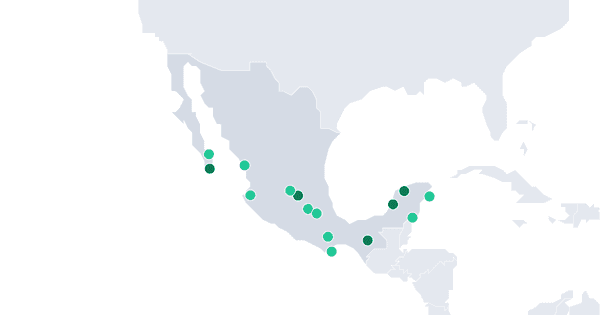
The safest cities in Mexico in 2026
Oct 22, 2026