Schengen EU Reform: What Changes for Travelers, Visas, EES & ETIAS?
 A. FruchardCo-Founder & Travel Insurance ExpertLast updated: October 17, 2026
EES: the Entry/Exit System did not start on 6 September 2026. It has been fully operational since 10 April 2026 at the external borders of the participating countries — that is the date on which it replaced passport stamping and began detecting overstays automatically (European Commission, Migration and Home Affairs). What expired on 6 September 2026 was something much narrower: the temporary derogation created by Regulation (EU) 2025/1534, which let an overloaded border crossing point pause the capture of biometrics (facial image and fingerprints) at peak times while still recording every entry and exit digitally. That derogation was not renewed: it lapsed on 6 September 2026 and is no longer available to border authorities. Airlines, airports and industry bodies, Ryanair among them, have since asked the European Commission to reinstate and extend it until at least April 2027, and the Commission has not responded as of 17 October 2026. So full biometric checks have applied, with no peak-time pause, since 7 September 2026: budget extra time at busy airports and land borders.
ETIAS: still not in operation, and there is no launch date. The EU dropped its last-quarter-2026 target in July 2026 and, between 10 and 13 August 2026, the delay was confirmed as indefinite. The official ETIAS site states that no applications are being collected and that the start date will be announced several months in advance. Nobody can sell you an ETIAS today, and the EU has warned travellers against sites and agents offering to do so. eu-LISA’s September 2026 management board has passed without any revised timeline being published; its next scheduled meeting is on 17–19 November 2026, and a move into 2027 now looks likely.
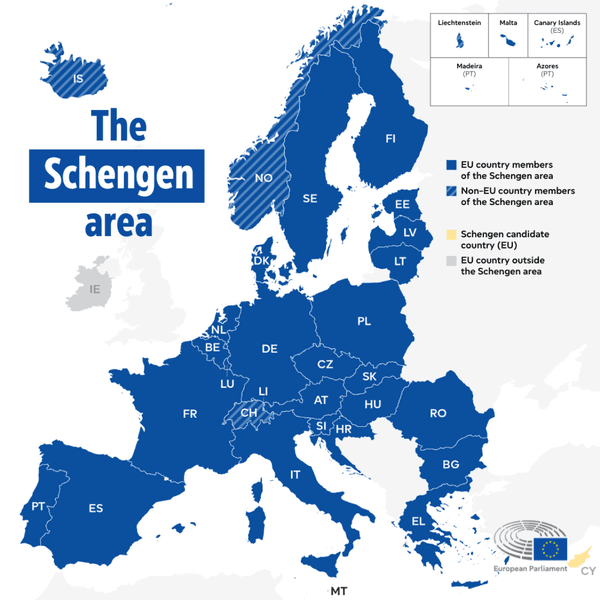
The Schengen EU Reform is reshaping how non-EU travelers enter and move across Europe. With the rollout of the Entry/Exit System (EES), the upcoming ETIAS travel authorisation and tighter data-sharing tools, borders are becoming fully digital. For many travelers, this raises new questions about overstays, visa approvals, future re-entry risks and what documentation will now be checked at the border.
For anyone applying for a Schengen visa — or planning repeated trips — staying compliant has never mattered more. Correctly counting your days under the 90/180 rule, maintaining clean travel history, providing financial and accommodation proof, and holding valid travel insurance all now play an essential role in renewing or securing future Schengen visas.
- The 90/180 rule remains unchanged: you can still stay up to 90 days in any rolling 180-day period.
- The Entry/Exit System (EES) has been rolled out since October 2025, digitally recording all non-EU arrivals and departures.
- Overstays are now automatically detected and can remain visible in the system for up to 5 years.
- ETIAS, a mandatory pre-travel authorisation for visa-exempt travelers, is expected to launch after EES, with a fee of around €20 and 3-year validity.
- In 2024 there were over 11.7 million Schengen visa applications, with refusal rates around 14–15% globally.
- Visa fees increased in June 2024 to €90 for adults and €45 for children aged 6–11.
- More than 50% of visas issued worldwide are now multiple-entry (MULT), especially for repeat travelers with a compliant history.
- Travel medical insurance remains essential — many travelers choose to subscribe online before applying to avoid delays or refusals.
- Border checks may temporarily take longer during reform rollout, especially at busy airports and land/rail crossings.
What is Schengen EU Reform and who does it affect?
Schengen EU Reform brings a major digital transformation to how Europe manages short-stay travel for non-EU nationals. The key elements are the Entry/Exit System (EES) — which replaces physical passport stamps with biometric registration — and the upcoming ETIAS travel authorisation for visa-exempt travellers. Together, these reforms strengthen border security and make overstay detection fully automated.
In practice, every non-EU traveller visiting Schengen for up to 90 days within any 180-day period is now recorded electronically at entry and exit. EES began rolling out in October 2025, with ETIAS to follow. These reforms do not replace Schengen visas — they change how compliance is monitored.

📊 Key systems affected: EES, ETIAS & the Borders Code
Entry/Exit System (EES)
- Rolled out from October 2025
- Replaces manual passport stamping
- Collects biometrics (photo + fingerprints)
- Stores travel history 3 years (5 years if overstayed)
- Applies to visa-exempt and visa-required travellers
ETIAS — European Travel Information & Authorisation System
- Launch planned after EES stabilisation
- Required for visa-exempt nationals
- Online application, often approved in minutes
- Fee around €20, valid for 3 years
Reform of the Schengen Borders Code (2024 update)
- Clarifies the use of temporary internal border controls
- Supports coordinated responses during crises
- Confirms the 90/180 rule remains unchanged
Overall, these changes affect around 1.4 billion visa-exempt travellers worldwide, plus the millions who apply for Schengen visas each year.
🌍 Travellers impacted by Schengen EU Reform
All non-EU nationals entering Schengen for short stays are concerned — although the rules apply differently depending on their status.
- Visa-exempt travellers (e.g., US, UK, Canada, Australia) : Must apply for ETIAS once launched and are always recorded in EES.
- Visa-required travellers (e.g., India, China, parts of Africa & the Middle East) : Continue to request a Schengen visa, while all movements are tracked in EES.
- Non-EU residents living in a Schengen country : Usually not subject to ETIAS or EES when returning home country-of-residence,but may be registered when travelling elsewhere in Schengen.
- Transit passengers : Impact depends on airport layout and whether an external border is crossed.
This reform is global in scope — it applies regardless of nationality, airline or travel purpose.
🧭 Traveller categories
👤 Traveller type | 🎫 Visa required? | 🧾 ETIAS? | 🖐 Tracked in EES? |
|---|---|---|---|
🇺🇸 US tourist | ❌ | ✅ | ✅ |
🇮🇳 Indian visitor | ✅ | ❌ | ✅ |
🇬🇧 UK tourist | ❌ | ✅ | ✅ |
🏡 EU resident (non-EU national) | ❌ | ❌ | 🔁 Depends |
✈️ Transit only | 🔁 Sometimes | ❌ | 🔁 Sometimes |
In short: if you are not an EU/Schengen citizen and you travel for a short stay, your entries and exits will almost always be recorded digitally under EES — with ETIAS added later for visa-exempt travellers.
To travel legally within the Schengen Area, you may need a Schengen visa and valid travel medical insurance that meets Schengen requirements. Many international travellers choose to compare and arrange compliant insurance online before applying, using trusted tools such as HelloSafe — making the process smoother and fully documented.

Get your Schengen travel insurance certificate in 2 minutes
When will ETIAS and EES start and how do they work?
The Schengen EU Reform relies on two major systems. First comes the Entry/Exit System (EES) — already rolling out — which replaces manual passport stamping with biometric registration and digital travel history. Then comes ETIAS, a pre-travel authorisation that will apply to visa-exempt travellers before flying to or entering the Schengen Area.
Together, these tools standardise controls across Europe while keeping the 90/180-day rule unchanged. The goal is not to reduce travel, but to digitise, verify and track it more accurately.
🛂 EES launch and data registered
The Entry/Exit System (EES) began phased rollout in October 2025, with full implementation expected by April 2026. From your very first entry, your passport is scanned and your biometrics (photo + fingerprints) are recorded. Each entry and exit is then logged digitally — replacing old passport stamps.
For compliant travellers, records are stored for 3 years. Where an overstay is detected, data can remain visible for up to 5 years. This applies to both visa-exempt and visa-required visitors on short stays.
- Rollout period: October 2025 → April 2026
- Records: biometrics + complete travel history
- Retention: 3–5 years depending on compliance
🌐 ETIAS launch, eligibility and cost
ETIAS (European Travel Information and Authorisation System) will follow once EES is fully stable. It will apply only to visa-exempt travellers — such as citizens from the US, UK, Canada, Australia and over 50 other countries.
Travellers will complete a short online application, pay a fee of around €20, and normally receive a decision within minutes. Once approved, ETIAS remains valid for 3 years (or until the passport expires, whichever is earlier). ETIAS is not a visa — rather, it is a pre-travel security and admissibility check.
- Applies to: visa-exempt travellers
- Fee: ≈ €20
- Validity: 3 years
🧾 System comparison
🔧 System | 📝 Purpose | 💶 Fee | 📅 Status |
|---|---|---|---|
🛂 EES | Track entries/exits digitally | ❌ Free | ✔ Active |
🌐 ETIAS | Pre-travel authorisation | 💶 ~€20 | 🔜 Coming |
🎟 Schengen visa | Authorise short stay | 💶 €90 | ✔ Active |
In simple terms: EES checks and records your movements automatically. ETIAS screens visa-exempt travellers before departure. The Schengen visa continues unchanged for those who already require one.
Does Schengen EU Reform change the 90/180 rule or overstays?
The headline answer is simple: no — the 90/180 rule remains exactly the same. You can still stay in the Schengen Area for up to 90 days within any rolling 180-day period as a short-stay visitor. What has changed is how these days are monitored: with EES, your entries and exits are now logged digitally instead of being stamped manually.
This means two things. First, compliant travellers have a clearer record of their movements. Second, overstays are now automatically detected, even when they were previously hidden by missing or unclear passport stamps.
✔️ What stays the same
- 90 days permitted in any rolling 180-day window
- Rule applies to ALL non-EU nationals on short stays
- Applies whether you are visa-exempt or visa-required
The reform does not extend permitted stay, nor does ETIAS change your rights. It simply improves border visibility.
📡 What changes with EES tracking
- No more “lost stamps” or unreadable entries
- Automatic detection of overstays
- Overstay history may remain visible in the system for up to 5 years
So even a small overstay — intentional or not — can show up in your EES profile and may influence future border checks or visa decisions.
📊 Overstay consequences
⚠️ Situation | 📊 EES record | 🚫 Possible impact |
|---|---|---|
1–2 day overstay | 🔴 Recorded | ❌ Future entry risk |
Repeated overstays | 🔴 Persisting | 🚫 Visa refusal likely |
Legal on-time departure | 🟢 Recorded | ✔ Positive history |
The rule hasn’t changed — but the technology now makes compliance (or non-compliance) fully visible.
How does Schengen EU Reform affect Schengen visa (Type C) applications?
Schengen EU Reform does not change the legal basis of the Type C short-stay visa, but it raises the importance of a clean and well-documented profile. With EES digitally recording every entry and exit — and ETIAS soon screening visa-exempt travellers — consulates now rely even more on verified travel history, consistency of documents and proof that the applicant will respect the 90/180-day rule.
In other words, the bar for credibility is higher — not the rules themselves.
💶 Current fees and approval rates
- €90 for adults (aged 12+)
- €45 for children aged 6–11
- Around 11.7 million visa applications in 2024 worldwide
- Refusal rate around 14–15% globally
- More than 50% of all visas issued are now MULT (multiple-entry)
These numbers show that Schengen visas remain widely issued — but refusals do still occur when files look weak, incomplete or inconsistent.
📂 Documents that matter most today
Under the reform, consulates focus strongly on verifiable stability and compliance:
- Documented travel history (especially clean Schengen stays)
- Income & financial stability (employment or business proof)
- Strong ties to the country of residence (work, family, property, studies)
- Valid travel insurance covering the whole stay — many travellers now purchase it online in advance through trusted comparison tools such as HelloSafe
The more consistent these elements are, the higher the chance of approval — particularly for MULT visas.
📈 Key approval drivers
📌 Factor | 👍 Positive impact | 👎 Risk factor |
|---|---|---|
Stable income 💼 | ✔ | ❌ Lack of proof |
✔ | ❌ Contradictions | |
Insurance 🛡️ | ✔ | ❌ None provided |
Past compliance 📘 | ✔ | ❌ Overstay history |
Schengen EU Reform rewards transparency and reliability. A neat, well-supported file — with strong travel insurance and clean past exits — remains the best foundation for approval.
Will border checks and internal Schengen controls change because of reform?
Yes — the experience at the border is evolving, mainly because Schengen EU Reform makes entry checks more digital and more standardised. The Entry/Exit System (EES) replaces manual passport stamping with biometric registration. This modernisation improves security and creates a reliable record of stays — but it can also mean slightly longer processing times during the transition phase, especially at very busy airports and land crossings.
Internal free movement within Schengen remains the rule. However, temporary internal border controls may still be used in response to specific security, migration or public-order situations. These controls are not permanent, but travellers may occasionally encounter spot checks depending on the country and timing.
🛂 External border changes
- Biometrics collected (photo + sometimes fingerprints) at first registration (get to know more on photo size requirements)
- Self-service kiosks and e-gates increasingly support the process
- Queues may be longer during rollout, though they should stabilise once most travellers are registered in EES
Short stays and entry eligibility rules do not change — only the technology used to check them.
🚆 Internal border checks
- Temporary controls remain possible under the Schengen Borders Code
- Implementation varies by country and security context
- Free movement still applies — but travellers should carry identification when moving within Schengen, particularly by land or rail
Bottom line: expect more digital controls at external borders, and occasional internal checks — but the principle of Schengen free movement continues.
What will ETIAS ask and who must apply?
ETIAS (European Travel Information and Authorisation System) is a digital pre-travel check that will become mandatory for visa-exempt travellers visiting the Schengen Area for short stays (up to 90/180 days). It does not replace a visa — instead, it screens travellers before departure to confirm eligibility and security clearance.
Once approved, ETIAS is expected to be valid for 3 years (or until passport expiry) and usable for multiple trips.
🌍 Who needs ETIAS
ETIAS will apply to travellers from visa-exempt countries, including (but not limited to):
- 🇺🇸 United States
- 🇬🇧 United Kingdom
- 🇨🇦 Canada
- 🇦🇺 Australia
- 🇳🇿 New Zealand
- 🇯🇵 Japan
- 🇸🇬 Singapore
- 🇦🇪 United Arab Emirates
- 🇰🇷 South Korea
- 🇧🇷 Brazil
- 🇲🇽 Mexico
In total, over 50 nationalities will need ETIAS to enter the Schengen Area for tourism, business, visiting family or short studies. If you live in the United States on a passport that still requires a visa, our guide to getting a Schengen visa from the US explains how to apply.
Travellers who already require a Schengen visa do not apply for ETIAS.
🔍 What information ETIAS checks
- Security databases at EU and international level
- Past overstays or immigration alerts, where applicable
- Identity verification and document validity
Applications are submitted online, with answers to simple eligibility questions plus passport details. The goal is to identify potential risks early, so compliant travellers face fewer surprises at the border.
⏱️ How long ETIAS approval takes
Most applications are approved within minutes. Some cases may require manual review, which can take up to 30 days
Travellers are therefore encouraged to apply a few days before departure, even though decisions are usually fast.
Does Schengen EU Reform make it harder to get a multiple-entry (MULT) Schengen visa?
In most cases, no — Schengen EU Reform does not make it harder to obtain a multiple-entry (MULT) Schengen visa. In fact, the overall trend goes in the opposite direction: more than half of all Schengen visas issued worldwide are now MULT visas. Consulates increasingly favour travellers who visit Europe regularly and comply with the 90/180 rule, as EES now provides a clear, verifiable travel history.
So rather than restricting MULT visas, the reform mainly rewards transparent, repeated and compliant travel behaviour.
📈 Current reality
- MULT visas now represent over 50% of all Schengen visas issued globally
- Repeat travellers are often prioritised
- Digital travel records make it easier to prove a trustworthy travel profile
This reflects how consulates evaluate risk: the more predictable and documented your past travel is, the easier it becomes to justify multiple entries.
🧠 What influences MULT approval
- Prior compliance : Clean Schengen history with no overstays or irregularities
- Genuine, frequent travel needs : Business, family visits, repeated tourism or professional mobility
- Financial stability : Employment, steady income and the ability to fund multiple trips
When these elements are consistent, MULT visas are commonly granted — sometimes with extended validity (1, 2 or even 5 years).
What risks do overstays or past refusals create under the new Schengen systems?
With Schengen EU Reform, past behaviour becomes fully visible. The Entry/Exit System (EES) now stores every recorded entry and exit — and flags overstays automatically. This doesn’t mean refusals are automatic, but border officers and consulates have clearer access to your history when assessing future travel or visa applications.
If you previously overstayed or received a refusal, it is still possible to travel again — but expect closer questioning and a stronger need to prove your intentions and ties. By contrast, travellers with a clean history benefit from a consistently positive record in EES.
📊 Risk scenarios
😟 Situation | 📈 Risk level | 📝 Notes |
|---|---|---|
Past refusal | ⚠️ Medium | Explain context |
Short overstay | ⚠️ Medium-High | Recorded digitally |
Long overstay | 🔴 High | Entry refusal risk |
Clean history | 🟢 Low | Positive profile |
Schengen EU Reform doesn’t automatically punish mistakes — but it does make them visible. Strong documentation and proof of ties become even more important after any incident.
What should travelers prepare now to stay compliant under Schengen EU Reform?
Because borders are now fully digital — and travel histories are stored in EES — well-prepared documentation matters more than ever. Whether you are visa-exempt or applying for a Schengen visa, arriving with clear proof of your plans and finances helps avoid delays, extra questioning, or even refusal of entry.
Here’s a simple checklist to stay compliant and confident under the new rules:
- A valid passport with sufficient validity for the full trip (and ideally beyond)
- Accommodation proof such as hotel bookings, rental confirmation or an invitation letter
- A confirmed return or onward ticket showing departure within the 90/180 limit
- Proof of funds (bank statements, salary slips or sponsorship letters)
- Travel medical insurance covering your stay — many travellers now compare and purchase policies online through services like HelloSafe
Keeping these documents ready — digitally and on paper — ensures a smoother border experience and helps maintain a clean, positive travel record in EES.
If you still need Schengen-compliant travel insurance, you can easily compare trusted options online through the HelloSafe journey before submitting your application or travelling.
What are the official Schengen visa fees, validity rules and statistics?
Schengen EU Reform does not change the core Type C short-stay visa rules — but the context is more data-driven than ever. Here are the latest official numbers and key facts so travellers can plan realistically and avoid surprises.
💶 Visa fees (since June 2024)
- €90 — adults aged 12+
- €45 — children aged 6–11
- Free — children under 6 and specific exempt categories (students, researchers, etc. in defined cases)
Fees are non-refundable — even when a visa is refused.
📅 Validity & stay rules
- Short stay = up to 90 days in any rolling 180-day period
- Applies whether the visa is single-entry or multiple-entry (MULT)
- The 90/180 rule has not changed under Schengen EU Reform
📊 Global Schengen visa statistics (2024)
Metric | Latest figure |
|---|---|
Total visa applications | ≈ 11.7 million |
≈ 14–15% | |
Share of MULT visas issued | 50%+ worldwide |
EES data retention | 3 years (5 years if overstayed) |
These figures show that the majority of Schengen visa applications continue to be approved — and more than half of successful applicants benefit from multiple-entry visas.
How can international travelers stay safe, insured and compliant under the new rules?
The best strategy under Schengen EU Reform is simple: prepare early, document clearly and stay within the 90/180 limit. Keep copies of your bookings, financial proof and insurance policy, and make sure the details of your trip are consistent across all documents. This helps border officers and consulates verify your profile quickly — especially now that EES records every movement digitally.
Travel insurance also plays a practical role. Medical costs in Europe can be significant, and many consulates still expect proof of Schengen-compliant coverage. Having a valid policy means fewer questions, smoother processing and better personal protection during your stay.
Many travelers now prefer arranging Schengen-compliant travel insurance online before applying or crossing the border. Platforms like HelloSafe let you compare and subscribe in just a few minutes — wherever you are in the world.
No. As of 17 October 2026 there is no confirmed ETIAS start date at all, and late 2026 is no longer on the table.
The European Union removed the expected-launch date from its official ETIAS site in mid-July 2026, and in August 2026 the delay was confirmed as indefinite. The official position is that ETIAS “is currently not in operation and no applications for travel authorisations are collected at this point”, and that the EU will announce the specific start date several months before it happens. eu-LISA, the agency that runs the technology, held its September 2026 management board without publishing a revised timetable, and its next scheduled meeting is on 17–19 November 2026; 2027 is the working expectation, not a commitment.
What that means for your trip right now: there is nothing to apply for. Visa-exempt travellers enter the Schengen Area on a valid passport, exactly as before, and the only document worth organising in advance is travel medical insurance — still expected by consulates from visa applicants, and strongly advised for everyone else, because most non-EU health cover does not follow you to Europe. Do not pay anyone for an “ETIAS”: the EU has warned travellers against websites and agents selling an authorisation that cannot yet be issued.
The system that is live is the Entry/Exit System. EES has been operating at Schengen external borders since April 2026, and biometric registration takes longer than a passport stamp: Frankfurt, Amsterdam and Munich reported peak waits of around two hours through summer 2026, with 2–5 hours at the busiest hubs on the worst days and closer to 30–60 minutes off-peak. Budget extra time at the border — not for an ETIAS application.
No to the first — and the second question has a false premise worth clearing up: EES is already fully in force, and has been since 10 April 2026. Nothing about it came into force on 6 September 2026.
ETIAS is not in operation. As of 17 October 2026 the European Union has published no launch date at all: the last-quarter-2026 target was removed in July 2026 and, between 10 and 13 August 2026, the delay was confirmed as indefinite. The official ETIAS site says the system is not running, that no applications are being collected, and that the start date will be announced several months before it goes live. Two practical consequences: travel to the Schengen Area on your passport exactly as before, and pay nobody for an ETIAS, because the EU is warning against sites and agents selling a European travel authorisation that cannot yet exist.
The Entry/Exit System is a different system, and it is not merely running — it has been fully operational since 10 April 2026, the date on which it replaced passport stamping at the external borders and began detecting overstays automatically (European Commission, Migration and Home Affairs). What fell due on 6 September 2026 was the temporary derogation created by Regulation (EU) 2025/1534: during the progressive start of operations, a border crossing point that was overwhelmed could suspend the capture of facial images and fingerprints for short bursts while still logging entries and exits digitally. That flexibility was not renewed: it lapsed on 6 September 2026 and is no longer available to border authorities, and the Commission has not acted on industry calls to reinstate it. Practical advice follows from that: expect slower borders, as they have been since 7 September 2026, and do not plan for an ETIAS application.
Probably a little — and on the contracts we actually distribute, no: a missed flight caused by a border queue is normally not covered. Here is the honest version of both halves.
What actually happened on 6 September. EES itself did not change that day; it has been fully operational since 10 April 2026. What expired was the temporary derogation under Regulation (EU) 2025/1534, which allowed a congested crossing point to pause fingerprint and facial-image capture at peak times while still recording entries and exits digitally. It was not renewed, and it has not been reinstated since: full biometric checks have applied everywhere since 7 September 2026, with no peak-time relief, so budget extra time at big airports and land crossings.
What our own contracts say, checked in our offer database on 2 September 2026. Two findings, and neither is flattering if you were hoping insurance would rescue a missed flight.
A Schengen-visa policy will pay nothing for it. Every one of the nine Schengen-visa formulas we list — Go Schengen, Go Schengen +, Cap Schengen, Schengen Start, Schengen Annual, Silver Plan, Gold Plan and the rest — records transport delay as not covered and trip cancellation as not covered. They are medical-and-assistance products built around the €30,000 Schengen minimum (€80,000 on Gold Plan): emergency care, repatriation, 24/7 assistance. That is what the certificate your consulate asks for is for, and it is not a delay product.
A tourist or annual policy usually has a delay benefit, but the trigger is the carrier’s delay, not yours. 32 of the formulas we list do carry a transport-delay benefit, from €60 to €5,000 per insured person. Read what sets it off. Go Protect (AssurTravel, 2026 terms) pays a lump sum only for a flight or train delay of more than four hours “compared to the originally scheduled arrival time”, and the delay must be “confirmed by the airline, shipping company or railway company” — €90 per person up to €400 per incident at four hours, then €30 per additional two hours up to €200 per person. Cap Explorer (Chapka, AXA Assistance policy 2243705) pays €31 per hour of delay, capped at €152 per person and €762 per event, on a three-hour excess measured against the arrival time printed on your ticket. A border queue delays you; it does not delay the aircraft, so no carrier will certify a delay and the benefit never fires.
The one narrow exception, and its limits. Some tourist policies add a separate missed-departure benefit. Cap Explorer’s reads: “If you miss your flight to depart for your trip for any cause whatsoever due to an event independent of your will”, it refunds a replacement ticket up to 80% of the flight (or 50% of a package), provided you leave within 24 hours or on the first available flight — and it cannot be combined with the flight-delay or cancellation cover. Note the wording: it covers the flight that begins your trip. A connection you miss after landing in the Schengen Area, or the flight home you miss because the exit queue was two hours long, falls outside it.
So, practically. Do not buy a policy expecting it to reimburse an EES queue; arriving earlier is the only reliable protection. If you do want financial cover for a missed departure, check the transport-delay and missed-departure lines and, above all, their trigger wording in the IPID and the full terms before you buy, rather than trusting a benefit name. And remember that air-passenger-rights rules cover delays caused by the airline, not delays caused by the border queue you were standing in.
No — the 90/180-day rule remains exactly the same. Non-EU visitors may stay in the Schengen Area for up to 90 days within any rolling 180-day period. What has changed is monitoring: the Entry/Exit System (EES) now records entries and exits digitally, replacing manual passport stamps. That means overstays — even short ones — are automatically detected and stored for several years, which can affect future border checks or visa applications.
EES is a digital border control system that records the entry and exit of all non-EU nationals travelling for short stays — whether they need a visa or not. At first registration, travellers provide biometric data (photo and sometimes fingerprints). The system logs every crossing instead of stamping passports. Travel records are generally stored for 3 years, or up to 5 years in overstay cases.
No. ETIAS is not a visa. It is a pre-travel electronic authorisation required for visa-exempt travellers (e.g., US, UK, Canada, Australia). You apply online, pay a small fee (expected around €20), and usually receive approval within minutes. ETIAS does not change your right to stay: the 90/180 rule still applies. Travellers who already need a Schengen visa do not apply for ETIAS.
During the initial rollout of EES, some travellers may experience longer queues, especially at busy airports and land borders, because biometric registration takes a little more time than a simple passport stamp. Once most travellers are registered, border flows are expected to stabilise. Preparing documents in advance and following airport guidance can help keep the process smooth.
No. Free movement within Schengen remains the rule. However, the Schengen Borders Code continues to allow temporary internal checks in specific security or public-order situations. These measures vary by country and are usually time-limited. Travellers moving between Schengen states — especially by land or rail — should still carry valid identification.
The visa rules themselves haven’t changed — but consulates now rely more on verified travel history and document consistency. With EES, compliance (on-time departures, regular trips, no overstays) is easier to prove. In 2024, there were around 11.7 million applications, with refusals near 14–15% and over half of all visas issued as multiple-entry (MULT) worldwide.
Overstays are now automatically recorded by EES. Even short overstays may be visible for up to 5 years and could affect future visas or entry decisions. Longer or repeated overstays increase the likelihood of refusals. If you have a clean record and depart on time, your compliant history works in your favour.
Many consulates still expect Schengen-compliant travel medical insurance, and it remains strongly recommended for visa-exempt travellers too. Insurance helps demonstrate preparedness and protects you against unexpected costs during your stay. Many international travellers now arrange their cover online before travelling using comparison platforms such as HelloSafe.
No — final entry decisions are still made by border officers. ETIAS simply confirms that you passed the pre-travel screening. You may still be asked to show proof of accommodation, funds or return tickets on arrival. Keeping your documentation consistent helps ensure a smooth experience.
Stay within the 90/180-day limit, keep good records of your trips, travel with supporting documents and avoid overstays. If you apply for a visa, ensure your file is complete, consistent and supported by financial and insurance proof. Under Schengen EU Reform, clear documentation and compliance are the strongest signals of credibility.
On the same topic

Schengen visa sticker explained 2026: read every field
Oct 20, 2026

Sponsorship letter sample for visa: complete guide for Schengen applications
Oct 11, 2026

TLScontact Schengen visa 2026: book, track, fees, contact
Oct 1, 2026