Schengen visa for Chinese citizens: documents, fees and the 2026 insurance rule
 A. FruchardCo-Founder & Travel Insurance ExpertLast updated: October 2, 2026
Applying for a Schengen visa from China has become both more common and more competitive in recent years. With international travel from China strongly rebounding, European consulates are once again processing a very high number of applications, especially in major cities such as Beijing, Shanghai and Guangzhou. Appointment availability, processing times and compliance with administrative requirements are now key challenges for Chinese applicants planning a trip to Europe.
In practice, getting a Schengen visa from China is less about luck than about preparation. Choosing the correct consulate, submitting a complete and consistent application file, respecting timelines and providing Schengen visa documents such as travel medical insurance all play a decisive role in the outcome. This guide explains, step by step, how the Schengen visa process works for applicants from China, what to expect in terms of costs and delays, and how to reduce the risk of refusal.
🌍 1.78 million Schengen visa applications were filed from China in 2024, making China the largest source country worldwide for Schengen short-stay visas.
📉 The refusal rate for Chinese applicants is only around 4.6%, significantly lower than the global average of 14.8%, but it still varies by destination country and applicant profile.
💶 Since June 2024, the standard Schengen visa fee for adults is €90 (about 700 CNY) and €45 for children aged 6–11, unchanged in 2026, plus an additional service fee charged by VFS Global or TLScontact in local currency.
⏱️ Processing time is officially 15 days, but can extend to 30–45 days (or more) during peak periods such as late spring, summer and major Chinese holidays.
🏥 Travel medical insurance is mandatory and must cover at least €30,000 in medical and repatriation expenses for the entire Schengen Area.
📄 A complete application typically includes passport, photos, application form, itinerary, proof of funds, ties to China and travel insurance.
🧭 The process follows 6 main steps: choose the right country, book a visa centre, prepare documents, submit the application, attend biometrics, and collect your passport.
Is a Schengen visa mandatory for Chinese citizens?
Yes. A Schengen visa is mandatory for Chinese passport holders who wish to travel to any country in the Schengen Area for a short stay, whether for tourism, family visits, business or short-term studies. Chinese nationals are not visa-exempt, which means you must obtain a visa before travelling to Europe.
In most cases, Chinese travellers apply for a Schengen short-stay visa (Type C). This visa allows you to stay for up to 90 days within any rolling 180-day period across the entire Schengen Area. The 90/180 rule is cumulative: every day spent in one Schengen country counts toward the same total, even if you visit several countries on the same trip.
In practice, a Schengen Type C visa can be issued as:
- Single-entry (one entry),
- Double-entry, or
- Multiple-entry (several trips within the validity period).
For Chinese citizens, this visa is mainly used for the following purposes:
Purpose 🎯 | Typical examples |
|---|---|
Tourism 🧳 | Holidays, sightseeing, multi-country trips |
Family visit 👨👩👧👦 | Visiting relatives or friends in Europe |
Business 💼 | Meetings, trade fairs, short professional visits |
Short-term study 🎓 | Language courses, seminars, training under 90 days |
The Schengen visa allows free movement between all Schengen countries during the authorised period, but it does not permit long-term work, residence or permanent settlement.
It is also important not to confuse the Schengen visa with a long-stay national visa:
- Schengen visa (Type C): for short stays only, limited to 90 days in any 180-day period, valid across the Schengen Area.
- Long-stay visa (Type D): issued by one specific country for stays longer than 90 days (work, full-degree studies, family reunification) and usually followed by a residence permit.
This guide focuses exclusively on the Schengen short-stay visa (Type C), which is the most common option for Chinese travellers planning a temporary trip to Europe.
Because travel medical insurance is mandatory for all Schengen short-stay visas, many Chinese travellers choose to prepare this part of their application early. Today, it is possible to compare Schengen-compliant travel insurance online, check coverage levels and download the certificate instantly through platforms such as HelloSafe. This ensures your visa file is complete as soon as an appointment becomes available, without last-minute stress.

Get your Schengen travel insurance certificate in 2 minutes
What are the Schengen visa requirements from China in 2026?
To apply for a Schengen visa from China in 2026, Chinese citizens must submit a complete and well-documented application file. While requirements are harmonised across the Schengen Area, consulates in China are particularly strict on document consistency, financial proof and mandatory travel insurance.
Below is a clear and practical checklist covering all required documents for a standard short-stay Schengen visa (Type C).
Document | What is required | Key points to watch ⚠️ |
|---|---|---|
🛂 Passport | Valid Chinese passport | Issued within the last 10 years, valid at least 3 months after leaving Schengen, with 2 blank pages |
📄 Application form | Completed Schengen visa application form | Filled in online or PDF, printed and signed |
📸 Visa photos | Biometric photos | Schengen visa photo size 35×45 mm, white background, recent (≤6 months), neutral expression |
Reservation or travel plan | No obligation to buy tickets before approval, but itinerary must be realistic | |
🏨 Accommodation proof | Hotel booking or invitation letter | Must cover the entire stay (hotel, Airbnb, or host declaration) |
🏦 Proof of funds | Bank statements or income proof | Usually last 3 months, showing sufficient and regular funds |
🇨🇳 Ties to China | Evidence of return intention | Work contract, leave letter, business license, property, family ties |
🏥 Travel insurance | Medical insurance for Schengen visa | Minimum €30,000 coverage, valid in all Schengen countries, for the full duration of stay |
✍️ Cover letter | Personal explanation letter | Explains purpose of travel, itinerary, dates, funding and return plan |
💳 Visa fee payment | Consular + service fees | Paid at the visa centre, usually in CNY |
📝 Important notes for Chinese applicants
- All documents must be consistent (dates, destinations, purpose of travel).
- Financial documents should clearly show stable income and affordability of the trip.
- Travel insurance is mandatory and frequently checked; policies that do not meet Schengen requirements can lead to refusal.
- The visa fee is non-refundable, even if the application is refused.
A complete and well-prepared file significantly increases approval chances. Many applicants from China now prepare their documents digitally in advance and secure Schengen-compliant travel insurance online, so they can submit their application as soon as an appointment becomes available.
How to get a Schengen visa from China step by step?
Below is a clear and structured step-by-step guide for Chinese citizens applying for a Schengen short-stay visa. The process is the same across the Schengen Area, but choosing the right country and booking the correct visa centre in China are decisive steps.
🗺️🏛️ Step 1: Choose your main destination and the right visa centre in China
Before anything else, you must determine which Schengen country is responsible for your application and where you must submit your file in China.
How to choose the correct Schengen country
The rule applied by all Schengen states is the following:
- Apply through the country where you will spend the longest time, or
- If the stay is evenly split, through the country of your main purpose of travel (tourism, business, family visit).
- Only if there is no clear main destination should you apply via the country of first entry.
Applying through the wrong country is a common and costly mistake and can lead to a refusal, even if all other documents are correct.
Visa application centres in China
Most Schengen countries outsource visa applications in China to VFS Global or TLScontact. You must apply at the centre that covers your place of residence, not simply the city of your choice.
Visa centre 🏢 | Main Schengen countries handled 🇪🇺 | Major cities in China 📍 | Official booking platform 🌐 |
|---|---|---|---|
VFS Global | Germany, Italy, Spain, Netherlands, Portugal, Czech Republic, Sweden, etc. | Beijing, Shanghai, Guangzhou, Chengdu, Wuhan, Chongqing, Hangzhou, Jinan… | https://visa.vfsglobal.com |
TLScontact | France | Beijing, Shanghai, Guangzhou, Chengdu, Wuhan, Hangzhou, Jinan and other regional centres | https://visas-fr.tlscontact.com |
Embassy / Consulate (limited cases) | Switzerland, some Nordic countries (specific profiles only) | Beijing, Shanghai, Guangzhou | Country-specific embassy website |
Important points for applicants in China:
- Jurisdiction rules are strict: for example, a resident of Shanghai usually cannot apply in Beijing.
- Each country has its own network and availability.
- Always check the official visa website of your destination country before booking.
📂 Step 2: Prepare your documents
Once the destination country and visa centre are confirmed, you should prepare your full application file:
- passport
- application form
- photos
- travel itinerary and accommodation
- proof of funds
- ties to China
- travel insurance
- cover letter
Your Schengen visa documents must be consistent (dates, destinations, purpose). Missing or contradictory information is one of the main reasons for refusal.
(Refer to the checklist above to make sure all required documents are included.)
🖊️📅 Step 3: Fill in the application form and book your appointment
You must complete the Schengen visa application form (online or PDF), then print and sign it.
Appointments are booked directly on the VFS Global or TLScontact platform of the destination country.
Availability can be very limited, especially in major cities such as Beijing, Shanghai and Guangzhou.
What Chinese applicants should know about appointments:
- Demand is highest between April and September and around major Chinese holidays (Labour Day, summer holidays, Golden Week).
- Appointment slots are released in batches and can disappear quickly.
- Some centres offer paid premium services, but these do not speed up the visa decision itself.
Booking as early as possible is strongly recommended, especially for summer travel.
🏥 Step 4: Buy your Schengen travel insurance from China
Travel medical insurance is mandatory for all Schengen visa applications.
Your policy must:
- cover at least €30,000 in medical and repatriation expenses
- be valid in all Schengen countries
- cover the entire duration of your stay
Many applicants from China now compare Schengen-compliant travel insurance online and download the certificate instantly, instead of buying insurance at the last minute.
Platforms such as HelloSafe allow travellers to compare policies quickly and obtain an insurance certificate accepted by Schengen consulates.
🧬 Step 5: Attend your appointment and submit biometrics
On the day of your appointment, you will:
- submit your full document file
- provide fingerprints and a photo (if required)
- pay the visa and service fees in CNY
- answer brief questions about your trip, if requested
Biometric data are generally valid for 59 months, so frequent travellers may not need to give fingerprints again.
⏳ Step 6: Wait for the decision and collect your passport
After submission, the standard processing time is around 15 days, but it may extend to 30–45 days during busy periods or if additional checks are required.
When you receive your passport, carefully check the visa sticker, including:
- validity dates
- number of entries (single, double or multiple)
- authorised duration of stay
These details determine how and when you can travel within the Schengen Area.
How much does a Schengen visa cost in China (EUR & CNY)?
The cost of a Schengen visa from China is made up of two main components:
- the official consular visa fee, set at EU level, and
- a service fee, charged by the external visa centres (VFS Global or TLScontact) that handle applications in China.
Below is a clear price overview with indicative conversions into Chinese yuan (CNY).
Applicant 👤 | Fee (EUR) 💶 | Fee (CNY est.) 💴 | Service fee (CNY) |
|---|---|---|---|
Adult (12+) | €90 | ≈ 700 CNY | ≈ 200–300 CNY |
Child (6–11) | €45 | ≈ 350 CNY | ≈ 200–300 CNY |
Child (<6) | €0 | 0 CNY | ≈ 200–300 CNY |
🧾 Important points to know before paying
- Visa fees are non-refundable: if your Schengen visa is refused, the consular fee and service fee are not reimbursed, regardless of the reason.
- The EUR fee is fixed, the CNY amount is not: €90 and €45 are set by the EU Visa Code and are identical at every Schengen consulate. The CNY figures are conversions (Schengen missions in China currently charge around 700 CNY for the €90 adult fee) and the exact amount may vary slightly depending on the consulate and the exchange rate applied on the day of payment.
- Payment is made in CNY at the visa centre: in China, both the visa fee and the service fee are generally paid in Chinese yuan directly at the VFS Global or TLScontact centre during your appointment.
- Optional services (SMS notifications, courier return, premium lounge) may be offered by the visa centre and are charged separately.
Because these fees cannot be recovered in case of refusal, many applicants focus on reducing financial risk elsewhere, for example by avoiding non-refundable bookings and choosing flexible, Schengen-compliant travel insurance that can be adjusted or refunded if the visa is not granted.
How long does Schengen visa processing take from China and when should you apply?
Under the Schengen Visa Code, the standard Schengen visa processing time for a short-stay visa is 15 calendar days from the date your application is received by the consulate.
However, for applications submitted in China:
- Processing can be extended to 45 days, or even up to 60 days in exceptional cases
- Extensions are more common during periods of high demand or when additional checks are required
Applicants can submit their Schengen visa application up to 6 months before the planned travel date, which is strongly recommended for peak travel periods.
Visa demand in China follows a very seasonal pattern, closely linked to school holidays, public holidays and outbound travel peaks.
The busiest periods typically include:
- Late spring and summer (April to September)
- Chinese public holidays, especially Labour Day (early May) and National Day / Golden Week (early October)
- Peak tourist months for Europe, when appointment slots in Beijing, Shanghai and Guangzhou fill up quickly
During these periods, applicants face both longer appointment waiting times and slower processing.
Period 🗓️ | Appointment availability | Typical processing time | Recommended time to apply |
|---|---|---|---|
Jan–Mar ❄️ | Good | ~15 days | 3–4 weeks before travel |
Apr–Jun 🌸 | Busy | 15–30 days | 6–8 weeks before travel |
Jul–Sep ☀️ | Very busy | 15–45 days | 2–3 months before travel |
Oct–Nov 🍂 | Medium | 15–30 days | 4–6 weeks before travel |
Dec 🎄 | Easier | ~15 days | 3–4 weeks before travel |
Is travel insurance mandatory for a Schengen visa from China?
Yes. Schengen travel medical insurance is a legal requirement for all Schengen short-stay visa applications submitted from China. Without valid insurance, your application will be considered incomplete and may be rejected, even if all other documents are in order.
For Chinese citizens, the insurance must comply with strict Schengen rules. It is not a simple recommendation but a mandatory condition set by the EU Visa Code and applied by all Schengen consulates and visa centres in China.
To be accepted, your travel insurance must include:
Requirement | Minimum |
|---|---|
Coverage amount | €30,000 |
Geographic area | All Schengen countries |
Duration | Whole trip |
Certificate language | English or French |
In practice, many applicants from China now choose to purchase Schengen-compliant travel insurance online, as it allows them to compare options easily and receive the certificate immediately.
Many Chinese travellers today purchase Schengen-compliant travel insurance online in just a few minutes and receive the certificate instantly through platforms such as HelloSafe.
Why are Schengen visas refused from China — and how can you avoid rejection?
Even though Chinese applicants tend to have much lower refusal rates than the global average, Schengen visa refusals still happen, and they usually stem from specific documentation or credibility issues.
According to the latest overview of Schengen refusal trends, the overall rejection rate for Schengen visas worldwide was about 14.8 % in 2024 (≈ 1.7 million refusals out of 11.7 million applications). In contrast, applicants from East Asia, including China, typically see refusal rates under 5 %.
Most refusals result from documentary or procedural gaps, not arbitrary assessment, which means understanding the typical refusal triggers can significantly improve your chance of approval.
Common refusal reason 🚩 | Approx. share / impact* | Why it leads to refusal | How to avoid it ✅ |
|---|---|---|---|
Incomplete or incorrect documentation | ~30–40 % | Missing forms, inconsistencies, unclear papers | Prepare a complete file with consistent dates, names, signatures |
Insufficient financial proof | ~20–30 % | Doubts about ability to fund trip | Provide ≥3–6 months of bank statements, salary slips |
Unclear purpose / weak itinerary | ~15–25 % | No convincing reason for travel | Submit detailed itinerary, booking references |
Insufficient or non-compliant insurance | ~10–20 % | Insurance doesn’t meet €30,000 / Schengen area / duration | Use compliant insurance with full coverage |
Weak ties to home country / intent to return | ~10–20 % | Risk of overstaying perceived | Include employment letter, property, family evidence |
🧠 Practical tips to avoid refusal
- Prepare your documents carefully using an official checklist and double-check dates, names and consistency across all files.
- Show stable finances with clear bank histories and supporting documents.
- Explain your travel plans in a well-written cover letter with supporting bookings.
- Purchase Schengen-compliant travel insurance that meets all requirements (min. €30,000, valid in all Schengen countries, covering the entire stay).
- Document strong ties to China (employment, property, family, ongoing commitments) to demonstrate intention to return.
Which Schengen countries can you visit with a visa from China, and which are easiest (or hardest) to get?
🌍 Which countries can you visit with a Schengen visa from China?
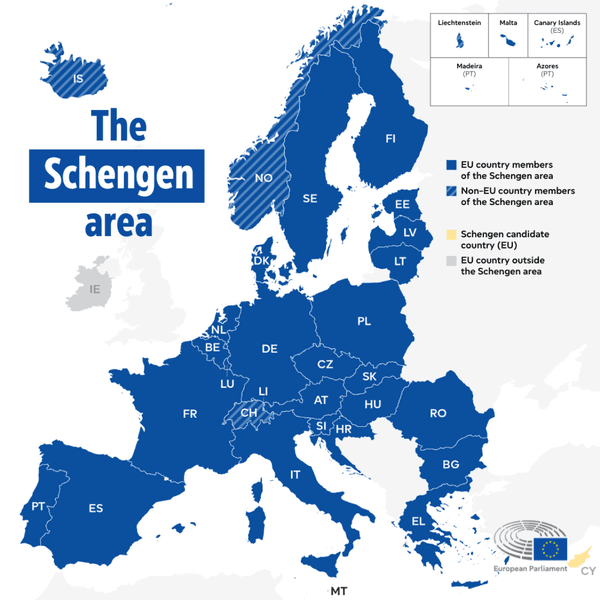
A Schengen visa issued to a Chinese passport holder allows travel across the entire Schengen Area, not just the country that issued the visa. Once the visa is granted, you can move freely between Schengen countries during the authorised period.
That said, one rule is essential and often misunderstood:
you must apply through the country that is your main destination (the country where you spend the most nights or where the main purpose of your trip takes place). If there is no clear main destination, you apply through the country of first entry.
Below are some of the most popular Schengen destinations for travellers from China and the reasons they are frequently chosen:
🇪🇺 Country | Capital | Why Chinese travellers go there 🧳 |
|---|---|---|
France 🇫🇷 | Paris | Tourism, museums, shopping, culture |
Italy 🇮🇹 | Rome | Honeymoon trips, heritage, gastronomy |
Spain 🇪🇸 | Madrid | Holidays, beaches, city breaks |
Germany 🇩🇪 | Berlin | Business travel, trade fairs, study |
Netherlands 🇳🇱 | Amsterdam | Transit hub, short city trips |
Switzerland 🇨🇭 | Bern | Alpine tourism, luxury and nature |
In practice, many trips combine several countries (for example France–Italy–Switzerland or Germany–Netherlands–Belgium), but only one Schengen visa is needed if your itinerary and documents are consistent.
📊 Which Schengen countries are easiest or hardest for Chinese applicants?
All Schengen countries apply the same visa rules, based on the EU Visa Code. However, approval rates still vary depending on the destination, the profile of applicants and local consular workload.
Based on recent statistics and observed trends for Chinese applicants, the following patterns are often highlighted:
Country | Approval rate for Chinese applicants | Insight |
|---|---|---|
Netherlands 🇳🇱 | ~96.7 % | One of the highest approval rates for Chinese nationals, often seen as comparatively easier. |
France 🇫🇷 | ~93.9 % | Highest volume of approvals for Chinese applicants, reflecting both popularity and strong overall success. |
Switzerland 🇨🇭 | ~88–90 % (industry estimates) | Consistently solid performance for tourist applications (approach with conservative estimate). |
Malta 🇲🇹 | ~74.0 % | Noted as an outlier with significantly higher refusal rates compared to major Schengen destinations. |
Larger countries with high volumes of applications may not be stricter in theory, but appointment availability and processing pressure can make the experience more challenging, especially during spring and summer.
A Schengen short-stay visa (Type C) allows you to stay up to 90 days within any rolling 180-day period.
The visa sticker will show:
- a validity period (the dates during which you may enter the Schengen Area), and
- a duration of stay (maximum number of days you are allowed to remain).
Even if your visa is valid for several months or years, you must always respect the 90/180 rule.
A multiple-entry Schengen visa allows you to enter and exit the Schengen Area several times within the visa’s validity period.
Chinese applicants may receive:
- a single-entry visa (most common for first applications),
- a multiple-entry visa valid for 1 year, or
- in some cases, a 2- or 5-year multiple-entry visa.
Longer-validity visas are usually granted to travellers with a good visa history and proof of regular travel needs.
Even with a 5-year visa, the 90 days in any 180 days rule still applies.
The visa number is printed on the visa sticker in your passport. It is usually located in the upper right corner and consists of a combination of letters and numbers.
This number may be requested for travel insurance claims or administrative procedures.
No. A single Schengen visa allows you to travel to all Schengen countries, as long as:
- your itinerary is consistent with your application, and
- the visa is still valid and within the authorised duration of stay.
For example, a trip covering France, Italy and Switzerland only requires one Schengen visa.
Minor changes are usually acceptable as long as your travel remains within the visa validity period.
However:
- you cannot extend the authorised duration of stay beyond what is written on the visa, and
- you may need to adjust bookings and insurance dates accordingly.
This is why many travellers choose flexible travel insurance, which can be updated if plans change.
Yes. A family member or sponsor living abroad can pay for your Schengen travel insurance, as long as:
- the policy is issued in your name, and
- the insurance certificate clearly shows your travel dates and Schengen-wide coverage.
Many Chinese travellers use online platforms such as HelloSafe to compare Schengen-compliant insurance and download the certificate instantly, regardless of where the payment is made.
Consulates do not require fully paid tickets or non-refundable hotels.
In fact, buying expensive, non-refundable bookings before visa approval increases your financial risk if the visa is refused.
A realistic itinerary and reservations are sufficient for most applications.
No. ETIAS does not apply to Chinese passport holders, as China is not visa-exempt.
Chinese citizens must continue to apply for a Schengen visa before travelling to Europe.
The most frequent issues are:
- incomplete or inconsistent documents,
- insufficient proof of funds or ties to China, and
- non-compliant travel insurance (wrong coverage amount, wrong dates or limited geographic scope).
Careful preparation and a complete application file significantly reduce the risk of refusal.
On the same topic

Schengen visa sticker explained 2026: read every field
Oct 1, 2026
Sponsorship letter sample for visa: complete guide for Schengen applications
Sep 30, 2026

TLScontact Schengen visa 2026: book, track, fees, contact
Oct 1, 2026