Italy Schengen Visa Fees, Requirements and Processing Time (2026)
 A. FruchardCo-Founder & Travel Insurance ExpertLast updated: September 23, 2026
Italy is one of the most in-demand Schengen destinations in the world, attracting travellers for tourism, family visits, business and cultural trips. Every year, more than a million people submit a Schengen visa application to the Italian authorities, making appointment availability, document accuracy and timing critical factors for success.
To obtain an Italy Schengen visa, applicants need to do much more than simply fill in a form. Choosing the right consulate, preparing a coherent itinerary, proving sufficient financial resources and holding compliant travel insurance are all decisive elements. In a system where even small inconsistencies can lead to refusal, understanding the rules before booking an appointment can significantly improve approval chances.
🇮🇹 Italy processed around 1.23 million Schengen visa applications in 2024, with a refusal rate of about 10.9%, which is lower than France (~15.8%) and Germany (~16%) — making Italy one of the more accessible Schengen consulates.
🧭 To get an Italy Schengen visa, you must apply in your country of residence, book an appointment with VFS Global or TLScontact, and submit your file to the Italian consulate for a final decision.
📄 Your application must include mandatory documents such as a passport, application form, hotel and flight bookings, proof of funds and Schengen-compliant travel insurance.
🩺 Travel insurance is legally required and must provide at least €30,000 of medical coverage, be valid in all Schengen countries, and cover your full travel dates.
💶 The Italy Schengen visa fee is €90 for adults and €45 for children (6–11), plus a service fee of €15–35 charged by the visa centre (VFS or TLS).
⏳ Processing usually takes up to 15 days, but during peak periods (May–August, Easter, Christmas) it can extend to 30–45 days.
Who needs a Schengen visa to travel to Italy?
Most travellers going to Italy apply for a Schengen visa (Type C), which is the standard visa for tourism, family visits, business trips and short stays up to 90 days within any 180-day period. Whether you need this visa depends on your passport nationality and, in some cases, your country of residence (for example, an Indian citizen living in Dubai or a Nigerian resident in the UK must apply from their country of residence, not from their home country).
Citizens of several countries are visa-exempt and can enter Italy without a visa for short stays, including travellers from the United States, the United Kingdom, Canada, Australia, Japan and South Korea. In contrast, nationals of many countries in Africa, South Asia and Southeast Asia must apply for a Schengen visa before travelling to Italy.
Other visas exist for longer stays (studies, work, family reunification), but these fall under different rules and procedures. You can find the full breakdown on our dedicated page about Schengen visa types.
Passport | Need a Schengen visa (Type C) for Italy? |
|---|---|
🇺🇸 United States | ❌ No |
🇬🇧 United Kingdom | ❌ No |
🇨🇦 Canada | ❌ No |
🇦🇺 Australia | ❌ No |
🇯🇵 Japan | ❌ No |
🇰🇷 South Korea | ❌ No |
🇧🇷 Brazil | ❌ No |
🇲🇽 Mexico | ❌ No |
🇮🇳 India | ✅ Yes |
🇵🇭 Philippines | ✅ Yes |
🇿🇦 South Africa | ✅ Yes |
🇳🇬 Nigeria | ✅ Yes |
🇵🇰 Pakistan | ✅ Yes |
🇲🇦 Morocco | ✅ Yes |
🇹🇳 Tunisia | ✅ Yes |
🇪🇬 Egypt | ✅ Yes |
🇻🇳 Vietnam | ✅ Yes |
🇹🇭 Thailand | ✅ Yes |
To make your Italy Schengen visa application as smooth as possible, having the right travel insurance is one of the easiest ways to avoid delays and refusals. With HelloSafe, you can compare Schengen-compliant policies, get your certificate instantly, and choose options that include refunds if your visa is refused — exactly what Italian consulates and visa centres expect when reviewing your file.

Get your Schengen travel insurance certificate in 2 minutes
What are the Italy Schengen visa requirements?
To apply for a Schengen visa to Italy (Type C), you must submit a complete and consistent file. Italian consulates and VFS centres assess not only whether each document is present, but also whether all documents tell the same travel story (dates, destination, accommodation and financial capacity must match).
Every applicant for an Italy Schengen visa must submit the following core documents:
Requirement | Mandatory | Notes |
|---|---|---|
Passport | ✅ | Valid at least 3 months after exit |
Application form | ✅ | Italy-specific form |
Photo 📸 | ✅ | Must follow Schengen photo format |
Flight itinerary ✈️ | ✅ | Entry and exit dates must match |
Hotel / accommodation 🏨 | ✅ | Or invitation letter |
Bank proof 💳 | ✅ | Usually last 3 months |
Travel insurance 🩺 | ✅ | Minimum €30,000 medical cover |
A single missing or inconsistent document can lead to delays or refusal, which is why most rejections happen not because of travel plans, but because the file does not fully meet Italy’s Schengen visa requirements.
How do you apply for a Schengen visa to Italy?
📍 Step 1 — Where should you apply for Italy?
You must apply at the Italian embassy or consulate responsible for your place of legal residence, not your nationality.
In most countries, Italy has outsourced visa collection to an official partner:
🌍 Country of residence | 🇮🇹 Italy visa partner |
|---|---|
United Kingdom | TLScontact or VFS Global |
United States | VFS Global |
India | VFS Global |
Philippines | VFS Global |
South Africa | VFS Global |
United Arab Emirates | VFS Global |
Morocco | TLScontact |
Nigeria | VFS Global or Italian Consulate |
You always apply to Italy, but your appointment and biometrics are handled by these centres.
📅 Step 2 — Book your Italy Schengen visa appointment
Italy does not accept walk-ins. You must book an appointment online with the official visa centre in your country.
Italy processes over 1.2 million Schengen visa applications per year, which makes appointment availability highly competitive in markets such as India, the UK, Nigeria, the Philippines and the UAE.
📆 When to apply
- You can apply up to 6 months before travel
- In practice, plan 6–8 weeks in advance, especially between May and August
🧾 Step 3 — Prepare your Italy Schengen visa file
Your Schengen visa documents must be perfectly consistent across your itinerary, accommodation, finances and insurance. Italian consulates check that everything matches.
At minimum, your file includes:
- passport and copies
- biometric photos
- flight itinerary and accommodation proof
- proof of funds or Schengen visa sponsor documents
- Schengen-compliant travel medical insurance
- Italy Schengen visa application form
- invitation letter (if visiting someone)
Italy is particularly strict about itinerary coherence and insurance compliance.
🩺 Step 4 — Get Schengen-compliant travel medical insurance
For Italy, your insurance must:
- cover at least €30,000
- be valid in all Schengen countries
- include emergency treatment and repatriation
- cover your full intended stay
This is one of the most common refusal triggers when it is missing or incorrectly issued.
👉 Many applicants use HelloSafe to compare Schengen-approved insurance policies and instantly download a certificate accepted by Italian consulates worldwide, with flexible dates and refund options if the visa is refused.
💻 Step 5 — Complete the Italy Schengen visa application form
Italy uses its own official Schengen application form (PDF or online, depending on the country).
You must:
- complete the form accurately
- print and sign it
- submit it at your appointment
All details must match your passport, itinerary, accommodation and insurance.
🧬 Step 6 — Attend your appointment and submit biometrics
At your VFS Global or TLScontact centre, you will:
- submit your full file
- provide fingerprints and a photo
- pay the €90 Schengen visa fee plus the local service fee
Your application is then forwarded to the Italian consulate, which makes the final decision.
📦 Step 7 — Track and receive your passport
After processing (usually up to 15 days, sometimes longer in high season), your passport will be returned to the visa centre or sent to you by courier.
Always check:
- your visa dates
- the number of entries (single, double or multiple)
- the spelling of your name
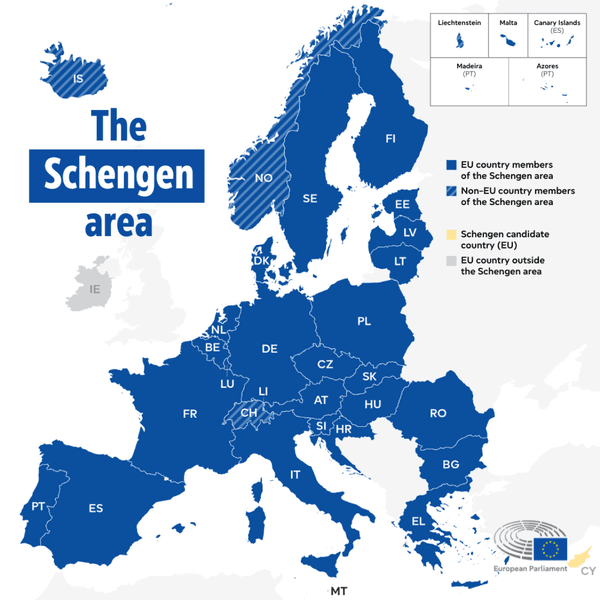
A Schengen visa issued by Italy allows you to travel to all Schengen countries, not just Italy.
How do you book an Italy Schengen visa appointment and how long does it take?
Booking an Italy Schengen visa appointment and waiting for the decision are the two main bottlenecks of the entire process. Italy is one of the most visited countries in Europe, and its visa centres face intense demand throughout the year.
⏰ Why Italy appointments are hard to get
Several Italy-specific factors explain why Italy Schengen visa slots disappear so quickly:
- Very high demand for Italy – Rome, Milan, Venice and Florence attract millions of international travellers every year.
- Seasonal travel peaks – Demand explodes before Easter, during the summer season (May to September) and around Christmas and New Year.
- Major Italian events – Periods around Venice Carnival, Easter in Rome, summer festivals and Milan Fashion Weeks create sharp increases in visa applications.
- Outsourced booking systems – Appointments are managed by VFS Global or TLScontact, which release limited batches of slots that are often taken within minutes.
🔄 What to do when no slots are available
When calendars show “no availability”, these strategies usually work best:
- Be flexible with cities – In the UK, USA or India, smaller centres (e.g. Manchester, Edinburgh, San Francisco, Chennai) may have slots when London, New York or Mumbai are full.
- Use timing strategy – Italy visa slots are often released early in the morning or late at night on VFS or TLS systems. Checking at the same times daily improves success.
- Avoid appointment agents – Many resell slots using bots. These bookings are often cancelled and can even compromise your visa file.
⏳ How long does an Italy Schengen visa take to process?
Once your file reaches the Italian consulate, Schengen law allows up to 15 calendar days for a decision. However, in practice, processing can take longer when additional checks are needed or during busy travel periods.
Delays are common when:
- Extra financial or travel documents are requested
- Security or background checks take longer
- Applications are submitted close to Italy’s peak tourist season
Period | Typical processing time |
|---|---|
Low season (Nov–Feb) | 7–15 days |
High season (May–Aug) | 15–30+ days |
Because Italy’s summer tourism calendar is one of the busiest in Europe, applicants travelling between May and August should apply as early as possible — ideally six to eight weeks before departure — to avoid missing their planned travel dates.
How much does an Italy Schengen visa cost in 2026?
The cost of an Italy Schengen visa is set at European level and is the same in all Schengen countries, regardless of where you apply. However, most applicants also have to pay additional service fees to the external visa centre (VFS Global or TLScontact), which explains why the total amount can vary from one country to another.
Fee | Amount |
|---|---|
Adult Schengen visa | €90 |
Child (6–11 years) | €45 |
Visa centre service fee | €15–35 (varies by country) |
The embassy fee (€90 or €45) is the official Schengen visa charge and is paid for the examination of your file by the Italian consulate. This fee is non-refundable, even if your visa is refused.
The service fee is collected by VFS Global or TLScontact for handling your appointment, documents and biometrics. It depends on the country, local taxes and the services included.
In many countries, you do not pay in euros. The visa centre converts the fee into the local currency (GBP, USD, INR, PHP, ZAR, AED, etc.) using an official monthly exchange rate set by the Italian authorities. As a result, the amount you see on your receipt may change slightly from one month to the next, even though the euro fee stays the same.
How strict is Italy compared to other Schengen countries and why are visas refused?
When comparing Schengen consulates, Italy is statistically one of the more accessible countries for visa applicants — but this does not mean approval is automatic. Italy processes over a million applications per year and applies the same EU-wide rules as France, Germany or Spain, yet its refusal rate remains noticeably lower.
Country | Refusal rate (approx.) |
|---|---|
Italy 🇮🇹 | ~10.9% |
Spain 🇪🇸 | ~13% |
France 🇫🇷 | ~15.8% |
Germany 🇩🇪 | ~16% |
Netherlands 🇳🇱 | ~11–12% |
Czech Republic 🇨🇿 | ~11–12% |
Greece 🇬🇷 | ~12–13% |
Belgium 🇧🇪 | ~17–18% |
Sweden 🇸🇪 | ~14–15% |
This means that around 9 out of 10 applicants receive an Italy Schengen visa when their file is correctly prepared. In practice, Italy is often perceived as one of the “safer” Schengen consulates because its refusal rate is well below the Schengen average and lower than the two biggest visa issuers, France and Germany.
However, Italy still refuses more than 1 in 10 applications, and the reasons are remarkably consistent across consulates. Most refusals are not linked to the destination itself, but to weak or contradictory applications.
The most common refusal triggers are:
- Weak financial proof – bank statements that do not match the cost of the trip
- Missing or non-compliant travel insurance – coverage below €30,000 or not valid for all Schengen countries
- Inconsistent itinerary – hotel, flights and Schengen visa cover letter that do not align
- Lack of ties to the home country – no strong proof of employment, income, family or property
- Previous overstays or visa violations in Schengen or other countries
⚠️ Over 1 in 10 Italy Schengen visa applications is still refused — most of them because of avoidable mistakes.
A well-structured file, coherent travel plan and compliant insurance remain the most effective way to stay on the approval side of the statistics.
Why is travel insurance mandatory for an Italy Schengen visa?
Travel insurance is not optional when applying for an Italy Schengen visa. It is a legal requirement set by the Schengen regulations and strictly enforced by Italian consulates. Your application cannot be approved unless your insurance policy meets all the official criteria.
Your insurance must cover medical risks for the entire Schengen area, not just Italy, and it must be valid for every day of your planned trip.
Insurance feature | Required |
|---|---|
Medical cover | €30,000+ |
Valid in all Schengen countries | Yes |
Covers full travel dates | Yes |
Repatriation and emergency care | Yes |
If any of these elements is missing or incorrectly stated on the certificate, the Italian consulate can refuse or delay your visa, even if all other documents are correct.
🧾 What applicants don’t realize
Many refusals and requests for additional documents happen because of small insurance mistakes:
- The certificate must match your travel dates exactly — if your trip is from 10 to 25 July, your insurance must cover at least those dates.
- Your policy must be valid even if you enter through another Schengen country (for example France or Germany before arriving in Italy).
- Refundability matters — if your visa is refused, having insurance that offers a refund or cancellation option protects you from losing money on a rejected application.
To avoid any issue at the Italian consulate, using a Schengen-compliant insurance policy that delivers an instant certificate and offers refund options if your visa is refused can make a real difference. With HelloSafe, you can compare and buy Italy-approved travel insurance in minutes, ensuring your application meets all official requirements from the very first submission.
What are the most common mistakes — and how can you maximise your chances of getting an Italy Schengen visa?
Most Italy Schengen visa refusals follow the same legal framework as all Schengen countries, but they are applied in a very Italian-specific way. Italian consulates process over 1.2 million files per year, and their officers are trained to look for three things above all: financial credibility, travel logic, and return guarantees.
⚠️ In 2024, about 14.6% of all Schengen visa applications worldwide were refused — around 1.7 million dossiers. Italy’s refusal rate (~10.9%) is lower than average, but almost all rejections come from clear documentary weaknesses, not random decisions.
❌ Common mistake (Italy context) | Share of refusals (Schengen avg.) | 🚫 Why Italian consulates reject it | ✅ How to maximise approval in Italy |
|---|---|---|---|
Weak financial proof | ~21% | Italy cross-checks daily expenses vs trip length vs income. Low balances or sudden deposits trigger doubts. | Show stable income and balances that realistically cover Italy’s cost of living (hotels, transport, food). |
Non-compliant travel insurance | ~15% | Italian consulates frequently reject certificates that don’t explicitly mention Schengen validity, €30,000 and full dates. | Use insurance clearly marked “Schengen compliant” with correct dates and repatriation. |
Inconsistent itinerary | ~12% | Italy is strict about being the main destination. If Spain or France dominates your bookings, refusal is common. | Make Italy your longest stay and explain your route clearly in your cover letter. |
Unverified accommodation | ~6% | Fake or unclear hotel bookings are quickly detected by Italian visa sections. | Use real, verifiable hotels or official invitation letters. |
Weak proof of return | ~7% | Italy looks closely at employment, income, family and property in your home country. | Provide contracts, payslips, employer letters, or sponsor evidence showing you will leave Schengen. |
(Percentages reflect general Schengen refusal patterns, but the application of these rules in Italy is particularly focused on itinerary coherence and financial credibility.)
Yes. An Italy-issued Schengen visa (Type C) allows you to travel freely within all Schengen countries (France, Spain, Germany, etc.) for up to 90 days in any 180-day period. However, Italy must be your main destination (the country where you spend the most nights) or your first point of entry if your stay is evenly split.
Minor changes are allowed, but your overall itinerary must remain consistent. If Italy is no longer your main destination after you apply, the consulate may consider this misleading. If significant changes occur before your appointment, it’s safer to update your bookings and cover letter to avoid inconsistencies.
Yes. Travel insurance is mandatory at the time of application. Your certificate must show €30,000+ medical coverage, be valid across the Schengen area, and cover your full travel dates. Without it, VFS/TLS will not accept your file, or the Italian consulate may request additional documents or refuse the visa.
You will receive a refusal letter stating the legal grounds (for example, insufficient funds or unclear purpose of travel). You can either appeal the decision or reapply with a stronger file. Note that the visa fee is not refunded, which is why many applicants choose insurance with refund options if the visa is refused.
You can apply up to 6 months before travel and no later than 15 days before departure. Because Italy appointments are highly competitive—especially from May to August—applying 6–8 weeks in advance is strongly recommended.
You must apply in the country where you legally reside, not where your passport was issued. For example, an Indian citizen living in the UAE applies in the UAE, and a Nigerian resident in the UK applies in the UK.
There is no single fixed amount, but your bank statements should realistically cover accommodation, food, transport and daily expenses for the full stay. Italian consulates check that your finances are consistent with your trip length and profile (salary, job, or sponsor).
Statistically, Italy has a lower refusal rate than France and Germany, which makes it one of the more accessible Schengen consulates. However, approval still depends entirely on the quality and consistency of your application.
Some nationalities require an Airport Transit Visa (Type A) even if they do not leave the airport. This depends on your passport and any visas you hold (US, UK, Canada). If you pass border control or change airports, you usually need a full Schengen visa (Type C).
Yes. HelloSafe lets you compare Schengen-compliant travel insurance, download your certificate instantly, and choose options that include refunds if your visa is refused—all designed to meet the exact requirements of Italian consulates and visa centres.
On the same topic

Schengen visa sticker explained 2026: read every field
Oct 1, 2026
Sponsorship letter sample for visa: complete guide for Schengen applications
Sep 30, 2026

TLScontact Schengen visa 2026: book, track, fees, contact
Oct 1, 2026