Schengen visa short stay (Type C): requirements, documents, insurance and approval rules
 A. FruchardCo-Founder & Travel Insurance ExpertLast updated: September 30, 2026
The Schengen visa short stay is one of the most requested visas worldwide, used by millions of travellers each year for tourism, family visits, business trips, conferences or short-term studies in Europe. Despite its popularity, the process is often perceived as complex and unpredictable: refusal rates remain significant, requirements can vary slightly from one Schengen country to another, and many applicants struggle to understand what consulates truly expect beyond the official checklist.
In practice, obtaining a Schengen visa Type C is less about submitting as many documents as possible and more about presenting a coherent, well-structured application. Clear justification of the travel purpose, realistic itineraries, compliant schengen travel insurance, credible financial proof and consistency between all documents are the elements most closely examined by consulates. Misunderstanding even one of these aspects can lead to delays or refusal.
- ⏱️ A Schengen visa short stay allows a maximum of 90 days within any 180-day period, across all Schengen countries combined
- 💶 Schengen visa Type C fees (2024): €90 for adults and €45 for children aged 6–11
- 🏥 Travel insurance is mandatory and must provide at least €30,000 medical coverage, valid across the entire Schengen area
- 🌍 One Schengen visa short stay grants access to all Schengen states, not just the issuing country
- 📉 The global refusal rate remains high at around 14–15%, mainly due to insufficient justification of travel conditions
- 📄 No single document guarantees approval: consulates assess the overall consistency of the application
What is a Schengen visa short stay (type C)?
A Schengen visa short stay is a Type C visa that allows non-EU nationals to enter and move freely within the Schengen Area for a limited period, under clearly defined purposes.
It is designed for temporary stays only and is governed by harmonised EU rules (Schengen Visa Code), even though applications are handled by individual countries.
What a Schengen visa Type C allows you to do
A Schengen visa Type C authorises short stays for the following purposes, provided they are clearly documented and justified in the application:
- Tourism: sightseeing, holidays, cultural trips
- Family or private visits: visiting relatives, partners or friends legally residing in a Schengen country
- Business trips: meetings, negotiations, trade fairs, professional events (without local employment)
- Events and conferences: academic, cultural, sporting or professional events
- Short studies or training: courses, workshops or programs lasting less than 90 days
The visa allows travel across all Schengen countries, regardless of the issuing state, as long as the main destination rule is respected at the time of application.
Despite common misconceptions, a Schengen visa short stay does not allow:
❌ Long-term studies (over 90 days)
❌ Paid employment or local work contracts
❌ Self-employment or freelancing for local clients
❌ Settlement or residence in a Schengen country
❌ Remote work presented as the main purpose of stay
Using a Schengen visa Type C for activities outside its scope can result in refusal at the border, future visa refusals, or entry bans in serious cases.
HelloSafe helps travellers meet Schengen visa requirements — for a Short-Stay Schengen Visa (Type C), travel insurance for schengen visa is mandatory. With HelloSafe, you can compare Schengen-compliant policies and get a visa-ready certificate quickly.

Get your Schengen travel insurance certificate in 2 minutes
90/180-day rule explained for a Schengen visa short stay
The 90/180-day rule is one of the most misunderstood aspects of the Schengen visa short stay.
👉 You may stay up to 90 days within any rolling 180-day period, across all Schengen countries combined, not per country.
This is a rolling window, not a fixed six-month block.
Travel history | Days spent in Schengen | Result |
|---|---|---|
30 days in France + 30 days in Spain | 60 days | ✅ Allowed |
90 consecutive days in Italy | 90 days | ✅ Allowed |
60 days, exit 30 days, re-enter for 40 days | 100 days | ❌ Not allowed |
45 days in Germany + 45 days in Netherlands | 90 days | ✅ Allowed |
Even short overstays (1–2 days) can be recorded and impact future applications.
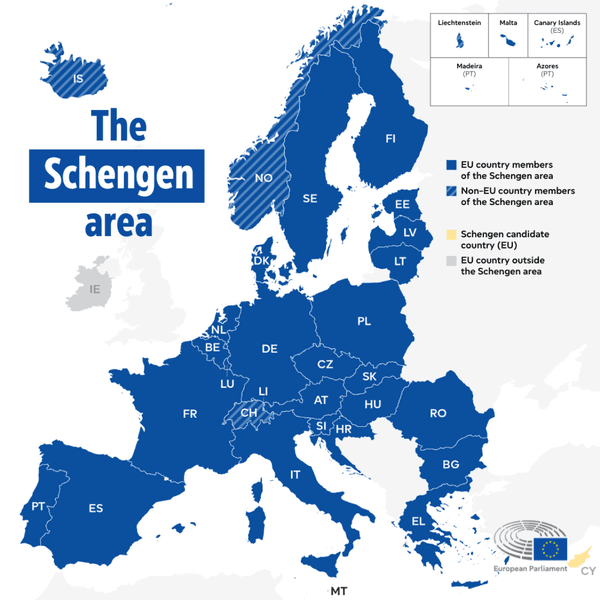
Schengen visa countries: where does a Schengen visa Type C allow you to go?
A Schengen visa Type C allows travel across the entire Schengen Area, not only to the country that issued the visa. Once admitted, holders may move freely between all Schengen states during the authorised period of stay, as long as they respect the 90/180-day rule.
As of today, the Schengen Area includes 29 European countries:
- Austria, Belgium, Croatia, Czech Republic, Denmark, Estonia
- Finland, France, Germany, Greece, Hungary, Iceland
- Italy, Latvia, Liechtenstein, Lithuania, Luxembourg
- Malta, Netherlands, Norway, Poland, Portugal
- Slovakia, Slovenia, Spain, Sweden, Switzerland
👉 This means that a Schengen visa short stay issued by any one of these countries grants access to all the others, without additional border checks.
However, applicants must still respect the main destination rule when applying:
- apply to the country where you will spend the most time, or
- if the stay is evenly split, apply to the country of first entry.
Failing to follow this rule does not usually block travel once the visa is issued, but it can increase the risk of refusal at the application stage or lead to closer scrutiny during future visa requests.
Who needs a Schengen visa Type C?
The obligation to apply for a Schengen visa Type C is determined strictly by nationality. Each year, millions of travellers from visa-required countries must apply for a Schengen visa short stay for tourism, family visits, business or short studies, even for trips lasting only a few days.
To better understand who is most concerned, the table below shows the nationalities that submit the highest number of Schengen short-stay visa applications worldwide, based on the latest consolidated EU statistics.
Nationalities requesting the most Schengen visa short stay applications
Nationality | Annual applications (approx.) | Visa required for short stay? | Key travel purposes |
|---|---|---|---|
🇨🇳 China | ~1.7–1.8 million | ✅ Yes | Tourism, business, family visits |
🇹🇷 Turkey | ~1.1–1.2 million | ✅ Yes | Family visits, business, tourism |
🇮🇳 India | ~1.1 million | ✅ Yes | Tourism, business, short studies |
🇲🇦 Morocco | ~600,000 | ✅ Yes | Family visits, tourism |
🇷🇺 Russia | ~600,000 | ✅ Yes | Tourism, private visits |
🇩🇿 Algeria | ~500,000 | ✅ Yes | Family visits |
🇹🇭 Thailand | ~300,000 | ✅ Yes | Tourism |
👉 These figures highlight that the Schengen visa short stay system is heavily used by travellers from Asia, the Middle East and North Africa, with India consistently ranking among the top three applicant nationalities worldwide.
Visa-required vs visa-free passports: how the rule works
Whether a traveller needs a Schengen visa Type C depends exclusively on their passport nationality.
Passport category | Short stay in the Schengen Area |
|---|---|
🇪🇺 EU / Schengen passport | No visa required |
🌐 Visa-free nationality | No visa required (up to 90 days) |
🚩 Visa-required nationality | Schengen visa Type C required |
Visa-free access mainly applies to passports from North America, the United Kingdom, parts of Latin America, East Asia and Oceania.
Travellers from most of Asia, Africa and the Middle East must apply for a Schengen visa short stay, even for very short trips.
Residence permits and long-term visas: a frequent misunderstanding
Holding a residence permit or long-term visa issued by a non-Schengen country does not replace a Schengen visa Type C.
Document held | Access to Schengen short stay |
|---|---|
UK residence permit (BRP) | ❌ Not valid |
US visa (B1/B2, F1, H1B) | ❌ Not valid |
Canadian PR or work permit | ❌ Not valid |
Residence permit from a non-Schengen country | ❌ Not valid |
These documents only authorise stay in the issuing country. To enter the Schengen Area for a short stay, travellers from visa-required nationalities must always rely on a valid Schengen visa short stay.
Schengen visa short stay requirements (official checklist)
Applying for a Schengen visa short stay requires submitting a standardised set of documents defined by the Schengen Visa Code. These requirements apply to all visa-required nationalities and are assessed as a whole: missing, inconsistent or non-compliant documents are among the most frequent causes of refusal.
Below is the official checklist used by consulates when reviewing a Schengen visa Type C application.
Mandatory documents required for a Schengen visa Type C
The following documents are required in all cases, regardless of the destination country or travel purpose:
Category | Document | Required for | What consulates check |
|---|---|---|---|
Identity | 🛂 Passport | All applicants | Valid ≥ 3 months after exit, issued < 10 years |
Application | 📝 Visa application form | All applicants | Fully completed, signed, consistent |
Photos | 📸 Passport photos | All applicants | Schengen / ICAO format |
Fees | 💶 Visa fee | All applicants | €90 adults / €45 children |
Insurance | 🏥 Travel insurance | All applicants | ≥ €30,000, Schengen-wide |
Finances | 💳 Proof of financial means | All applicants | Sufficient & credible funds |
Travel plan | ✈️ Flight itinerary | All applicants | Entry & exit dates shown |
Accommodation | 🏨 Accommodation proof | All applicants | Covers full stay |
Purpose: tourism | Tourism only | Clear, realistic travel plan | |
Purpose: family visit | 👨👩👧 Invitation letter + host documents | Family/private visit | Host legality & accommodation |
Purpose: business / events | 💼 Invitation from company or institution | Business / conferences | Professional legitimacy |
Purpose: short studies | 🎓 Course or event confirmation | Short studies / training | Duration < 90 days |
👉 Consulates assess not only the presence of these documents but also their internal consistency (dates, destinations, purpose).
There is no separate “tourist Schengen visa” or “business Schengen visa”.
All short stays fall under the Schengen visa Type C.
The only difference is how you prove the purpose of your trip.
HelloSafe makes it easy to comply with Short-Stay Schengen Visa (Type C) rules by helping you choose a Schengen-valid travel insurance policy and download a consulate-ready certificate in minutes.
Schengen visa photo size requirement: official specifications
Incorrect photos are a very common reason for applications being delayed or rejected, especially at the VFS/TLScontact stage. For a Schengen visa short stay (Type C), photos must strictly follow the official Schengen biometric standards.
Get to know more on Schengen Visa Photo Size and Requirements.
Requirement | Official specification |
|---|---|
📐 Photo size | 35 mm x 45 mm |
👤 Face size | Face must cover 70–80% of the photo |
🎨 Background | Plain light colour (white or light grey) |
🧑 Expression | Neutral expression, mouth closed |
👀 Eyes | Open and clearly visible |
🕶️ Glasses | Allowed only if no reflection and eyes fully visible |
🎩 Headwear | Not allowed (except for religious reasons) |
📅 Recency | Taken within the last 6 months |
👉 Photos must be biometric-quality, printed on photo paper, and identical to the digital photo sometimes captured at the visa centre.
Consulates and visa centres frequently reject applications when:
- the photo size is incorrect,
- the background is too dark or textured,
- the face is too small or off-centre,
- the photo is older than six months.
Using a photo that fully complies with the Schengen visa photo size requirements helps avoid unnecessary delays and last-minute resubmissions.
How much proof of financial means is required for a Schengen visa short stay?
Proof of sufficient financial means is a key assessment criterion for a Schengen visa short stay. Consulates use it to verify that the applicant can cover all travel expenses and leave the Schengen Area on time, without relying on undeclared work or public assistance.
There is no single universal amount for a Schengen visa Type C. Each Schengen country publishes its own reference thresholds, which are used by consulates and border authorities.
Country | Official reference | Minimum funds required |
|---|---|---|
🇫🇷 France | France-Visas | €65 per day with hotel booking€120 per day without accommodation proof |
🇪🇸 Spain | Spanish authorities | €118 per day, with a minimum overall threshold |
🇮🇹 Italy | Italian Ministry of Foreign Affairs | Variable scale depending on stay length (e.g. ~€270 for 1–5 days for one person, then daily supplements) |
👉 These figures are reference amounts, not approval guarantees. Consulates always assess the coherence between funds, itinerary and declared expenses.
To support a Schengen visa short stay application, applicants are generally expected to provide:
- Bank statements covering the last 3 to 6 months
- Proof of regular income (salary slips, employment letter, pension, business income)
- Statements clearly identifying the account holder and showing transaction history
Common red flags include:
- large unexplained cash deposits shortly before the application,
- balances inconsistent with declared income,
- use of third-party accounts without justification,
- screenshots instead of official bank-issued statements.
The goal is not to display large sums, but to demonstrate stable, credible financial capacity.
When personal funds are insufficient, financial sponsorship may be accepted in some cases.
This usually requires:
- a signed sponsor letter, proof of the sponsor’s financial resources,
- evidence of the relationship between sponsor and applicant.
However, sponsorship does not automatically strengthen an application. If poorly justified, it can raise concerns about independence or return intent. For a Schengen visa Type C, sponsorship should therefore be used carefully and transparently, and only when it clearly supports the overall credibility of the application.
What accommodation and flight reservation rules apply to a Schengen visa short stay?
Proof of where you will stay and how you will travel are two closely linked requirements in a Schengen visa short stay application. Consulates assess them together to verify the credibility of the itinerary, the main destination, and the applicant’s intention to leave the Schengen Area at the end of the stay.
Inconsistencies between accommodation and flight documents are among the most common refusal triggers.
Accommodation proof: hotel booking, Airbnb or invitation letter
Several accommodation options are accepted for a Schengen visa Type C, as long as they cover the entire duration of the stay and match the declared travel plan.
Accommodation type | Accepted for Schengen visa short stay? | What consulates verify |
|---|---|---|
🏨 Hotel booking | ✅ Yes | Applicant’s name, stay dates, address, itinerary consistency |
🏠 Airbnb / short-term rental | ✅ Yes | Official booking confirmation, full address, dates |
👨👩👧 Invitation letter | ✅ Yes | Host’s legal status, accommodation capacity |
🏢 Company accommodation | ✅ Yes | Employer letter and lodging details |
Refundable reservations are generally acceptable. What matters is that the accommodation appears realistic, verifiable and coherent at the time of application.
Flight reservations: paid tickets vs travel itinerary
For a Schengen visa Type C, consulates usually require a flight itinerary or reservation, not a fully paid ticket.
Accepted documents typically include:
- return or onward flight reservations,
- temporary holds or booking confirmations,
- itineraries showing entry and exit from the Schengen Area.
Buying non-refundable tickets before visa approval is not required and often discouraged. Fake or contradictory flight documents, however, can seriously weaken the application.
Main destination rule: aligning flights and accommodation
A Schengen visa short stay application must be submitted to:
- the country where the applicant will spend the most time, or
- if time is evenly split, the country of first entry.
Common mistakes include:
- applying to one country while most accommodation is booked in another,
- flight itineraries that contradict hotel or Airbnb bookings,
- assuming the issuing country must be the entry point.
Consulates primarily look for logical alignment between flights, accommodation and declared purpose. A coherent and realistic itinerary significantly reduces the risk of refusal and strengthens the overall Schengen visa short stay application.
How to apply for a Schengen visa short stay (step by step)
Applying for a Schengen visa short stay (Type C) follows a standard process across all Schengen countries, even though practical details (online forms, visa centres) may vary slightly depending on where you apply from.
Below is the step-by-step procedure used by most applicants worldwide.
Step 1: gather all required documents
Start by preparing the complete document file for your Schengen visa Type C, including:
- passport and photos,
- application form,
- travel insurance,
- proof of financial means,
- accommodation and flight itinerary,
- purpose-specific supporting documents.
Submitting an incomplete or inconsistent file is one of the main reasons for refusal or delays.
Step 2: identify the correct Schengen country to apply to
You must apply to:
- the country where you will spend the most time, or
- if time is evenly split, the country of first entry.
Applying to the wrong consulate is a common mistake and may result in refusal or the application being redirected.
Step 3: complete the visa application form
Depending on the Schengen country:
- the form may be completed online (most common),
- or on paper in a few cases.
Make sure that:
- dates, destinations and purpose match all supporting documents,
- personal details match your passport exactly.
Step 4: book an appointment at a visa centre (VFS, TLScontact, etc.)
Most Schengen countries outsource application collection to visa centres such as VFS Global or TLScontact.
At this stage, you will:
- book an appointment,
- pay service fees,
- receive instructions for biometric collection.
Appointment availability can be limited in high-demand regions.
Step 5: submit your application in person
On the appointment day, you must:
- submit all documents,
- provide biometrics (fingerprints and photo),
- answer basic questions about your trip if asked.
Once submitted, the application is forwarded to the consulate for a decision. Processing usually takes around 15 calendar days, but can be longer in some cases.
How much does a Schengen visa cost? (Schengen visa fees)
The cost of a Schengen visa short stay (Type C) is set at EU level and applies uniformly across all Schengen countries. These fees are mandatory and must be paid when submitting the application, regardless of the final decision.
Official Schengen visa fees (Type C)
Applicant category | Visa fee |
|---|---|
👤 Adults (12 years and older) | €90 |
🧒 Children (6–11 years) | €45 |
👶 Children under 6 years | Free |
These fees apply to tourism, family visits, business trips, events and short studies under the same Schengen visa Type C.
Additional costs to consider
In addition to the visa fee, applicants should expect extra mandatory or optional costs, depending on where they apply:
Cost type | Typical amount | Notes |
|---|---|---|
🏢 Visa centre service fee (VFS, TLScontact, etc.) | €20–€40 (approx.) | Paid to the service provider, non-refundable |
🏥 Travel insurance | Varies | Mandatory for Schengen visa Type C |
📄 Document preparation | Varies | Photos, translations, copies |
✈️ Flight & accommodation reservations | Varies | Refundable options recommended |
Are Schengen visa fees refundable?
No. Schengen visa fees are non-refundable, even if:
- the visa is refused,
- the applicant withdraws the application,
- the processing time is longer than expected.
This is why many applicants try to limit financial risk elsewhere, especially when choosing travel insurance with a visa-refusal refund option.
The Schengen visa cost is the same whether you apply for tourism, business or a family visit.
What changes the total budget is not the visa fee, but the supporting documents and insurance choices.
Is travel insurance mandatory for a Schengen visa Type C?
Yes. Travel insurance is a legal obligation for a Schengen visa Type C, as explicitly required by Article 15 of the Schengen Visa Code.
Every applicant must demonstrate that they are insured for the entire duration of their stay and for specific medical risks. Consulates do not treat this as a formality: if the insurance certificate does not clearly meet the official criteria, the application can be rejected without further examination.
This obligation applies to all visa-required nationalities, all Schengen destinations and all short-stay purposes (tourism, family visit, business, events or short studies).
What are the minimum insurance requirements for a Schengen visa Type C (€30,000)?
To be accepted, a travel insurance policy must clearly include all of the following elements:
Requirement | What consulates expect |
|---|---|
🏥 Medical expenses | Minimum €30,000 coverage for emergency medical care |
🚑 Emergency hospitalisation | Included without restrictive sub-limits |
🛫 Medical repatriation | Repatriation to the country of residence for medical reasons |
⚰️ Repatriation in case of death | Explicitly stated in the policy terms |
🌍 Geographical validity | Valid across all Schengen countries |
📅 Coverage period | Covers the entire planned stay, from entry to exit |
If one of these criteria is missing or unclear, the insurance may be considered non-compliant, even if it is a genuine travel insurance product.
Because Schengen visa fees are non-refundable, many applicants choose insurance that limits financial risk in case of refusal. HelloSafe makes it possible to compare and subscribe online to Schengen-compliant travel insurance in just a few minutes, with policies that meet consular requirements (minimum €30,000 medical coverage, repatriation, validity across all Schengen countries). HelloSafe also offer a refund of the insurance premium if the visa is refused, making this a practical and secure choice for a Schengen visa short stay application.
Get your Schengen travel insurance certificate in 2 minutes
Schengen visa short stay refusal: reasons and statistics
Refusals are an integral part of the Schengen visa short stay system and affect a significant share of applicants each year. Understanding the scale of visa schengen refusals, the main grounds used by consulates, and the next steps after a refusal helps applicants avoid repeating the same errors when applying for a Schengen visa Type C.
Refusal rates and key facts (global overview)
Indicator | Latest available data |
|---|---|
🌍 Global refusal rate | ~14–15% of Schengen visa Type C applications |
📄 Annual applications | Over 11 million worldwide |
🔍 Variations by nationality | Refusal rates vary widely depending on applicant profile |
🇮🇳 Indian applicants | Generally close to global average, with peaks linked to documentation issues |
For Indian applicants in particular, refusals are most often linked to financial proof inconsistencies, unclear travel purpose or weak itinerary justification, rather than to nationality alone.
Most frequent refusal reasons for a Schengen visa short stay
Refusal ground | What consulates usually identify |
|---|---|
❌ Insufficient financial means | Funds not matching stay duration or unexplained deposits |
❌ Unclear purpose of travel | Missing or weak supporting documents |
❌ Inconsistent itinerary | Mismatch between flights, accommodation and dates |
❌ Doubts about return intention | Limited ties to home country or overstay risk |
❌ Non-compliant travel insurance | Coverage below €30,000 or limited territory |
❌ Overall lack of credibility | Combination of small inconsistencies |
Refusals are rarely caused by a single missing document. They typically result from an overall assessment that the application does not sufficiently demonstrate the conditions of stay.
What happens after a Schengen visa Type C refusal?
Option after refusal | What it means in practice |
|---|---|
🔄 Reapply | Submit a new application correcting the refusal reasons |
⚖️ Appeal | Possible in some countries within a strict deadline |
⏸️ Postpone | Wait until financial or personal circumstances improve |
A refusal does not result in a permanent ban from the Schengen Area. However, reapplying without addressing the identified weaknesses often leads to a second refusal. Strengthening the file and ensuring full compliance with Schengen visa short stay requirements significantly improves the chances of approval in future applications.
What are the other types of Schengen visas?
The Schengen visa short stay (Type C) is the most commonly issued visa, but it is not the only Schengen visa category. Depending on travel frequency, duration and purpose, applicants may be eligible for other types of Schengen visas or specific formats within the same category.
Understanding these options helps travellers choose the most appropriate visa and avoid unnecessary reapplications.
Short-stay Schengen visas: different formats under the same Type C
All short stays (up to 90 days within any 180-day period) fall under the Schengen visa Type C, but this visa can be issued in different entry formats:
Schengen visa format | What it allows |
|---|---|
🔁 Single-entry visa | One entry into the Schengen Area during the validity period |
🔁🔁 Double-entry visa | Two separate entries during the validity period |
♾️ Multiple-entry Visa (MULT) | Multiple entries within the visa’s validity (days still capped at 90/180) |
A multiple-entry Schengen visa does not allow longer stays. It simply offers more flexibility for travellers who need to enter and exit the Schengen Area several times.
Long-term national visas (Type D)
For stays longer than 90 days, travellers must apply for a national long-stay visa (Type D) issued by a specific Schengen country.
Type D visas are used for:
- long-term studies,
- employment,
- family reunification,
- residence purposes.
Unlike a Schengen visa Type C, a Type D visa:
- is valid mainly for one country,
- follows national immigration rules,
- does not fall under the short-stay 90/180-day framework.
There is no separate “tourist Schengen visa” or “business Schengen visa” category.
Tourism, business, family visits and short studies are all covered by the same Schengen visa Type C.
What varies is the number of entries and the validity period, not the visa type itself.
This is a common misconception often repeated in online forums (including Reddit).
The rule is 90 days total within any rolling 180-day period, across all Schengen countries combined, not per country. Spending 30 days in France and 30 days in Spain already counts as 60 days used. Overstaying by even one day can negatively affect future applications.
No. The 90/180-day rule is rolling, not fixed.
Leaving Schengen does not reset the counter automatically. Each day of stay is counted backward over the previous 180 days. Overstays often happen when travellers assume the clock “resets” after exit, which is incorrect.
No. Fully paid flights are not required and are often discouraged.
Consulates usually ask for a flight itinerary or reservation showing entry and exit dates. Buying non-refundable tickets before approval exposes applicants to unnecessary financial risk.
Yes, Airbnb and short-term rentals are accepted, as long as the booking:
- covers the entire stay,
- shows the full address,
- matches the travel itinerary.
In practice, consulates focus on verifiable accommodation, not the brand or type.
Refundable reservations are commonly used and generally accepted, provided they are:
- genuine,
- consistent with flights and travel dates,
- not cancelled before the visa decision.
What consulates assess is credibility, not whether the booking is refundable. Fake or contradictory reservations can seriously weaken an application.
There is no universal “safe amount” that guarantees approval.
Each country sets official daily reference thresholds, but consulates assess:
- length of stay,
- accommodation type,
- income stability,
- consistency with travel plans.
Large unexplained balances can raise red flags.
Most consulates ask for 3 to 6 months of bank statements.
Refusals are often linked to:
- recent cash deposits,
- sudden balance increases,
- statements without transaction history,
- screenshots instead of official bank documents.
Stability matters more than the final balance.
Yes. Travel insurance is a legal requirement under the Schengen Visa Code.
Applications are frequently refused when the policy:
- does not clearly state €30,000 medical coverage,
- is valid for only one country,
- does not cover the full travel period.
Price itself does not matter, but non-compliant insurance does.
Refusals can happen when policies (often chosen only for price) miss required wording such as repatriation, coverage territory, or clear limits in euros. Consulates assess content, not cost.
No.
Travel insurance is a compliance requirement, not a compensating factor. It cannot offset weak financial proof, unclear travel purpose or doubts about return intention.
There is no officially “easy” Schengen country.
Approval depends on:
- application quality,
- consistency,
- applicant profile.
Applying to a country that is not your main destination can increase refusal risk.
No. A refusal is not a permanent ban.
However, it is recorded and future applications may be scrutinised more closely. Reapplying without addressing the refusal reasons often leads to another refusal.
Yes, but only if you correct the issues identified in the refusal letter.
Submitting the same documents again usually leads to another refusal. Successful reapplications typically include clear improvements in documentation or explanation.
A Schengen visa short stay does not authorise employment, including remote work presented as the main purpose of stay.
Declaring remote work can create problems at the visa or border stage, and rules/enforcement may vary by case.
Yes, as long as the issuing country is your main destination.
However, inconsistencies between entry point, accommodation and declared purpose can raise doubts, especially if the itinerary is unclear.
On the same topic

Schengen visa sticker explained 2026: read every field
Oct 11, 2026
Sponsorship letter sample for visa: complete guide for Schengen applications
Oct 11, 2026

TLScontact Schengen visa 2026: book, track, fees, contact
Oct 1, 2026