How to get a Schengen visa from the Philippines: requirements, fees & approval tips
 A. FruchardCo-Founder & Travel Insurance ExpertLast updated: October 7, 2026
Travelling to Europe from the Philippines is a dream for many, whether it’s for tourism, visiting family and friends, pursuing short-term studies, or attending business events. But getting a Schengen visa can feel overwhelming: applicants frequently run into questions about financial proof, insurance compliance, appointment availability, and increasing processing times at visa centres.
Understanding the practical steps and requirements before you apply makes a huge difference. This guide breaks down exactly what Filipinos need to prepare, from how to choose the right embassy to the documents you must include, so you can maximise your chances of approval and reduce stress and unnecessary expenses.
📊 Schengen visas from the Philippines in 2024: around 218,000 applications, with a refusal rate of only ~6%, significantly lower than the global average (~14.8% worldwide).
💶 Total cost to apply: expect to pay around ₱8,500 to ₱11,000, including the €90 visa fee (~₱6,400), VFS/TLS service fees, photos and mandatory travel insurance.
📄 Key documents required: valid passport, Schengen application form, bank certificate + bank statements (ADB), proof of employment or business, travel itinerary, Schengen-compliant travel insurance, and a cover letter.
🛂 Main application steps: choose the correct embassy, book a VFS Global or TLScontact appointment, prepare documents, attend biometrics, then wait for the decision.
🧾 Travel insurance is compulsory: minimum €30,000 coverage (≈ ₱2 million), valid in all Schengen countries and for the entire stay.
⏳ Processing time: officially around 15 days, but often 30–45 days during peak periods such as summer (May–August) and Christmas season.
Is a Schengen visa mandatory for Filipinos travelling to Europe?
Yes: Filipino passport holders must obtain a Schengen visa before travelling to most European countries. The Philippines is not part of the EU’s visa-free list, which means you cannot enter countries like France, Italy, Germany or Spain without a visa, even for short tourist trips.
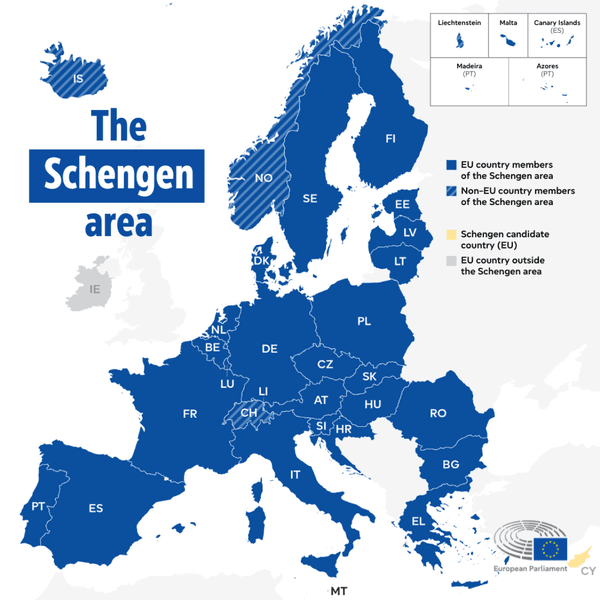
A Schengen visa is a short-stay visa that allows you to travel within the Schengen Area, a group of 29 European countries that have removed internal border controls. With one single visa, you can move freely between all Schengen states during your authorised stay, as long as you respect the validity period and number of entries granted.
This makes the Schengen visa extremely practical for Filipino travellers planning a multi-country European trip. For example, you can land in Italy, continue to France, then visit Switzerland and Germany without needing to apply for a separate visa for each country, as long as all are part of Schengen.
However, it is important not to confuse the Schengen Area with the whole of Europe. Countries like the United Kingdom and Ireland are not part of Schengen. Even if you already have a Schengen visa, you will still need a separate UK or Irish visa to travel there, and vice versa.
Visa type | What it allows ✈️ |
|---|---|
🟢 Single-entry (Type C) | One entry into the Schengen Area for a short stay (up to 90 days) |
🔁 Multiple-entry – MULT (Type C) | Several entries into the Schengen Area during the visa’s validity (still limited to 90 days in any 180-day period) |
✈️ Airport transit visa (Type A) | Transit through a Schengen airport without entering the Schengen Area |
🔁 Can Filipinos get a multiple-entry Schengen visa?
Yes. Filipino passport holders can obtain a multiple-entry Schengen visa, but it is usually granted to applicants with a strong travel history. This visa allows multiple entries into the Schengen Area during its validity, while respecting the 90 days within any 180-day period rule.
Embassies are more likely to issue a multiple-entry visa to Filipinos who have previously held Schengen visas, travelled to countries like Japan, South Korea, the UK or the US, and can show stable employment or business ties in the Philippines. First-time applicants typically receive a single-entry visa, even with complete documents.
Before moving on to the application process, one requirement deserves special attention: Schengen travel insurance. It is not optional for Schengen visas, and it must strictly follow European rules (coverage amount, countries covered, and travel dates). Choosing a policy that is fully compliant and easy to adjust, like those available through HelloSafe, can help avoid unnecessary refusals and last-minute stress when submitting your application.

Get your Schengen travel insurance certificate in 2 minutes
What are the Schengen visa requirements for Filipinos?
When Filipinos apply for a Schengen visa, European embassies are mainly trying to verify two things: that you can afford your trip and that you will return to the Philippines after visiting Europe. To do this, they rely on a standard set of documents required for all Schengen countries.
Below is the complete list of documents Filipino applicants must prepare.
Document | Why it matters |
|---|---|
📘 Passport | Must be issued within the last 10 years and remain valid for at least 3 months after your return from Europe |
📝 Schengen application form | The official EU form used by all Schengen embassies |
Must meet biometric rules (size, background, face position) | |
💰 Bank certificate & bank statements (ADB) | Shows your financial capacity and stability over time |
🏢 Certificate of Employment or business documents | Proves strong economic and professional ties to the Philippines |
✈️ Travel itinerary (flights & accommodation) | Shows realistic travel plans and main destination |
🏥 Travel insurance (minimum €30,000) | Mandatory for Schengen visas; must cover all Schengen countries |
Explains your purpose of travel and intention to return |
This documentation package is used by all Schengen embassies in the Philippines, whether you apply through VFS Global in Manila or Cebu or via TLScontact for France. A complete and consistent file greatly increases your chances of approval, especially when financial proof and travel insurance meet Schengen standards exactly.
How to get a Schengen visa from the Philippines
Applying for a Schengen visa from the Philippines follows a clear process, but small mistakes, especially with embassy choice, financial proof (ADB) and insurance compliance, can delay or even derail an application. Below is the step-by-step method used by Filipino applicants applying through VFS Global (Manila or Cebu) or TLScontact (for France).
🧭 Step 1: Choose the correct embassy
You must apply at the embassy (or visa centre) of the Schengen country where you will stay the longest.
- If you spend more nights in Italy than in France, apply to Italy.
- If you spend the same number of days in several countries, apply to the country where you enter Schengen first.
This choice affects where you submit your documents in the Philippines, not where you are allowed to travel. Once issued, your Schengen visa lets you move across all Schengen countries within the validity of your visa.
Examples for Filipino applicants
- 🇮🇹 Italy → VFS Global Manila or Cebu
- 🇫🇷 France → TLScontact Manila or Cebu
- 🇩🇪 Germany → VFS Global Manila
📅 Step 2: Book your VFS or TLS appointment
Most Filipino applicants submit their files through the centres below. Book as early as possible: during May–August and November–December, waiting times of 2–4 weeks are common.
Centre 🏢 | Location 📍 | How to book 🔗 | Notes ℹ️ |
|---|---|---|---|
🇮🇹 VFS Global (Italy & others) | Manila & Cebu | https://visa.vfsglobal.com/phl/en/ita/book-an-appointment | Handles Italy and several other Schengen countries |
🇩🇪 VFS Global (Germany, NL, CH, etc.) | Manila | https://visa.vfsglobal.com/phl/en/ | Choose the country after logging in |
🇫🇷 TLScontact (France) | Manila & Cebu | https://fr.tlscontact.com/ph/ | Mandatory for France Schengen visas |
🇪🇸 VFS Global (Spain) | Manila | https://visa.vfsglobal.com/phl/en/esp/ | Spain routed via VFS |
Check both Manila and Cebu (slots sometimes open earlier in Cebu).
New appointments appear without notice, so refresh regularly.
📂 Step 3: Prepare all required documents
Filipino applicants are closely assessed on:
- Bank balance and ADB (Average Daily Balance)
- Proof of income and employment/business
- Strong ties to the Philippines (job, family, assets, future plans)
Embassies look for financial stability over time, not just a large last-minute deposit.
🏥 Step 4: Buy Schengen-compliant travel insurance
Your policy must:
- Cover at least €30,000 (≈ ₱2 million) in medical expenses
- Be valid in all Schengen countries
- Cover every day of your stay
Dates must match your travel plans. If your appointment or flights change, you may need a re-issued certificate. Choosing a flexible, refundable policy (like those available via HelloSafe) helps avoid losing money if your visa is refused or your dates move.
🧬 Step 5: Attend your biometrics appointment
At VFS or TLScontact in Manila or Cebu, you will submit:
- Your full document set
- Fingerprints
- Digital photo (required for all applicants aged 12+)
📦 Step 6: Track your application
After submission, track your passport via:
- VFS Global tracking or
- TLScontact tracking
Processing usually takes 15–45 days, depending on the embassy and the season.
🎫 Step 7: Receive your passport
You will collect your passport at VFS/TLS or receive it by courier. If approved, your visa shows:
- Schengen visa sticker validity dates
- Number of entries (single, double, or multiple)
- Maximum length of stay
You can then travel freely within the Schengen Area during your visa’s validity.
How much does a Schengen visa cost in the Philippines?
For Filipino applicants, the total cost of a Schengen visa is more than just the embassy fee. You should also budget for the visa centre service fee, mandatory travel insurance, and small but unavoidable expenses such as photos and document copies. Knowing the full cost in advance helps avoid last-minute surprises.
Here is what most applicants from the Philippines typically pay:
Cost item | EUR | PHP 🇵🇭 |
|---|---|---|
💶 Visa fee | €80 | ~₱4,900 |
🏢 VFS service fee | – | ~₱1,200–1,600 |
🏥 Travel insurance | €10–40 | ~₱600–2,500 |
📸 Photos & copies | – | ~₱300–500 |
In practice, most Filipinos spend between ₱8,500 and ₱11,000 just to submit a Schengen visa application, even before booking flights or hotels. Because of this, many applicants choose flexible travel insurance that can be refunded if the visa is refused, a small detail that can save a significant amount of money.
How much money should Filipinos have in the bank for a Schengen visa?
One of the most common questions from Filipino applicants is: “How much money do I need in my bank account to get a Schengen visa?”
There is no single official minimum, but European embassies use your bank balance, bank statements and ADB (Average Daily Balance) to decide whether you can realistically afford your trip.
Unlike some Asian visas, Schengen embassies do not look only at how much money you have today. They focus on your ADB, which shows how stable your finances are over time. A large deposit made just before applying can actually raise red flags, while a consistent balance over several months is viewed much more positively.
As a general rule, most Schengen countries expect travelers to have the equivalent of €50 to €100 per day for their stay, roughly ₱3,400 to ₱6,900 per day, depending on the destination and accommodation type. This amount must cover food, local transport, sightseeing, and other daily expenses, not just hotel costs.
If someone in Europe is sponsoring your trip, you may submit an affidavit of support or invitation letter, but you are still expected to show some personal funds in your own bank account. Being fully sponsored does not eliminate the need for financial proof from the applicant.
Trip length | Safe bank balance 💰 |
|---|---|
7 days | ₱70,000 – ₱120,000 |
14 days | ₱120,000 – ₱200,000 |
30 days | ₱250,000+ |
These figures are not official limits, but they reflect what Filipino applicants commonly present to Schengen embassies to avoid financial refusal. Matching your bank balance, ADB, and travel plans is one of the strongest ways to improve your chances of approval.
Is travel insurance mandatory for a Schengen visa from the Philippines?
Yes: travel insurance is mandatory for every Filipino applying for a Schengen visa. Without a valid insurance certificate, your application will be rejected by VFS Global, TLScontact, or the embassy, even if all your other documents are complete.
Your policy must strictly follow EU Schengen visa rules, which are the same for all Filipinos applying to any Schengen country.
Requirement | What it means for Filipino applicants |
|---|---|
🏥 Minimum coverage | At least €30,000 (≈ ₱2 million) for medical treatment and emergencies |
🌍 Geographical coverage | Must be valid in all Schengen countries (not just Italy, France, etc.) |
📅 Travel dates | Must cover every day from arrival in Europe to departure |
🚑 Repatriation | Must include medical evacuation and return to the Philippines |
📄 Official certificate | Must be issued in English and accepted by Schengen embassies |
If even one of these elements is missing (for example, if the insurance only covers one country or the dates do not match your flight itinerary), your visa can be refused immediately.
This is why many Filipino travellers prefer Schengen-compliant insurance that can be generated instantly, updated if appointment dates change, and refunded if the visa is denied. Platforms like HelloSafe make it easy to get a certificate that meets embassy rules while keeping your costs and risks under control.
How long does Schengen visa processing take in the Philippines?
For Filipino applicants, the normal processing time for a Schengen visa is about 15 calendar days once the embassy receives a complete file from VFS Global (Manila or Cebu) or TLScontact (for France). This is the standard target used by most Schengen consulates.
In practice, timelines from the Philippines are highly seasonal. During busy periods, processing can stretch to 30–45 days or more, especially if embassies request extra documents or if appointment slots are scarce.
🇵🇭 When are delays most likely?
Beyond Europe’s summer rush, the Philippines has its own travel peaks that overload VFS and TLS centers:
- Holy Week (March–April) ✝️ A major local travel period. Many Filipinos plan trips abroad around school and work breaks, causing a spike in visa submissions in late February–March.
- Graduation & summer travel (May–August) 🎓☀️ This overlaps with Europe’s high season and is the most congested period for Schengen visas from Manila and Cebu. Expect longer waits for both appointments and decisions.
- Undas / All Saints’ Day (late October–early November) 🕯️ Another peak for outbound travel, often paired with Europe’s autumn trips.
- Christmas & New Year (November–December) 🎄 Filipinos visiting relatives in Europe or taking winter holidays create a second annual surge, pushing processing times well beyond 15 days.
If you are travelling in summer 2025 or around Christmas, apply 8–10 weeks before departure. This buffer helps you secure a VFS/TLS appointment in time and leaves room for potential embassy backlogs, while also giving you flexibility to adjust documents like travel insurance dates if your appointment moves.
Why are Schengen visas refused for Filipinos?
In 2024, Filipino applicants had a Schengen visa refusal rate of around 6%, which is significantly lower than the global average. Still, thousands of applications from the Philippines are refused every year, and almost all of them fall into a few well-known categories.
Most refusals are not about the destination you choose, but about how convincing and consistent your file looks to the embassy.
Main refusal reason | Share of refusals* | What it means for Filipino applicants | How to avoid |
|---|---|---|---|
💰 Low ADB / weak financial proof | ~21% | Your Average Daily Balance (ADB) or bank history suggests you may not be able to afford the trip | Show stable funds over 3–6 months, not last-minute deposits; match your budget to trip length (€50–€100/day) |
🏠 Weak ties to the Philippines | ~12% | The embassy doubts you will return (no strong job, business, property, or family links) | Provide a COE, approved leave, business registration, payslips, or proof of family dependents |
✈️ Inconsistent travel plans | ~10% | Flights, hotels, and cover letter do not match or look unrealistic | Use a coherent itinerary (same dates, same countries, logical route) and explain it clearly in your cover letter |
🏥 Incomplete or non-compliant insurance | ~15% | Insurance does not meet Schengen rules (coverage amount, dates, or countries) | Buy Schengen-compliant insurance with €30,000 coverage, valid in all Schengen countries and for all travel dates |
*Shares are based on EU-wide Schengen refusal statistics and reflect the same patterns seen by Filipino applicants.
In practice, many refusals from the Philippines happen because one single requirement is weak, not because the whole application is bad. This is why choosing a fully compliant and flexible Schengen travel insurance, like the policies available through HelloSafe, is a simple way to remove one of the most common refusal risks while protecting your money if your visa is denied.
Which Schengen country is easiest for Filipinos?
Many Filipino travelers search for the “easiest Schengen visa”, hoping to find the country with the highest approval rate. In reality, there is no official easiest Schengen country. All Schengen embassies apply the same European visa rules and use similar criteria to evaluate Filipino applications.
What actually determines where you apply is your travel itinerary. You must submit your application to:
- the country where you will stay the longest, or
- if your stay is evenly split, the country where you will enter Schengen first.
Trying to choose an embassy just because it is perceived as “easier” can backfire if your itinerary does not match. Schengen embassies regularly refuse applications that are filed with the wrong country, even if all other documents are correct.
The good news is that once your visa is issued, you can travel freely across the entire Schengen Area, whether you enter through Italy, France, Germany, Spain, or the Netherlands. Your travel insurance must therefore be valid for all Schengen countries, not just the embassy you apply to, which is why choosing a Schengen-wide compliant policy is essential when preparing your application.
Yes. A family member or partner in Europe can sponsor you by providing an invitation letter and, in some cases, a formal declaration of support. However, Filipino applicants are still expected to show some personal funds in their own bank account. Being fully sponsored does not remove the need to prove financial stability.
No. You only need a flight itinerary or reservation, not fully paid tickets. Many Filipinos use refundable or on-hold bookings to avoid losing money if the visa is refused.
Yes, if you are staying with a host. You must submit an invitation letter and, for some countries like France, an official accommodation certificate. Otherwise, hotel reservations are required.
If your visa is refused, the €90 visa fee and VFS/TLS service fees are not refunded. This is why many Filipino travellers choose travel insurance that can be refunded if the visa is denied, so at least one major cost can be recovered.
No. AXA is not mandatory. Any insurance company is accepted as long as the policy meets Schengen requirements: €30,000 coverage, valid in all Schengen countries, and covering the full travel period.
Yes, but your insurance certificate must always match your travel dates. If your VFS or TLS appointment is delayed, you may need a new or updated certificate. Flexible insurance providers make this process much easier.
Processing times depend on the embassy, not the city. However, appointment availability can differ, and Cebu sometimes has earlier slots than Manila during busy seasons.
Most Filipinos should apply at least 6–8 weeks before travel, and 10 weeks in summer or Christmas season, to allow time for appointments and possible delays.
On the same topic

Schengen visa sticker explained 2026: read every field
Oct 20, 2026

Sponsorship letter sample for visa: complete guide for Schengen applications
Oct 11, 2026

TLScontact Schengen visa 2026: book, track, fees, contact
Oct 1, 2026