How to get a Schengen visa from Canada (2026 guide): requirements, steps, fees and processing time
 A. FruchardCo-Founder & Travel Insurance ExpertLast updated: September 30, 2026
Applying for a Schengen visa from Canada can feel surprisingly stressful — not because the rules are unclear, but because the process is full of practical hurdles. Many people searching this topic are not Canadian citizens (who are usually visa-exempt for short stays), but international students, work permit holders and Canadian permanent residents with a non-visa-exempt passport. In real life, the biggest pain points are getting an appointment, understanding which Schengen country you must apply through, and avoiding small document mistakes that can trigger delays or refusals.
To improve your odds, the approach is simple: start with eligibility (do you need a visa?), apply through the correct destination country, and submit a complete, consistent file (dates, itinerary, finances and supporting documents all aligned). Two items tend to cause avoidable problems: proof of funds (presented clearly, in CAD) and Schengen-compliant travel insurance (certificate that meets the €30,000 rule and covers your full stay across the Schengen Area).
👤 Who needs a Schengen visa from Canada? Most applicants are international students, work permit holders and Canadian permanent residents with non-visa-exempt passports, while Canadian citizens are usually visa-free for short stays.
📊 Applications from Canada every year: Canada is one of the main Schengen visa application hubs in the Americas, with tens of thousands of applications submitted each year through VFS Global centres in Toronto, Vancouver and Montreal.
❌ Schengen visa refusal rate: The global refusal rate is around 14–15% (about 1 in 7 applications). Applications submitted from Canada have a much lower refusal rate, estimated at around 6%, but refusals still occur, mainly due to financial doubts, weak ties to Canada or non-compliant travel insurance.
💰 Total cost of a Schengen visa from Canada: The visa fee is €90 (around CAD 130), plus CAD 30–45 in VFS service fees, in addition to document-related costs such as photos, copies and mandatory travel insurance.
⏳ Processing time when applying from Canada: The official processing time is 15 calendar days, but in practice it often ranges from 20 to 45 days, especially during peak periods like May–August and December.
🧭 Main steps to apply from Canada: The process includes checking visa eligibility, applying through the correct Schengen country, booking a VFS or consulate appointment, preparing compliant documents and submitting biometrics in Canada.
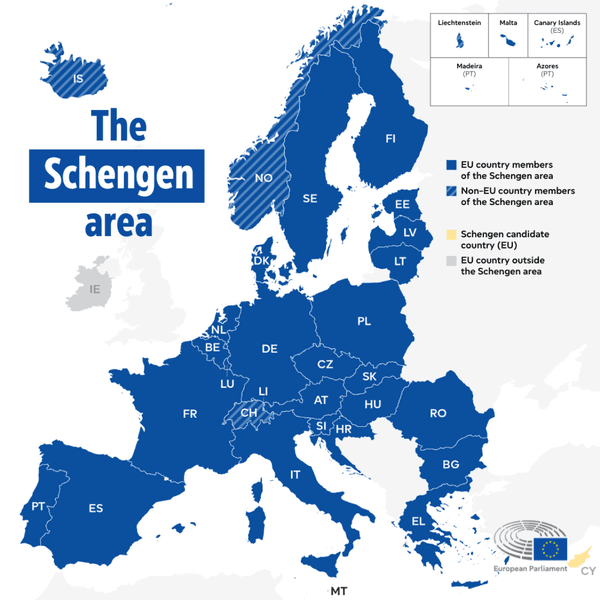
🛡️ Travel insurance is mandatory: Schengen rules require at least €30,000 in medical coverage, valid in all 27 Schengen countries for the entire stay, and insurance issues are involved in a significant share of refusals, which is why many applicants from Canada choose online insurance with an instant certificate.
Do you need a Schengen visa if you live in Canada?
This is the first question every applicant must answer. Living in Canada does not automatically mean you are exempt from the Schengen visa requirement. What matters is your passport, not your Canadian status.
Canadian citizens do not need a Schengen visa for short stays of up to 90 days for tourism or business. They can travel visa-free across the Schengen Area.
Canadian permanent residents may still need a Schengen visa, depending on their nationality. Holding a PR card does not grant visa-free access to Europe if the passport itself is subject to the Schengen visa requirement.
Students and work permit holders usually need a Schengen visa when their nationality is not visa-exempt, even if they have been living in Canada for several years.
Status in Canada | Passport type | Schengen visa required |
|---|---|---|
🇨🇦 Canadian citizen | Canadian passport | ❌ No |
🏠 Permanent resident | Indian, Chinese, Filipino passport | ✅ Yes |
🎓 Study permit holder | Non-exempt nationality | ✅ Yes |
💼 Work permit / PGWP | Non-exempt nationality | ✅ Yes |
This point is often misunderstood, especially by permanent residents who assume that Canadian PR status grants visa-free travel to Europe. Once your eligibility is clear, the next step is preparing a fully compliant application, including mandatory travel insurance that meets Schengen requirements. Online comparison tools such as HelloSafe allow applicants from Canada to quickly check insurance options and obtain a Schengen-compliant certificate without delaying their visa process.

Get your Schengen travel insurance certificate in 2 minutes
What are the requirements for a Schengen visa application from Canada?
Before booking an appointment, applicants must make sure they meet all administrative requirements set by Schengen states when applying from Canada. These requirements are assessed both at the VFS Global centre and later by the consulate, and inconsistencies between documents are a frequent cause of delays or refusals.
To apply from Canada, you must hold a valid passport issued within the last 10 years and prove that you are legally residing in Canada with a PR card, study permit or work permit. You also need to clearly justify the Schengen visa cover letter explaining the purpose of your trip with supporting documents such as flight plans, accommodation bookings or an invitation letter. Financial proof must show that you can cover your stay, with bank statements presented in CAD and consistent with your travel plans. Finally, Schengen-compliant travel insurance is mandatory and must cover the entire duration of your stay in all Schengen countries.
Required document | Mandatory | What the consulate checks |
|---|---|---|
🛂 Passport | ✅ | Issued within the last 10 years and valid beyond the return date |
🏠 Proof of legal residence in Canada | ✅ | PR card or valid study/work permit covering the full application period |
📝 Completed application form | ✅ | Accuracy and consistency with supporting documents |
✅ | Correct size, background and recent appearance | |
💰 Bank statements (last 3 months) | ✅ | Sufficient funds, regular income and realistic travel budget |
🛡️ Travel insurance (≥ €30,000) | ✅ | Medical coverage valid in all Schengen countries for the full stay |
All Schengen visa documents must be complete, recent and coherent. Missing paperwork, unclear financial proof or non-compliant insurance can result in additional checks, longer processing times or a direct visa refusal. Taking the time to prepare each requirement carefully is one of the most effective ways to improve your chances when applying from Canada.
How to get a Schengen visa from Canada step by step
This section breaks down the exact process for applying for a Schengen visa from Canada, with practical details that reflect what applicants actually face on the ground. While Schengen rules are unified, the experience differs depending on your city, the visa centre you use and the consulate handling your file.
🧭 Step 1: Confirm whether you need a Schengen visa
Start with your passport nationality, not your Canadian status. This single check determines whether you need to apply at all.
Many applicants living in Canada assume that a PR card or work permit replaces a visa requirement. It does not. Schengen rules always follow nationality.
🌍 Step 2: Choose the correct Schengen country
You must apply through the country that best represents your trip. Consulates verify this carefully.
Your travel situation | Where to apply |
|---|---|
One main destination | That country’s consulate |
Multiple countries | Country of longest stay |
Equal stays | First country of entry |
Applying through the “wrong” country is a common reason for refusals, even when the rest of the file is strong.
📅 Step 3: Book a VFS or consulate appointment in Canada
Most Schengen visa applications from Canada are submitted through VFS Global, depending on the country you are applying to. Appointment availability varies widely by city and by season.
City | Application centre | Common Schengen countries |
|---|---|---|
Toronto | VFS Global | France, Italy, Germany, others |
Vancouver | VFS Global | France, Netherlands, others |
Montreal | VFS + consulates | Processing hub for several states |
Calgary | VFS Global | Limited country coverage |
Applicants must apply within the jurisdiction of their place of residence in Canada. Applying in the wrong city can lead to your application being rejected or not accepted.
Toronto and Vancouver are usually the hardest cities for appointments during May–August. Montreal often processes files for several countries, which can affect timelines.
📂 Step 4: Prepare all required documents
Your application must be complete, clear and consistent. Consulates check whether all documents tell the same story.
What is checked | What applicants should ensure |
|---|---|
Dates match across flights, accommodation and insurance | |
Financial proof | Recent bank statements in CAD, realistic for the trip |
Legal status in Canada | PR card or permit valid throughout processing |
Purpose of travel | Tourism, family visit or business clearly documented |
Small inconsistencies (for example, insurance dates not matching flight dates) are a frequent cause of additional checks or delays.
🛡️ Step 5: Obtain Schengen-compliant travel insurance
Travel insurance is a mandatory document. It must cover at least €30,000 in medical expenses, be valid in all 29 Schengen countries, and cover the entire duration of your stay.
Insurance requirement | Mandatory |
|---|---|
Minimum medical coverage | €30,000 |
Geographic validity | All Schengen countries |
Coverage period | Entire stay |
Certificate format | Accepted by VFS and consulates |
Because appointment slots in Canada often appear at short notice, many applicants prefer online solutions that allow them to compare policies and download a compliant certificate instantly. Platforms such as HelloSafe are commonly used by Canada-based applicants to secure valid insurance without delaying their appointment.
🖐️ Step 6: Attend the appointment and track your application
On the day of your appointment, you will submit your documents and provide biometrics (fingerprints and photo). Your file is then forwarded for processing, often through centralised hubs such as Montreal for certain Schengen countries.
Processing stage | What to expect |
|---|---|
After appointment | Status shows “under process” |
Standard timeframe | Around 15 days |
Peak periods | Up to 45 days or more |
Processing times are longer during summer and year-end holidays, so applying early from Canada significantly reduces stress.
How long does it take to get a Schengen visa from Canada?
Processing times for a Schengen visa from Canada vary depending on the season, the Schengen country you apply to and the workload at VFS centres and consulates. While the official baseline is 15 calendar days, real-world timelines are often longer, especially during peak travel periods for Canada-based applicants.
Period | Average processing time |
|---|---|
January–March | 15–25 days |
April–June | 25–40 days |
July–August | 30–45+ days |
December | Highly variable |
Several Canada-specific factors tend to increase processing times:
- Summer school holidays (late June to August) drive a sharp rise in applications from students, families and work permit holders planning trips to Europe.
- Quebec construction holidays (last two weeks of July) often coincide with higher demand at the Montreal processing hub, which handles applications for multiple Schengen countries.
- Canadian Thanksgiving (October) and Christmas–New Year holidays (late December) reduce staffing levels on both the Canadian and European sides, making timelines unpredictable.
- Peak periods also mean fewer appointment slots at VFS centres in Toronto and Vancouver, which can delay the start of the process even before consular review begins.
Applying as early as possible, ideally several months before departure, is strongly recommended when filing from Canada, especially for summer or year-end travel. Early preparation leaves room to adjust documents, insurance dates or appointments if delays occur.
How much does a Schengen visa cost from Canada?
The total cost of a Schengen visa application from Canada goes beyond the visa fee itself. Applicants should budget for mandatory administrative fees as well as supporting documents required by Schengen consulates.
Cost item | Amount |
|---|---|
🛂 Visa fee | €90 (≈ CAD 130, based on current consular exchange rates) |
🏢 VFS service fee | ≈ CAD 30–40, depending on the country |
🛡️ Travel insurance | Varies based on trip duration and coverage |
📸 Photos & copies | ≈ CAD 15–30 |
The Schengen visa fee was increased at EU level in mid-2024, which is why older sources may still mention €80. The current fee is €90, which corresponds to around CAD 130–135 when applying from Canada, depending on the monthly consular exchange rate. Consulates use a fixed exchange rate updated periodically, so the exact amount charged in CAD may vary slightly from one month to another.
Most of these costs are non-refundable, even if the visa is refused. This is particularly important for items such as the visa fee, VFS service fee and document preparation. Travel insurance may sometimes be refundable depending on the policy conditions, which is why many applicants from Canada choose flexible or online insurance options that limit financial risk if the application does not succeed.
Is travel insurance mandatory for a Schengen visa from Canada?
Yes. Travel insurance is a mandatory requirement for any Schengen visa application submitted from Canada. Applications without compliant insurance are routinely delayed or refused.
To be accepted by Schengen consulates, the insurance policy must meet all of the following criteria:
Insurance requirement | What it means in practice |
|---|---|
💶 Minimum medical coverage | At least €30,000 for emergency care, hospitalization and repatriation |
🌍 Geographic validity | Coverage must apply in all 29 Schengen countries, not just the main destination |
📅 Coverage period | Insurance must cover the entire stay, from entry to exit |
📄 Official certificate | A formal certificate must be submitted with the visa application |
Insurance is checked early in the review process, and non-compliant policies are one of the most frequent administrative issues raised by consulates. Because appointment slots in Canada often appear at short notice, many applicants choose online insurance platforms that allow fast subscription and immediate download of a Schengen-compliant certificate accepted by VFS centres and consulates.
To avoid last-minute issues, many applicants applying from Canada prefer solutions that are simple, flexible and immediately compliant with Schengen rules. Using an online comparison platform such as HelloSafe makes it easier to select suitable coverage, adapt travel dates if appointments change, and download a valid insurance certificate within minutes — helping ensure that insurance is never the weak point of a Schengen visa application.
Can your Schengen visa be refused when applying from Canada?
Yes — a Schengen visa can be refused even when you apply from Canada. Recent data from the HelloSafe Schengen Visa Refusal Barometer shows that in 2024 the global short-stay visa refusal rate stood at about 14.6 % (≈ 1 in 7 applications) based on 11.7 million applications analysed across countries and regions.
In practice, applicants from the Americas (including Canada) tend to have lower refusal rates (around 5–8 %) compared with global averages, mainly because supporting documents are generally stronger and easier to verify.
Still, refusals from Canada are most often linked to file preparation issues, not the fact of applying from Canada itself.
Here are the most common reasons (worldwide) driving Schengen visa refusals according to the latest data:
🚫 Refusal reason | 📉 Approx. share of refusals | 🛠️ How to reduce the risk |
|---|---|---|
💰 Insufficient financial resources | ~21 % | Provide clear, recent bank statements in CAD and a realistic budget |
🛡️ Non-compliant travel insurance | ~15 % | Use Schengen-compliant insurance covering ≥ €30,000 |
🎯 Doubts about purpose of travel | ~12 % | Submit detailed itinerary, bookings, invitation letters |
🧩 Inconsistent or incomplete documents | ~7 % | Ensure application form, dates and documents all match |
🏠 Weak ties to country of residence | ~7 % | Show stable studies, employment or long-term status in Canada |
📄 Other administrative reasons | ~38 % | Cross-check every requirement on the official list |
These figures are drawn from the HelloSafe barometer built on official Schengen Commission data, showing how refusals are distributed among types of errors.
Refusals are rarely due to a single “big mistake”; most often they stem from multiple small gaps in documentation, such as travel insurance that doesn’t match the stay dates, missing proofs of funds, or unclear travel purpose. Preparing your application carefully — and choosing compliant travel insurance — is the most effective way to reduce the risk of refusal.
Do you need a Schengen transit visa when travelling from Canada?
A Schengen transit visa may be required depending on your nationality and on how your connection works inside the Schengen Area. This is a frequent source of confusion for travellers departing from Canada and transiting via major European hubs such as Paris (CDG), Amsterdam (AMS) or Frankfurt (FRA).
The key distinction is whether you remain in the international transit area of the airport or whether you pass through Schengen border control, even briefly.
Situation | Transit visa required? | Explanation |
|---|---|---|
✈️ Airside transit only | ❌ Usually no | You stay in the international zone and do not enter the Schengen Area |
🛂 Passing border control | ✅ Yes (Type C) | Required if you leave the transit zone or collect luggage |
🔁 Connecting to a Schengen flight | ✅ Yes (Type C) | Any domestic Schengen flight requires entry into the Schengen Area |
🌍 Transit with high-risk nationality | ⚠️ Possibly (ATV) | Some nationalities require an airport transit visa even airside |
Holding a Canadian PR card, study permit or work permit does not automatically exempt you from transit visa rules. Exemptions depend strictly on passport nationality, not on Canadian residence status.
For example, a traveller with an Indian or Pakistani passport transiting airside in Paris may be exempt from an airport transit visa, while other nationalities may still need one. Rules vary by country and airport, so checking the specific consulate requirements before booking is essential.
If your transit involves entering the Schengen Area at any point, standard Schengen requirements apply — including mandatory travel insurance covering the full stay. This is another reason many travellers departing from Canada secure compliant insurance early, even when their trip initially looks like “just a connection.”
In most cases, no. Schengen consulates generally require applicants to prove legal residence in Canada, such as a permanent resident card, study permit or work permit. If you are in Canada as a visitor, your application may be refused or not accepted unless you can demonstrate exceptional circumstances and strong ties to your country of residence.
You can usually apply up to 6 months before your planned departure and no later than 15 days before travel. In practice, applying at least 8 to 12 weeks in advance is recommended, especially if you plan to travel during summer (May–August) or the year-end holiday period.
No. You must apply through a VFS centre or consulate that corresponds to your place of residence in Canada. Applying in the wrong jurisdiction (for example, Toronto instead of Vancouver) can lead to your application being rejected or delayed.
Yes, if their passport nationality is not visa-exempt. Canadian permanent residence does not grant visa-free access to the Schengen Area. Schengen rules are based on nationality, not residence status.
Yes. Travel insurance can be purchased by a third party, as long as the policy is Schengen-compliant, covers your full stay, and clearly states your name and travel dates. This is common when family members in Europe help finance or organise the trip.
It depends on the insurance provider and policy terms. Some policies allow partial or full refunds in case of visa refusal, provided official proof of refusal is submitted. This is why many applicants from Canada choose flexible or online insurance options that limit financial risk.
No. Transit visa requirements depend strictly on passport nationality and the type of transit (airside or crossing Schengen border control). Canadian visas or residence permits do not automatically grant transit exemptions.
The most frequent issues are choosing the wrong Schengen country, submitting inconsistent documents, providing weak financial proof, or using non-compliant travel insurance. Careful preparation and early planning significantly reduce these risks.
On the same topic

Schengen visa sticker explained 2026: read every field
Oct 20, 2026

Sponsorship letter sample for visa: complete guide for Schengen applications
Oct 11, 2026

TLScontact Schengen visa 2026: book, track, fees, contact
Oct 1, 2026