How to get a Schengen visa from Algeria (2026 full guide)
 A. FruchardCo-Founder & Travel Insurance ExpertLast updated: September 22, 2026
Applying for a Schengen visa from Algeria can feel complex and uncertain. Algeria is one of the countries that files the highest number of Schengen visa applications every year, yet it also faces one of the world’s highest refusal rates. Between appointment availability, financial documentation, non-refundable fees and strict scrutiny of each file, many Algerian travellers worry about doing everything “correctly” to avoid rejection.
This guide explains clearly how residents of Algeria can maximise their chances of approval. You’ll find expert, practical advice on choosing the right Schengen visa type, meeting Schengen requirements, preparing strong financial and personal evidence, and securing mandatory documents such as Schengen-compliant travel medical insurance, all explained in simple steps.
📊 544,634 Schengen visa applications were submitted from Algeria in 2024, with 185,101 refusals, a 35% rejection rate (average cost of one refusal: ≈ €185 in non-refundable fees and expenses).
💶 Schengen visa cost: €90 for adults (≈ 13,500–14,500 DZD), €45 for children aged 6–11 (≈ 6,700–7,200 DZD), and free for children under 6. These fees are never refunded, even if the visa is refused.
🧭 How to get a Schengen visa from Algeria: choose your visa type → book an appointment (Capago, VFS or TLS) → prepare your documents → buy compliant travel insurance → submit biometrics → track your passport.
📄 Mandatory documents include: valid Algerian passport, application form, travel itinerary, accommodation proof, bank statements, employment or sponsor proof, photos, and travel insurance certificate.
🛡️ Travel medical insurance is compulsory: minimum €30,000 coverage, including emergency care and repatriation, valid in all Schengen countries for the entire stay. Without it, the application is rejected.
Is a Schengen visa mandatory for Algerian travellers and who needs one?
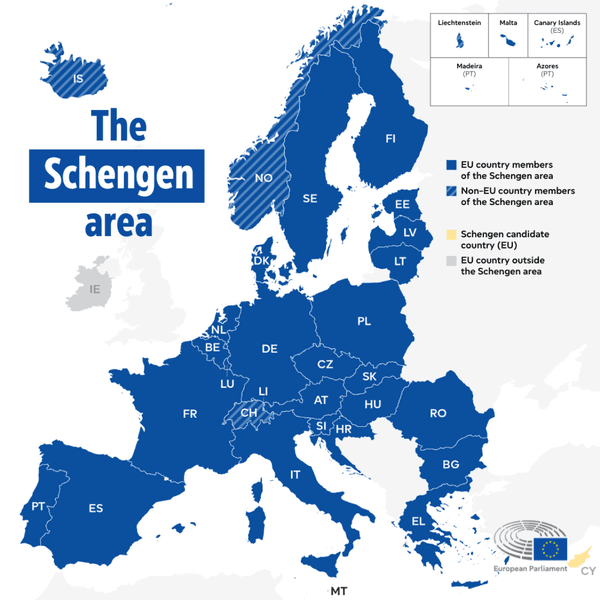
A Schengen visa is mandatory for all holders of an Algerian passport who wish to travel to any of the 29 Schengen countries, whether for tourism, visiting family, business, medical care, studies or longer stays. There is no visa-free access for Algerian nationals to the Schengen area.
This requirement applies to:
- tourists
- people visiting relatives or friends
- business travellers
- students and trainees
- patients travelling for medical treatment
- anyone planning to live, study or work in Europe
Only travellers holding dual nationality with a visa-free country or a valid residence permit in a Schengen state may be exempt from applying for a short-stay visa.
In 2024, more than 544,000 Algerian residents applied for a Schengen visa, showing how essential this visa is for travel between Algeria and Europe. Yet, with around 35% of applications refused, it also remains one of the most competitive and closely examined visa processes in the world.
This is where practical preparation makes a real difference. Many Algerian travellers start by securing their Schengen-compliant travel insurance online via HelloSafe, which provides an instant certificate accepted by consulates and a refund if the visa is refused, allowing applicants to move forward with confidence before booking the rest of their trip.

Get your Schengen travel insurance certificate in 2 minutes
What are the main requirements to get a Schengen visa from Algeria?
When Algerian residents apply for a Schengen visa, consulates do not only verify documents: they evaluate whether the traveller is credible, financially stable and likely to return to Algeria after the trip. These are the real conditions behind every approval or refusal.
Requirement | What the consulate checks 🔍 | What strengthens your application ✅ |
|---|---|---|
🛂 Legal status | Applicant lives legally in Algeria | Valid Algerian passport, local residency |
🧭 Travel purpose | Why you are travelling | Clear itinerary, realistic plan |
💶 Financial capacity | Ability to pay for the trip | Regular income, stable bank statements |
🏠 Return guarantees | Risk of overstaying | Job, family, studies, property in Algeria |
🧬 Biometrics | Identity verification | Fingerprints & photo (valid 59 months) |
🛡️ Travel insurance | Medical risk covered | €30,000+ coverage for all Schengen states |
Most consulates expect Algerian applicants to show they can comfortably afford their trip. This usually means having enough funds for flights, accommodation and daily expenses, supported by 3 to 6 months of regular bank activity. Depending on the destination, reference amounts typically range from €30 to €120 per day, but what matters most is financial consistency, not just the total balance.
Consulates also look closely at ties to Algeria, such as stable employment, family responsibilities, studies or property. These elements help prove that the traveller has strong reasons to return home after the visit.
Finally, every application must include Schengen-compliant travel medical insurance covering at least €30,000, including emergency care and repatriation, valid in all Schengen countries for the full stay. The certificate must clearly display the traveller’s full name and travel dates.
How much does a Schengen visa from Algeria cost in 2026?
Applying for a Schengen visa from Algeria involves fixed EU fees plus a few mandatory local costs. All visa fees are non-refundable, even if the application is refused.
The official Schengen visa fees are:
- €90: adults (12+)
- €45: children (6–11)
- Free: children under 6
In addition, applicants must pay service centre fees (Capago, VFS or TLS), buy travel medical insurance, and cover small administrative expenses such as photos and copies.
For most Algerian travellers, the total budget before plane tickets is usually between:
👉 €145 and €200 (around 21,000–29,000 DZD)
Cost item 💼 | EUR 💶 | Approx. DZD 🇩🇿 | Notes |
|---|---|---|---|
Visa fee (adult) | €90 | ≈ 13,500–14,500 | Non-refundable |
Visa fee (6–11) | €45 | ≈ 6,700–7,200 | Non-refundable |
Service centre | €25–€40 | ≈ 3,800–6,200 | Capago / VFS / TLS |
Travel insurance | €20–€40 | ≈ 3,000–6,200 | Mandatory |
Photos & admin | €10–€30 | ≈ 1,500–4,600 | Copies, prints |
Estimated total | €145–€200 | ≈ 21,000–29,000 | Per adult |
Many Algerian applicants choose to buy their Schengen-compliant travel insurance online via platforms like HelloSafe, which provide an instant certificate ready to attach to the visa file, often the easiest part of the entire process.
How to get a Schengen visa from Algeria step by step?
This section walks you through the real-life process followed by Algerian travellers, from choosing your visa type to collecting your passport. If you follow each step carefully, your application will be clearer, more credible, and easier for the consulate to process.
Step 1 – Choose the right Schengen visa type 🗂️
Most Algerian residents apply for a Type C short-stay Schengen visa, valid for up to 90 days in any 180-day period. The most common categories are:
- Tourism
- Visiting family or friends
- Business trips or conferences
- Short study or training
- Medical treatment
Your purpose must match your documents.
For example: hotel bookings = tourism, invitation letter = family visit, employer letter = business.
Step 2 – Select your main Schengen destination 🗺️
You must apply through the country that is your:
- main destination (where you spend the most nights), or
- first entry country, if all stays are equal.
For Algerian travellers, the most common destinations are France, Spain and Italy.
Examples:
- 7 nights Paris + 3 nights Rome → Apply via France
- 4 nights Madrid + 4 nights Barcelona → Apply via Spain
- Equal stays in several countries → Apply where you first arrive
Submitting via the wrong consulate may delay or damage your application.
Step 3 – Book your Schengen visa appointment in Algeria 📅
All Schengen visa applications from Algeria must be submitted in person at an authorised visa centre.
You first book your appointment online via the official provider for your destination country.
Destination country 🇪🇺 | Service provider 🏢 | Cities in Algeria 📍 | Book your appointment 🔗 | Notes 📝 |
|---|---|---|---|---|
France 🇫🇷 | Capago International | Algiers – Oran – Annaba | https://france-visa.capago.eu/ | Most common destination for Algerian travellers |
Spain 🇪🇸 | VFS Global | Algiers | https://visa.vfsglobal.com/dza/en/esp | High demand, apply early |
Italy 🇮🇹 | VFS Global | Algiers | https://visa.vfsglobal.com/dza/en/ita | Short-stay & long-stay categories |
Netherlands 🇳🇱 | VFS Global | Algiers | https://visa.vfsglobal.com/dza/en/nld | Applications processed by Dutch Embassy |
Switzerland 🇨🇭 | VFS Global | Algiers | https://visa.vfsglobal.com/dza/en/che | Often considered efficient |
Belgium 🇧🇪 | VFS Global | Algiers | https://visa.vfsglobal.com/dza/en/bel | Includes family visit & business |
Germany 🇩🇪 | TLScontact / VFS (depending on updates) | Algiers | https://www.tlscontact.com/ | Always check embassy site for confirmation |
Other Schengen states | VFS Global / TLScontact | Mainly Algiers | https://visa.vfsglobal.com/dza/en | Select your country to view details |
⚠️ Always confirm on the official embassy website, as service providers can change.
⏳ Tips to secure an appointment (especially in high season)
- Apply 6–12 weeks before travelling
- Check portals daily for new slots
- Avoid paying unofficial “agents”
- Make sure your passport is valid long enough
- Keep screenshots / confirmations
Appointments in Algeria can fill up quickly, especially for France, Spain and Italy, so planning ahead makes a huge difference.
Step 4 – Prepare your documents and financial proofs 📂
Your supporting documents tell your travel story: who you are, why you’re travelling, how you’ll fund your stay and why you’ll return to Algeria.
A clear and coherent file makes approval far more likely.
Category 📁 | Required proof 📄 | What consulates look for 🔍 |
|---|---|---|
Identity & passport | Valid Algerian passport (with spare blank pages + validity after return) | Recent passport, undamaged, previous visas if any |
Application | Completed & signed Schengen visa form | Correct visa type & details consistent |
Photos | Biometric passport photos | ICAO-compliant size & background |
Flight booking or reservation | Dates matching accommodation & insurance | |
Accommodation | Hotel booking OR invitation/attestation | Entire stay covered |
Purpose of travel | Tourism plan, invitation letter, business letter, etc. | Clear reason & realistic plan |
Employment / studies | Employer letter, payslips, contract OR school certificate | Stability & ties to Algeria |
Financial means | 3–6 months bank statements (+ sponsor docs if applicable) | Regular income, not sudden deposits |
Insurance | Schengen-compliant travel medical insurance | Min. €30,000 + repatriation, all Schengen, full trip |
Civil status (if relevant) | Family book, marriage/birth certificates | Context & family ties |
Previous travel history | Copies of old visas or stamps | Positive travel behaviour |
Everything must match: dates, budget, purpose, accommodation, income.
Gaps trigger questions… and sometimes refusals.
Step 5 – Buy your Schengen travel insurance online 🛡️
Every Schengen visa applicant from Algeria must provide travel medical insurance that:
- covers at least €30,000
- includes emergency medical care + repatriation
- is valid in all Schengen countries
- covers your full trip duration
Most consulates expect to see:
✔ your full name
✔ exact travel dates
✔ confirmation of Schengen coverage
Many Algerian travellers now buy their policy online: you can compare Schengen-approved plans and purchase via platforms like HelloSafe, with a certificate ready in minutes and downloadable for your file.
Step 6 – Submit biometrics and pay your fees ✋
At your appointment you will:
- Provide fingerprints & photo (biometrics)
- Submit your Schengen visa documents
- Pay the €90 visa fee (plus service fee)
Biometrics are valid for 59 months, meaning repeat travellers don’t always need to redo them.
Keep your receipt: you’ll need it to track your file.
Step 7 – Track your application and collect your passport 📬
Schengen visa processing times are normally up to 15 days, but can be longer during busy periods.
You will be notified when your passport is ready:
- Approved → check the Schengen visa sticker carefully (dates, entries, name spelling, duration of stay)
- Refused → you will receive a written explanation
If refused, you may apply again, ideally after strengthening your file.
How long does a Schengen visa take to process in Algeria?
Processing times for Schengen visas in Algeria vary mainly with local demand at visa centres in Algiers, Oran and Annaba. Centres such as Capago (France), VFS Global (Spain, Italy, Switzerland, Netherlands, Belgium) and TLScontact experience strong seasonal pressure driven by summer holidays, Ramadan and Eid travel, university intakes and family visits to Europe.
Once your biometrics and documents are submitted, the file is sent to the consulate. In quiet months, many Algerian applicants receive a decision in 7–15 days. During peak travel periods, however, waiting times can easily stretch to 30–45 days or more, especially for France, Spain and Italy.
Period ⏳ | Expected processing time 📨 | Main cause of delays 🇩🇿 |
|---|---|---|
January–March | 7–15 days 🙂 | Low demand after holidays |
Ramadan & Eid | 15–30 days 😐 | Family and religious travel |
June–September | 25–45+ days 😟 | Summer tourism & weddings |
October–November | 10–20 days 🙂 | Moderate demand |
Mid-Dec to early Jan | 20–35 days 😐 | End-of-year travel |
Student intake (Aug–Oct) | 15–30 days 😐 | University mobility |
⛔ Processing time starts after your appointment, not when you begin searching for a slot.
For Algerian travellers, the safest strategy is to apply 6–12 weeks before departure, and 2–3 months in advance if travelling during summer, Ramadan/Eid or Christmas. In Algeria, waiting too long often means no appointments, longer processing and risky non-refundable bookings.
Why is the Schengen visa refusal rate high in Algeria?
In 2024, Algerian residents filed 544,634 Schengen visa applications, of which 185,101 were refused, a 33.99% rejection rate, significantly above the global average of 14.8%. This means roughly 1 in 3 applications from Algeria was denied, making Algeria one of the countries with the highest refusal rates worldwide.
High refusal rates are largely due to strict consular scrutiny on financial stability, travel purpose, insurance compliance and return intention. Consulates do not simply check boxes: they assess the overall credibility of the applicant and the trip. When key elements of a file are weak or unclear, refusal becomes more likely.
Across all nationalities, the main Schengen visa refusal reasons in 2024 were:
- Insufficient financial resources: the leading cause
- Non-compliant travel insurance: a frequent technical refusal trigger
- Unclear travel purpose and related issues
For applicants from North Africa (including Algeria), these patterns are even more pronounced due to regional documentation practices and economic contexts.
Refusal reasons and their approximate share in 2024
These percentages reflect the distribution of refusal reasons across all Schengen visa refusals in 2024; consular priorities in Algeria tend to align with these global & regional patterns. HelloSafe
Refusal reason 🚫 | Approximate share of refusals (%) | What it means in practice |
|---|---|---|
💶 Insufficient financial resources | ≈ 25–28% | Funds or bank history not convincing |
🛡️ Non-compliant travel insurance | ≈ 15% | Insurance does not meet Schengen requirements |
🎯 Unclear travel purpose | ≈ 9–12% | Itinerary or justification too vague |
🔁 Doubts about return intention | ≈ 10–18% | Weak ties to home country, risk of stay extension |
🏠 Accommodation proof not credible / missing | (included in regional patterns) | Missing stable lodging evidence |
❌ Document inconsistencies / fraud concerns | (smaller share) | Mismatch or false info detected |
📄 Incomplete documentation | (minor but relevant) | Missing required forms, photos, etc. |
These figures show that financial credibility and insurance compliance remain the dominant drivers of refusals, followed by how clearly the purpose of travel is justified and how convincingly the applicant demonstrates ties to Algeria.
In practical terms, Algerian applicants improve their chances by:
- Demonstrating stable finances with regular account activity (3–6 months)
- Purchasing fully compliant Schengen travel insurance with minimum €30,000 coverage
- Providing a clear, realistic travel purpose and confirmed bookings
- Showing strong personal ties to Algeria (employment, family, studies)
In practical terms, many refusals are linked to factors that applicants can control, especially financial clarity, travel insurance compliance and a coherent travel plan. This is why more and more Algerian travellers choose to secure their Schengen-compliant travel insurance in advance through platforms like HelloSafe, which provide an instant certificate accepted by consulates and a refund if the visa is refused, removing one of the biggest financial and technical risks in the process.
Which Schengen countries are easiest or hardest for Algerian applicants?
Although Schengen rules are technically the same across Europe, approval rates for Algerian applicants vary from one consulate to another. This is mainly due to differences in migration risk assessment, application volume and supporting-document expectations.
For Algerian travellers, some countries are perceived as stricter, while others seem more balanced, especially for tourist and family-visit visas.
- France, Spain and Italy receive the largest share of applications from Algeria, which also means heavier scrutiny.
- Germany, Belgium, the Netherlands and Switzerland are often viewed as more structured and predictable when files are strong.
- Malta is frequently cited as one of the toughest consulates for Algerian residents.
Perceptions are based on statistical trends and applicant experience. Final decisions always depend on the traveller’s profile and file quality.
Country 🇪🇺 | Popularity with Algerians 🌍 | Perceived approval trend 🙂 | Key reasons mentioned by applicants 🗣️ |
|---|---|---|---|
France 🇫🇷 | ⭐⭐⭐⭐⭐ | 😐 Strict / variable | Very high demand → detailed scrutiny of finances & ties |
Spain 🇪🇸 | ⭐⭐⭐⭐ | 😐 Moderately strict | Financial credibility closely reviewed |
Italy 🇮🇹 | ⭐⭐⭐⭐ | 😐 Moderately strict | Documentation requirements seen as demanding |
Germany 🇩🇪 | ⭐⭐⭐ | 🙂 Fair when file is strong | Structured and criteria-based assessments |
Belgium 🇧🇪 | ⭐⭐⭐ | 🙂 Generally balanced | Stable evaluation approach |
Netherlands 🇳🇱 | ⭐⭐ | 🙂 Often reasonable | Transparent expectations |
Switzerland 🇨🇭 | ⭐⭐ | 🙂 Often favourable | Consistent review of solid files |
Malta 🇲🇹 | ⭐ | 😟 Tough | Frequently cited as very strict |
The main destination rule still applies:
you must apply to the country where you will spend the most nights.
More than the country itself, the strength, clarity and credibility of your file remain the biggest factors influencing approval.
Yes. Holders of an Algerian passport must obtain a Schengen visa for any short stay such as tourism, family visits, business trips, medical travel or studies under 90 days.
This applies to all Schengen countries including France, Spain, Italy, Germany, Belgium, Switzerland and the Netherlands.
Only travellers with dual nationality or a valid residence permit in a Schengen state may be exempt.
With a Type C Schengen visa, you may stay:
- up to 90 days
- within any rolling 180-day period
- across all Schengen countries combined
Overstaying can seriously harm your chances of getting future visas.
Yes, provided:
- you first enter or mainly stay in the country that issued the visa, and
- your visa allows multiple entries if you leave and re-enter the area.
Once inside the Schengen zone, internal borders are open, but your main destination rule still matters.
Yes. Many Algerian travellers receive multiple-entry visas valid for 6–12 months or sometimes longer. These are generally granted to travellers who:
- have respected previous visas
- show stable employment or business activity
- travel regularly for family or business reasons
First-time applicants usually receive single-entry visas.
It depends on the type of transit:
Airside transit only (no passport control):
Some nationalities require an airport transit visa, but insurance may not always be checked.
Entering the Schengen zone during transit:
You need a short-stay visa, and travel insurance then becomes mandatory.
When unsure, it is safer to have valid insurance.
Best practice is to apply 6–12 weeks before departure.
During summer, Ramadan/Eid or school holidays, applicants in Algiers, Oran and Annaba should apply even earlier because appointment slots fill quickly.
Because consulates closely analyse:
- financial stability
- credibility of the travel purpose
- strength of ties to Algeria
- previous travel record
If doubts remain about the intention to return or the financial situation, refusal is more likely.
Yes, absolutely. Your file will not be accepted without:
- minimum €30,000 medical coverage
- repatriation included
- validity across all Schengen states
- coverage for your full stay
Many Algerian travellers purchase their policy online via HelloSafe, which provides an instant Schengen-approved certificate to attach to the application.
You will receive a written refusal notice explaining the reason. You may appeal (depending on the country) or re-apply later with a stronger file.
Visa fees are not refundable.
However, policies purchased via HelloSafe include a refund guarantee if your visa is refused, provided the refusal letter is submitted and the policy has not been used.
Yes. A family member or sponsor in Europe can purchase your policy online and send you the PDF certificate, as long as your full name, passport number and travel dates appear clearly on it.
You simply print the document and include it in your file at Capago, VFS or TLScontact.
On the same topic
Schengen visa sticker explained 2026: read every field
Oct 1, 2026
Sponsorship letter sample for visa: complete guide for Schengen applications
Sep 30, 2026

TLScontact Schengen visa 2026: book, track, fees, contact
Oct 1, 2026