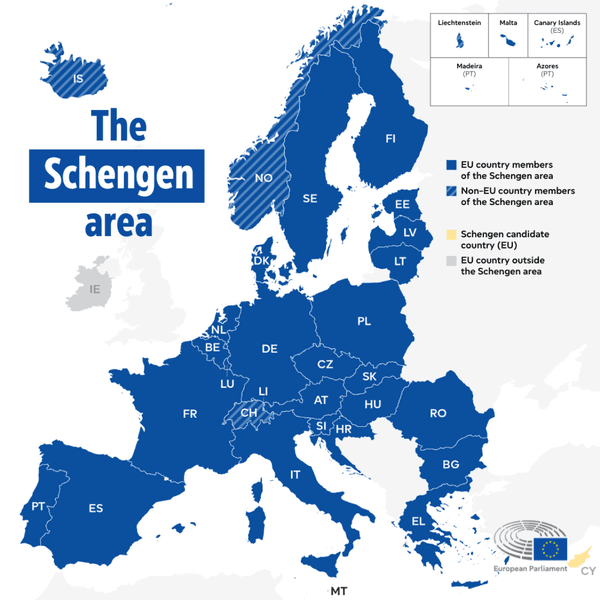
Schengen Visa to Spain: Requirements, Application Process & Approval Data
 A. FruchardCo-Founder & Travel Insurance ExpertLast updated: October 15, 2026
Spain consistently ranks among the most requested Schengen destinations worldwide, receiving well over one million short-stay visa applications each year. This strong demand puts significant pressure on Spanish consulates and visa application centres, especially during peak travel seasons. As a result, many applicants face appointment shortages, longer processing times, and a refusal rate that remains higher than the Schengen average. In practice, a large share of refusals are not due to ineligibility, but to avoidable issues such as incomplete documents, unclear financial proof, or non-compliant travel insurance.
Successfully obtaining a Schengen visa to Spain therefore depends on understanding how Spanish authorities assess applications. Beyond choosing the correct visa type, applicants must submit a coherent file that meets Schengen rules in detail: sufficient financial means, consistent travel plans, and a travel insurance policy that fully complies with legal requirements. Knowing what Spanish consulates actually verify, and where applications most often fail, significantly reduces the risk of refusal.
📊 1,634,887 Schengen visa applications were lodged with Spanish consulates in 2024
❌ 244,432 applications were refused in 2024, representing a 14.95% refusal rate
🌍 Spain is consistently among the top three most requested Schengen destinations worldwide
🇲🇦🇩🇿🇹🇷🇮🇳🇨🇳 Major applicant nationalities include Morocco, Algeria, Turkey, India and China
💶 The official Schengen visa fee for Spain is €90 for adults and €45 for children aged 6–11, excluding local service fees
🧾 Spain applies the standard Schengen Visa Code, with strict checks on document consistency and travel purpose
🩺 Travel insurance is mandatory, with a minimum coverage of €30,000 for medical care and repatriation
⏳ Standard processing time is up to 15 days, but can extend to 45 days during peak seasons or when additional checks are required
Is a Schengen Visa Mandatory to Travel to Spain?
A Schengen visa to Spain allows non-EU nationals to enter Spain under the common Schengen rules. Several visa categories exist depending on the length and purpose of the stay, but the short-stay Schengen visa (Type C) is by far the most commonly issued, especially for tourism, family visits, business trips and short study programs.
Whether a visa is required depends mainly on your nationality. Spain applies the same Schengen entry rules as the rest of the zone, which means that many travelers must obtain a visa before traveling, even for short stays.
With a valid Schengen visa, travelers can stay up to 90 days within any 180-day period, move freely between Spain and all other Schengen countries, and enter Spain for tourism, family visits, business travel, conferences or short-term studies. This visa does not allow long-term residence or paid work in Spain.
Most nationals from Africa, South Asia, the Middle East, most of Asia and Latin America are required to apply in advance. This applies even for a short holiday, and airline tickets or hotel bookings do not replace the visa. Traveling without the required Schengen visa usually leads to denied boarding or refusal at the Spanish border.
Situation | What it really means |
|---|---|
🇪🇸 Spain-only itinerary | You still need a visa valid for all Schengen countries |
🧾 Schengen visa | It allows short stays only, not residence or work |
✈️ Visa-free airport transit | It does not allow entry into Spain |
Because travel insurance is one of the few mandatory Schengen documents fully under the applicant’s control, choosing a policy that strictly meets Spain’s consular requirements is critical. Using an insurance comparison platform such as HelloSafe makes it possible to quickly compare Schengen-compliant policies, check coverage wording, and obtain an instant certificate accepted by Spanish consulates.

Get your Schengen travel insurance certificate in 2 minutes
Who needs a Schengen visa for Spain
A Schengen visa is required for many travelers depending on nationality and place of residence:
Applicant profile | Schengen visa required | Notes |
|---|---|---|
Nationals of non-visa-free countries 🌍 | ✅ Yes | Applies to most of Africa, Asia and the Middle East |
First-time Schengen travelers 🧳 | ✅ Yes | Often subject to stricter document checks |
Residents applying from a third country (UK, UAE, etc.) 🏠 | ✅ Yes | A valid residence permit is mandatory |
Nationals of visa-exempt countries ✈️ | ❌ No | The 90/180-day rule still applies |
Even when a visa is not required, Spanish border authorities may still verify length of stay, financial means, and travel insurance at the point of entry.
Spain Schengen Visa Requirements (Documents Checklist)
To apply for a Schengen visa to Spain, applicants must submit a complete set of Schengen visa documents that strictly follows Schengen rules and Spanish consular guidelines. Spanish authorities are known for carrying out detailed checks, and inconsistencies between documents are a frequent reason for refusal.
Document | Required | Notes |
|---|---|---|
Application form 📝 | ✅ | Fully completed and signed |
Passport 🛂 | ✅ | Issued within the last 10 years |
Passport photos 📸 | ✅ | Must comply with Schengen photo standards |
Travel insurance 🩺 | ✅ | Minimum coverage of €30,000 |
Proof of funds 💶 | ✅ | Recent bank statements required |
Accommodation 🏨 | ✅ | Hotel booking or official invitation |
✅ | Reservation accepted (no paid ticket required) |
All documents must be consistent in dates and purpose. Mismatches between accommodation, flights and insurance coverage are closely scrutinised by Spanish consulates.
- Incomplete or non-compliant insurance certificates, missing coverage details or valid dates
- Unclear source of funds, including large unexplained deposits or insufficient balances
- Weak cover letters or vague itineraries that fail to clearly justify the purpose and conditions of the stay
Ensuring clarity, consistency and compliance across these documents significantly improves the chances of approval.
Schengen Visa Insurance for Spain: Is It Mandatory?
Yes, Schengen visa insurance is mandatory for anyone applying for a short-stay visa to Spain. This requirement is defined by the Schengen Visa Code and is systematically verified by Spanish consulates during the application process. An insurance policy that does not fully comply with these rules can lead to an immediate refusal, even if all other documents are in order.
🩺 Minimum insurance requirements
Insurance requirement | Mandatory | Details |
|---|---|---|
Medical coverage 🏥 | ✅ | Minimum €30,000, clearly stated in euros |
Emergency care 🚑 | ✅ | Includes urgent treatment and hospitalization |
Medical repatriation ✈️ | ✅ | Required in case of serious illness or death |
Territorial validity 🌍 | ✅ | Must cover all Schengen countries |
Coverage period 📅 | ✅ | Must match the entire stay duration |
The insurance certificate must clearly display all these elements. Spanish consulates routinely check both the coverage amount and the exact wording of the guarantees.
🚫 Insurance mistakes leading to refusal
- Spain-only coverage, instead of validity for the whole Schengen area
- Coverage dates shorter than the visa request, even by a single day
- Missing or vague wording on repatriation, which is a strict legal requirement
Because travel insurance is one of the few mandatory documents fully under the applicant’s control, selecting a compliant policy is essential. Using an insurance comparison platform such as HelloSafe helps applicants compare Schengen-compliant options, verify certificate wording, and obtain an instant document accepted by Spanish consulates.
How Much Money Do You Need for a Spain Schengen Visa?
Spanish consulates require applicants to prove that they have sufficient financial means to cover their stay and return without relying on public funds. This assessment is systematic and plays a major role in visa decisions, particularly for first-time applicants and travelers from non-visa-free countries.
💶 Official financial thresholds
Spanish authorities publish a reference amount that applicants are expected to meet:
- Around €100 per day of stay, with a minimum threshold of approximately €900, regardless of trip length
- Funds must be liquid, accessible and traceable, typically shown through recent bank statements
- The amount should be consistent with the length of stay, accommodation type and travel profile
While this figure is a reference, consulates may request higher amounts depending on the applicant’s situation, travel history or accommodation arrangements.
- Cash deposits without clear explanation, especially shortly before the application
- Sponsored trips without proper legal proof, such as missing sponsorship letters or financial documents from the sponsor
- Mismatch between declared income and savings, which can raise doubts about the origin of funds
Providing clear, well-documented financial proof significantly reduces the risk of refusal on financial grounds.
Spain Schengen Visa Application Process Step by Step
Spain manages Schengen visa applications through its own consular network and, in most high-volume countries, through its official external provider BLS International. Appointment availability, fees and timelines vary significantly depending on the country of application, which is why Spain strongly enforces local rules.
🧭 Step 1 – Identify the correct Spanish authority for your country
You must apply through the Spanish consulate or Spain Visa Application Centre (VAC) responsible for your place of legal residence.
In practice, Spain relies on BLS International in many countries, including:
- 🇲🇦 Morocco: BLS Spain centres in Casablanca, Rabat, Tangier
- 🇩🇿 Algeria: BLS Spain centres in Algiers, Oran
- 🇬🇧 United Kingdom: BLS Spain centres in London and Manchester
- 🇮🇳 India: BLS Spain centres in New Delhi, Mumbai, Bengaluru, Chennai
- 🇹🇷 Turkey: BLS Spain centres in Istanbul, Ankara
- 🇦🇪 United Arab Emirates: BLS Spain centres in Dubai, Abu Dhabi
In countries where BLS is not used, applications are handled directly by the Spanish consulate or embassy.
📌 Spain is the competent country if:
- Spain is your main destination (longest stay), or
- Spain is your first point of entry when stays are equal.
🗓️ Step 2 – Book a Spain visa appointment (official channels only)
Appointments must be booked exclusively through official Spanish channels:
- 🌐 Spain Visa Application Centres (BLS)
- 🌐 Spanish consulates (direct booking): via the official consulate website in your country
Spain and BLS explicitly warn applicants:
- ❌ do not use third-party “agents” selling appointments
- ❌ paid or unofficial bookings may result in cancellation
In high-demand countries (Morocco, Algeria, Turkey, India), appointment slots can be fully booked weeks in advance, especially before summer and school holidays.
📂 Step 3 – Prepare documents expected by Spanish consulates
Spanish authorities are particularly attentive to consistency and clarity, especially for:
- Accommodation in Spain (hotel booking or official invitation from a host in Spain)
- Travel insurance wording (Schengen-wide, €30,000, repatriation clearly stated)
- Proof of financial means, aligned with Spain’s reference amount (≈ €100 per day)
Spanish consulates frequently request additional documents if dates, locations or coverage do not perfectly match.
🧬 Step 4 – Attend your appointment at the Spain visa centre
On the day of your appointment at a BLS centre or Spanish consulate, you will:
- Submit your complete application file
- Provide biometrics (fingerprints and photo)
- Pay the €90 Schengen visa fee, plus a local BLS service fee (amount varies by country)
From this stage, your passport is retained by Spanish authorities until a decision is made.
⏱️ Step 5 – Spain visa processing & tracking
- ⏳ Standard Schengen visa processing time: 7–15 working days
- 🔥 Peak season (April–September): often 30 days or more, especially in North Africa and South Asia
- 🔍 Tracking is available via: the BLS Spain tracking portal, or the local Spanish consulate system
Spanish consulates usually do not provide intermediate updates. Applicants are contacted only once a final decision has been taken.
How long does it take to get a Schengen visa for Spain?
- For Spain, the average processing time is 7–15 working days, starting from the date biometrics are taken
- In peak periods (April to September), processing times frequently exceed 30 days, especially in North Africa, Turkey and South Asia
- Passports are retained by Spanish authorities during processing and are returned only once a final decision is made
Tracking is available through the official BLS or consular platform used in the country of application. Status updates are often limited, as Spanish consulates usually communicate only the final decision, not intermediate steps.
Spain Schengen Visa Approval & Rejection Rate
Spain continues to be one of the most requested destinations in the Schengen area, and that scale of demand is reflected in both the volume of applications and the number of refusals. In 2024, Spain recorded a Schengen visa refusal rate of 14.95%, based on 1,634,887 applications and 244,432 refusals. While this level is close to the Schengen average, meaningful differences exist by nationality and consulate, and a significant share of refusals is tied to factors applicants can control, such as documentation quality, financial proof and travel insurance compliance.
⚠️ Attention when applying: the main reasons Schengen visas are refused
❌ Reason for refusal | 📊 Estimated share of refusals | 💡 What it means in practice |
|---|---|---|
💰 Insufficient financial resources | ~21% | Funds too low or not adequately documented |
🩺 Non-compliant travel insurance | ~15% | Coverage < €30,000 or missing repatriation wording |
🚫 Doubts about returning home | ~12% | Weak ties, limited travel history |
🧳 Unclear travel purpose or itinerary | ~12% | Vague plans, no convincing rationale |
📄 Other administrative/document issues | ~40% | Missing docs, inconsistencies, accommodation issues |
📌 These figures are drawn from the HelloSafe Schengen Visa Refusal Barometer 2025, which consolidates 2024 data from EU sources and national consulates. They represent general patterns across the Schengen area, but they reflect core drivers of refusals that also apply to Spanish visa cases, especially financial proof, insurance compliance and travel intent.
Because Spain carefully verifies each part of the application, addressing these common refusal reasons (particularly with clear evidence of funds, a strong itinerary and a compliant insurance certificate) can make a significant difference in approval odds.
Who Applies for a Schengen Visa to Spain?
Spain attracts a diverse range of travellers seeking short-stay access to the Schengen area. Its vibrant tourism sector, family ties across Europe, and business opportunities make it one of the busiest visa markets in the world. In 2024, Spain processed around 1.63 million Schengen visa applications, making it the second most applied-to Schengen country after France.
🌍 Main applicant profiles
Applicant segment | Typical profile | Why they apply |
|---|---|---|
Tourists & first-time travellers 🧳 | Holidaymakers, bucket-list visitors | Spain’s beaches, culture and heritage drive demand |
Family visit applicants 👨👩👧👦 | Those visiting relatives or friends | Strong diaspora ties, especially from North Africa |
Business & conference travellers 💼 | Professionals attending fairs and meetings | Spain hosts numerous international trade and corporate events |
Students (short programs) 🎓 | Short courses, summer schools, exchanges | Rising number of short academic/training stays |
Spain’s high volume of tourist and short-stay applications contributes to seasonal spikes (particularly from April through September), which in turn can increase scrutiny and processing times.
📌 Nationalities with highest application volume
Nationality | 📍 Number of applications to Spain | % of Spain’s total applications |
|---|---|---|
🇨🇳 China | 254,571 | ~15.6% of total Spain applications |
🇲🇦 Morocco | 216,985 | ~13.3% |
🇷🇺 Russia | (Top group, included) | Ranked among top-3 |
🇩🇿 Algeria | 123,991 | ~7.6% |
🇬🇧 United Kingdom (residents) | 123,058 | ~7.5% |
👉 Combined, applicants from China, Morocco, Russia, Algeria and the UK accounted for over half (≈51%) of all Spain Schengen visa applications in 2024.
Yes. If you are a national of a non-visa-free country, you must obtain a Schengen visa before traveling to Spain, even for a short stay of a few days. Spain applies the common Schengen entry rules, meaning the requirement depends strictly on your nationality, not on your travel purpose or duration.
Without a valid visa, airlines will usually deny boarding, and Spanish border authorities may refuse entry upon arrival.
Spain follows the same Schengen Visa Code as other member states, but it processes one of the highest numbers of applications in Europe. In 2024, Spain recorded a refusal rate of 14.95%, which is slightly above the Schengen average.
In practice, Spanish consulates tend to be strict on document consistency, especially regarding financial proof, travel justification and insurance compliance. Many refusals occur not because applicants are ineligible, but because documents are incomplete or unclear.
The standard processing time is up to 15 working days from the date biometrics are submitted. However, during peak seasons (spring and summer) or in high-demand countries such as Morocco, Algeria, Turkey or India, processing can extend to 30–45 days.
Applicants should apply as early as possible, especially if travel dates are fixed, as Spanish authorities rarely expedite applications.
Spanish authorities use a reference amount of around €100 per day of stay, with a minimum of approximately €900, regardless of trip length. This amount is indicative and may vary depending on accommodation type, length of stay and applicant profile.
Funds must be liquid, recent and traceable, usually proven through bank statements from the last 3 to 6 months. Large unexplained deposits or a mismatch between income and savings often raise concerns.
Yes. Travel insurance is legally mandatory and systematically checked by Spanish consulates. The policy must cover at least €30,000 for emergency medical expenses and repatriation, be valid for all Schengen countries, and cover the entire duration of the stay.
Insurance certificates missing required wording or dates are a frequent reason for refusal, even when the rest of the application is strong.
Yes. A Schengen visa issued by Spain allows travel throughout the entire Schengen area. However, Spain must be your main destination (longest stay) or your first point of entry if stays are of equal duration.
If your actual travel pattern contradicts what you declared in your application, this may raise issues during future visa applications.
Yes, but only if you are a legal resident of that country. For example, Moroccan, Algerian or Indian nationals living in the UK, UAE or another country may apply there, provided they hold a valid residence permit. Tourist visas or short-term stays do not qualify for local application.
Yes. In most cases, your passport is retained by the Spanish consulate or visa centre while your application is being processed. This means you cannot travel internationally during this period. The passport is returned only once a final decision has been made.
Yes. There is no mandatory waiting period to reapply. However, submitting a new application without addressing the exact refusal reasons significantly lowers approval chances. A successful reapplication should clearly correct the issues mentioned in the refusal letter, such as insufficient funds, unclear itinerary or non-compliant insurance.
No. A Schengen visa allows short stays only, up to 90 days within any 180-day period. It does not grant the right to live, work or study long-term in Spain. Long-stay visas and residence permits follow a separate process and are issued under Spanish national immigration law.
On the same topic

Schengen visa sticker explained 2026: read every field
Oct 20, 2026

Sponsorship letter sample for visa: complete guide for Schengen applications
Oct 11, 2026

TLScontact Schengen visa 2026: book, track, fees, contact
Oct 1, 2026