Schengen visa sticker explained 2026: read every field
 A. FruchardCo-Founder & Travel Insurance ExpertLast updated: October 20, 2026
The Schengen visa sticker is a small document with major administrative consequences. Issued by a consulate and placed directly in your passport, it is used by border authorities, airlines, insurance providers and online platforms to verify your right to enter and stay in the Schengen Area. Yet, many applicants struggle to understand what the different numbers, dates and fields on the sticker actually mean.
Confusion around the Schengen visa sticker is one of the most common causes of errors when filling in online forms, applying for mandatory Schengen travel insurance or preparing a trip. Knowing how to correctly read the sticker, where to find the visa sticker number and how to interpret each field helps avoid delays, rejected applications and last-minute problems at the airport.
🛂 The Schengen visa sticker is the official visa label affixed inside your passport
🔢 The visa sticker number is a unique identifier printed on the sticker and often required in online forms
📅 The sticker clearly separates validity dates, duration of stay and number of entries, which are frequently confused
🌍 The visa sticker number format and location are standard across all Schengen countries
⚠️ Misreading the sticker can lead to administrative errors, insurance issues or boarding problems
What is a Schengen visa sticker?
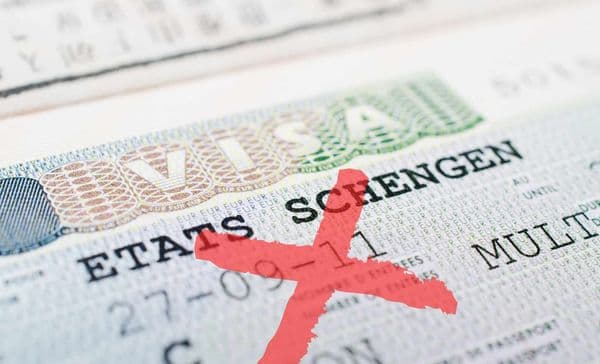
A Schengen visa sticker is the official visa label issued by a Schengen consulate and placed directly inside your passport. It summarises the conditions under which you are authorised to enter and stay in the Schengen Area for a short period. It is neither a residence permit nor the Schengen visa application itself, but the final document used during travel and administrative checks.
What is used the visa sticker for?
The visa sticker is used by border authorities, airlines and public administrations to verify your identity, the validity of your visa and the rules that apply to your stay. It also serves as an administrative reference in official systems such as the Visa Information System (VIS), which stores visa application data and biometric information.
Every year, millions of Schengen visas are issued worldwide using a fully standardised sticker format defined at European level. This ensures that the layout and meaning of each field are identical across all Schengen countries, regardless of the issuing consulate.
Element | Purpose | Common confusion |
|---|---|---|
Visa sticker 🛂 | Official travel authorisation | Confused with residence permits |
Sticker number 🔢 | Unique visa identifier | Confused with passport number |
Validity dates 📅 | Time window during which the visa can be used | Confused with allowed length of stay |
Because the visa sticker is used as a reference for multiple administrative procedures, including Schengen travel insurance, having a clear and correctly interpreted sticker makes the process much smoother. This is why many travellers choose to prepare their insurance online in advance, using solutions that align directly with the information shown on the Schengen visa sticker.

Get your Schengen travel insurance certificate in 2 minutes
What is the Schengen visa sticker number and where can you find it?

The visa sticker number is printed on the visa label itself, usually in red or black, and is separate from your passport number.
The visa sticker number is a unique identification number assigned to your Schengen visa at the time it is issued. It appears directly on the rectangular visa sticker placed inside your passport and serves as the official reference for that specific visa.
This number is not hidden and does not require any decoding. It is clearly distinct from other information printed on the sticker, such as your name, passport number, validity dates or duration of stay.
Visually, the visa sticker number is:
- printed in coloured ink (most often red, sometimes black)
- placed outside the main text blocks of the sticker
- easy to identify once you know it is not linked to personal details
There is only one visa sticker number per visa, and this is the number requested in most administrative and online forms.
📍 Where exactly is the visa sticker number located?
The location of the visa sticker number is fully standardised across the Schengen Area. A visa issued by Germany, France, Spain, Italy or any other Schengen country will display the sticker number in the same area of the visa label.
If you know where to find it on one Schengen visa, you will know where to find it on all others. There is no country-specific format, placement or numbering system.
🧾 What is the visa sticker number used for?
The visa sticker number is used to identify and cross-check your visa across multiple systems. It is commonly requested for:
- official forms submitted to authorities or travel platforms
- Schengen travel insurance applications, to link coverage to a valid visa
- border and immigration records, where visas are logged and referenced
This is why it is important to enter the exact number shown on the sticker when completing administrative steps linked to your Schengen visa documents.
🔢 What does a Schengen visa sticker number look like? (format & example)
A Schengen visa sticker number follows a standardised alphanumeric format defined at European level. While the exact sequence varies, the structure remains consistent across all Schengen countries.
Example (fictitious but realistic):
0123456789
This number:
- does not include your name or nationality
- does not change during the validity of the visa
- cannot be modified or reused
To prevent administrative errors, the visa sticker number should not be confused with:
- your passport number
- a control or machine-readable number printed elsewhere on the sticker
- a visa application reference number received during the application process
How to read a Schengen visa sticker step by step?
A Schengen visa sticker contains several fields that must be read independently. Most misunderstandings happen when travellers confuse these fields or assume they work together. The table below explains, step by step, how to correctly read each element of a Schengen visa sticker.
Field | What it means | How to read it correctly | Typical mistake |
|---|---|---|---|
Valid from / Valid until 📅 | Period during which the visa is usable | You may enter on or after the start date and must leave no later than the end date | Believing this shows how long you can stay |
Duration of stay ⏳ | Maximum number of days allowed in total | Days are counted cumulatively within the validity period | Thinking days reset after exit |
Number of entries 🔁 | Number of authorised entries | 1 = single, 2 = double, MULT = multiple | Assuming Schengen MULT means unlimited stay |
Sticker number 🔢 | Unique administrative visa identifier | Used in forms, insurance and official records | Confusing it with passport number |
Remarks 📝 | Technical or administrative notes | Usually informational only | Interpreting it as a restriction |
This table reflects the standard layout used by all Schengen countries, regardless of where the visa was issued.
Understanding how each field works helps avoid common issues such as overstaying, incorrect form submissions or last-minute problems at the airport.
Is the Schengen visa sticker number the same for all countries?
Yes. The Schengen visa sticker number follows the same structure in all Schengen countries. There is no country-specific format, no national numbering system and no difference in how the number should be read or used depending on where the visa was issued.
Whether your visa was issued by Germany, France, Italy, Spain or any other Schengen country, the visa sticker number:
- is printed on the visa label in the same area
- follows the same alphanumeric logic
- serves the same administrative purpose
This standardisation is defined at European level and ensures that border authorities, airlines and online systems interpret visa information in exactly the same way across the entire Schengen Area.
For travellers, this means that once you know where to find and how to use the visa sticker number, the process remains identical regardless of the issuing country.
Is the visa sticker number linked to fingerprints or biometrics?
No. The visa sticker number is not linked to fingerprints or biometric data.
Fingerprints and facial data are stored separately in the Visa Information System (VIS), which is used by Schengen authorities to process and verify visa applications. This biometric information is collected during the application process but does not appear on the visa sticker and cannot be accessed using the sticker number.
The confusion exists because both the visa sticker number and biometrics are associated with the same visa record in administrative systems. As a result, some travellers assume that the number printed on the sticker is a biometric identifier. In reality, the sticker number is only an administrative reference, used to identify the visa itself in forms, insurance applications and official records.
In short, the visa sticker number is a non-biometric identifier, and fingerprints remain stored exclusively in secure databases such as the VIS.
What should you check on your Schengen visa sticker before travelling?
Before travelling to the Schengen Area, it is strongly recommended to review your visa sticker carefully. Most last-minute issues at the airport or border can be avoided with a quick check of the key elements below.
Check point | What to verify | Why it matters |
|---|---|---|
Sticker number 🔢 | The number is clearly printed and readable | This number may be required for administrative or insurance verification |
Validity dates 📅 | “Valid from” and “Valid until” cover your full travel period | Travelling outside this window can lead to boarding or entry refusal |
Number of entries 🔁 | 1, 2 or MULT matches your travel itinerary | Re-entry without the correct number of entries may be refused |
Total authorised days are sufficient for your trip | Exceeding this limit may result in overstay issues | |
Travel insurance 🏥 | Coverage matches the full stay period | Insurance and visa dates are often checked together |
Although Schengen travel insurance is required before applying for a visa, the visa sticker number is often requested after the visa has been issued for administrative follow-up. It allows insurers to match the insurance policy with the final visa conditions shown on the sticker, such as validity dates, duration of stay and number of entries.
This is especially useful when travellers need to confirm coverage, adjust dates, download a final insurance certificate or provide proof of insurance during checks. For this reason, many travellers use online Schengen insurance solutions like HelloSafe to manage their coverage easily before and after visa issuance.
The visa sticker number is a unique identification number printed directly on the Schengen visa label inside your passport. It is used by authorities, airlines and insurance providers to identify your visa. It is not the passport number and it is not linked to biometric or fingerprint data.
No. The structure of the Schengen visa sticker has not changed in 2024 or 2025. The layout, key fields and visa sticker number remain the same across all Schengen countries.
Only minor security features may evolve over time, without affecting how the sticker is read or used.
The visa sticker number is located on the visa sticker itself, inside your passport. It is printed separately from your personal details, validity dates and duration of stay. The position of this number is standard across all Schengen countries.
Yes. In most administrative and online forms, the terms “visa number” and “visa sticker number” refer to the same identifier printed on the Schengen visa sticker.
A Schengen visa sticker number follows a fixed alphanumeric format defined at European level. It does not include your name, nationality or passport number and does not change once the visa has been issued.
No. While Schengen visas regularly include updated security features, the visa sticker number format and its administrative function have not changed in 2024 or 2025.
No. Fingerprints are stored in the Visa Information System (VIS) and are not printed on the visa sticker. The visa sticker number is a separate administrative reference and cannot be used to access biometric information.
No. All Schengen countries, including Germany, France, Spain and Italy, use the same visa sticker format. The visa sticker number structure does not vary depending on the issuing country.
Some insurance providers request the visa sticker number to verify the existence and validity of the Schengen visa. This allows them to issue an insurance certificate that matches the authorised stay and complies with Schengen requirements.
Entering an incorrect visa sticker number may lead to processing delays, rejected applications or requests for correction. It is recommended to double-check the number directly on the visa sticker before submitting any administrative or insurance form.
On the same topic

Sponsorship letter sample for visa: complete guide for Schengen applications
Oct 11, 2026

TLScontact Schengen visa 2026: book, track, fees, contact
Oct 1, 2026
Schengen Visa via BLS International: Process, Appointments, Documents and Key Tips
Oct 11, 2026