Schengen Visa Type D (National Long-Stay Visa): Complete Guide for Long-Term Stays in Europe
 A. FruchardCo-Founder & Travel Insurance ExpertLast updated: September 30, 2026
For many non-EU nationals, the Schengen visa type D is the mandatory first step to live, study, work or join family in Europe for more than 90 days. Unlike the standard Schengen short-stay visa, this national long-stay visa comes with specific territorial limits, strict administrative obligations and post-arrival procedures that are often misunderstood. Confusion around travel rights within Schengen, the meaning of “MULT” on the visa sticker or the relationship with the 90/180-day rule regularly leads to avoidable mistakes, delays or even refusals.
Obtaining a Schengen visa type D is less about travel history and more about the credibility of a long-term residence project. Authorities assess whether the purpose of stay is clear, realistic and well documented, whether financial resources are sufficient and stable, and whether mandatory requirements such as accommodation and health insurance are fully compliant. Understanding these elements in advance is essential to secure the visa and avoid administrative issues after arrival.
- 🇪🇺 The Schengen visa type D is a national long-stay visa allowing residence beyond 90 days in one specific Schengen country
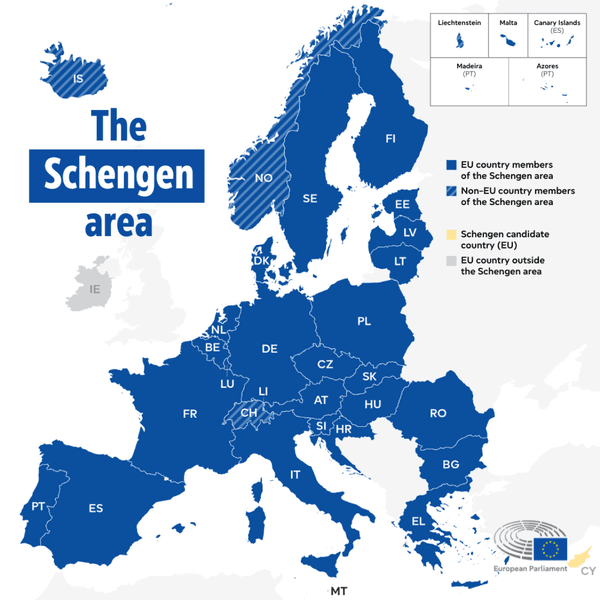
- 📍 It does not grant the right to live across the entire Schengen area
- ✈️ Short stays in other Schengen countries remain limited to 90 days within any 180-day period
- 💶 The visa fee typically ranges around €75–€100, depending on the country and visa category (excluding service fees)
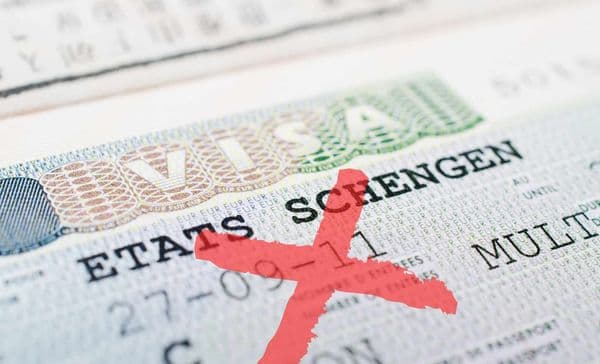
- 🏷️ The visa sticker (validity, duration of stay, “valid for”, MULT) is frequently misinterpreted
- 🧾 In most cases, the Type D visa must be validated or converted into a residence permit after arrival
- 🛡️ Health insurance is mandatory and carefully checked during the application process
- ⚠️ Misunderstanding the rules can affect future visa or residence permit applications
What is a Schengen Visa Type D?
How is a Type D visa defined under Schengen rules?
A Schengen visa type D is a national long-stay visa that allows a non-EU national to remain more than 90 days in a single Schengen country. It is designed for people whose purpose of stay goes beyond tourism or short business trips, such as studying at a university, taking up employment, conducting research or joining family members already residing in Europe.
Legally, the Type D visa sits at the intersection of EU principles and national immigration law. While the Schengen framework recognises the existence of long-stay visas, each Schengen country defines its own eligibility criteria, documentation requirements and post-arrival obligations. This is why a Type D visa is always issued for one specific country and why rules can differ significantly from one destination to another, even within the Schengen area.
In practice, the Type D visa often functions as an entry and transition document: it allows the holder to enter the country legally and then complete local formalities (such as registration or validation) to obtain a residence permit or an equivalent long-term status.
How is a Type D visa different from a Schengen short-stay visa (Type C)?
The confusion between a Schengen Visa Type C and Type D visas is extremely common, yet the two serve very different purposes. The table below highlights the key distinctions that applicants need to understand before applying.
Criteria | Type C (Short stay) | Type D (Long stay) |
|---|---|---|
Maximum stay | Up to 90 days | More than 90 days |
Territorial scope | All Schengen countries | Issuing country only |
Residence rights | ❌ No | ✅ Yes |
Permit conversion | ❌ Not applicable | Usually required |
Typical use | Tourism, business, visits | Study, work, family |
In short, a Type C visa is a travel visa, while a Type D visa is a residence-oriented visa. Mixing the two concepts is one of the main reasons applicants misunderstand their rights, overestimate their freedom of movement, or fail to comply with post-arrival administrative rules.
Who needs a Schengen Visa Type D?
Which travellers are required to apply for a Type D visa?
A Schengen visa type D is required for non-EU and non-EEA nationals who plan to stay in a Schengen country for more than 90 days. The decisive criteria are the length of stay and the intention to reside, not the purpose of travel alone. As soon as a stay goes beyond short-term travel, a long-stay visa becomes mandatory.
This visa applies to travellers with a long-term residence intent, meaning they will live in the destination country for an extended period, even if they plan occasional trips to other Schengen states. The issuing country must remain the main place of residence throughout the stay.
What are the main categories of Type D visas?
Category | Typical purpose | Examples of applicants |
|---|---|---|
🎓 Study & research | Long-term academic or research stay | University students, PhD candidates, researchers |
💼 Employment & professional activities | Long-term work or assignment | Employees, researchers, intracompany transferees |
👨👩👧 Family reunification | Joining family already residing legally | Spouses, children, dependent relatives |
🧾 Other national long-stay permits | Country-specific residence schemes | Long-stay visitors, volunteers, trainees |
Each category is governed by national immigration rules, with specific eligibility criteria, documentation and post-arrival requirements defined by the host country.
How do you apply for a Schengen Visa Type D?
What are the main steps to submit a Type D visa application?
Although procedures differ slightly between Schengen countries, the submission process generally follows the same structure:
- Identify the correct visa category 🎯: Determine the exact national Type D category that matches the purpose of your long-term stay (study, work, family, etc.).
- Book an appointment with the competent consulate 📅: Appointments are usually mandatory and may be subject to long waiting times, especially during peak periods.
- Prepare a complete and coherent application file 📂: Gather all required documents, ensuring consistency between the purpose of stay, financial resources, accommodation and insurance.
- Attend the appointment and submit biometrics 🖐️: Most applicants must appear in person to submit fingerprints, photographs and original documents.
- Pay the visa fee and submit the application 💳: Fees vary by country and category and are generally non-refundable.
- Wait for processing and potential follow-up requests ⏳: Authorities may request additional documents or clarifications before issuing a decision.
Following these steps carefully reduces the risk of delays, refusals or requests for additional information later in the process.
Where must a Type D visa application be submitted?
A Schengen visa type D application must always be submitted to the embassy or consulate of the destination country, meaning the country where the applicant intends to reside long term. Unlike short-stay visas, there is no flexibility based on travel plans or entry points: the issuing country must be the main place of residence.
Applications are generally subject to jurisdiction and residency rules. Most consulates require applicants to apply from their country of legal residence, not from a third country chosen for convenience. This requirement is strictly enforced and is one of the most common reasons applications are rejected as inadmissible.
There is also no concept of an “easiest country” for a Type D visa. Because these visas are governed by national immigration law, each country applies its own criteria and verification process. Attempting to “optimize” the choice of country rather than aligning with the genuine place of residence is often seen as a red flag.
What documents are usually required for a Type D visa?
While the exact checklist varies by country and by visa category, most Type D visa applications rely on a common set of core documents. These documents allow authorities to assess the legitimacy of the project and the applicant’s ability to reside long term.
Document | Purpose |
|---|---|
🛂 Passport | Legal identification and travel document |
🎯 Proof of purpose | Study, employment, family reunification or other long-term reason |
💶 Financial proof | Demonstrates long-term financial sustainability |
🏠 Accommodation | Confirms local residence in the host country |
🛡️ Health insurance | Covers medical risks during the stay |
📝 Application form | Ensures administrative compliance |
Because health insurance is a mandatory document for most Type D applications, it’s often worth securing it before booking the consular appointment. With HelloSafe, you can take out a Schengen-compliant policy from insurers commonly accepted by embassies and VFS centres and receive your insurance certificate immediately, so you can add it to your file without delay (with refund options if the visa is refused, depending on the policy).
How are financial requirements assessed in a Type D visa application?
When applying for a Schengen visa type D, financial proof is assessed as part of the overall application file, with a clear focus on long-term sustainability, not just the amount shown on a bank statement. Consular authorities want to ensure that the applicant can live legally and independently for the entire duration of the planned stay.
Several elements are examined together:
- Living costs vs duration 🏠: Financial resources must realistically cover everyday expenses over several months. Authorities look at rent, daily living costs, transport and local expenses in relation to the length of stay, not just the entry date.
- Regular income vs savings 💼 : Stable and recurring income (salary, scholarship, employment contract, pension) is generally viewed more positively than high but unexplained savings. Sudden deposits or inconsistent account activity often trigger additional checks.
- Sponsor vs self-funded applicants 🤝 : If a sponsor is involved (family member, employer, institution), their legal status, income and formal commitment are assessed. Self-funded applicants must demonstrate full financial autonomy.
A common mistake is assuming that higher amounts automatically increase approval chances. In reality, coherence and credibility matter more than figures alone. Financial proof must align with the purpose of stay, accommodation and overall project.
There is no single European financial threshold for Type D visas. Each country defines indicative minimum resources based on local living costs and visa category. The figures below are reference points, not guarantees of approval.
Country | Estimated minimum per month |
|---|---|
🇩🇪 Germany | ~€934 |
🇫🇷 France | ~€615 |
🇪🇸 Spain | ~€600–700 |
🇳🇱 Netherlands | ~€1,000 |
These amounts usually cover basic living expenses only and may exclude accommodation or health insurance, depending on the country. Planning a financial buffer is strongly recommended, as underestimating costs is a frequent cause of refusals or post-arrival administrative issues.
Is travel insurance mandatory for a Schengen Visa Type D?
Health insurance is a mandatory requirement for a Schengen visa type D and is systematically checked during the application process. Authorities require proof that the applicant will be covered from the first day of arrival, regardless of future access to a national health system.
At a minimum, the insurance must cover:
- Medical expenses 🩺: Including consultations, treatments and prescribed care during the stay.
- Hospitalisation 🏥: Coverage for inpatient care, surgery and extended medical treatment if necessary.
- Emergency care 🚑: Immediate treatment in case of accident or sudden illness, including emergency transport.
- Minimum coverage levels 💶: While thresholds vary by country, coverage is generally expected to meet Schengen standards, often aligned with the €30,000 minimum used for short-stay visas, unless higher national requirements apply.
Failure to present compliant insurance is one of the most common and easily avoidable reasons for refusal. Authorities focus not only on coverage amounts, but also on the duration, territorial validity and clarity of the insurance certificate.
Once residence formalities are completed, many visa holders transition to a national health insurance scheme or an approved local private insurer. For this initial phase, choosing a Schengen-compliant health insurance policy distributed by a specialised broker such as HelloSafe allows applicants to meet consular requirements efficiently. These policies typically offer immediate insurance certificates, are issued by insurers recognised by embassies and VFS centres, and often include visa-refusal reimbursement guarantees, providing both administrative security and financial peace of mind during the application process.

Get your Schengen travel insurance certificate in 2 minutes
How should you read a Schengen Visa Type D sticker?
What do “validity”, “duration of stay” and “valid for” mean?
The visa sticker is one of the most misunderstood elements of a Schengen visa type D. Many compliance issues arise not from bad intent, but from misinterpreting the information printed on the visa itself. Each field has a specific legal meaning and must be read carefully.
- Validity (“From – Until”) 📅: This indicates the time window during which the visa can be used, not how long you may stay in total. You must enter the country within this period, but your residence rights depend on other factors such as validation or permit conversion.
- Duration of stay ⏱️: For Type D visas, this field is often confusing or even misleading. In many cases, it does not represent the full length of the authorised stay, but rather the initial authorised period or a technical entry reference. Relying solely on this number to calculate your legal stay is a common mistake.
- Valid for 📍: This field specifies the issuing country. A Type D visa is national, meaning it authorises residence only in the country named here. It does not grant the right to live in other Schengen states.
Common interpretation errors include assuming that the validity equals the allowed length of stay, or believing that “valid for [country]” prohibits any travel elsewhere in Europe. In reality, these fields must be read together and in the context of long-stay rules.
A Type D visa valid from January 1 to December 31 and marked “valid for: France” allows the holder to reside in France during that period, but short trips to other Schengen countries remain subject to the 90/180-day rule.
What does “MULT” mean on a Type D visa?
The term “MULT” refers strictly to the number of entries allowed during the visa’s validity period. When “MULT” appears on a Type D visa, it means the holder may enter and exit the issuing country multiple times without invalidating the visa.
It is important not to confuse this “MULT” indication with a multiple-entry Schengen visa (which usually refers to a Type C multiple-entry visa for short stays). A Type D visa remains a national long-stay visa, even when marked “MULT”.
In practice, MULT does not remove legal limits:
- It does not allow unlimited stays in other Schengen countries
- It does not extend the authorised length of residence
- It does not replace the obligation to validate the visa or obtain a residence permit
The most common misconception is assuming that “MULT” grants full freedom of movement across Europe. In reality, it simply offers entry flexibility, while territorial scope and time limits continue to apply throughout the long stay.
Can you travel freely in Europe with a Schengen Visa Type D?
What travel is allowed in other Schengen countries?
A Schengen visa type D allows long-term residence in the issuing country, but it also permits short stays in other Schengen countries under specific conditions. Outside the country that issued the visa, travel is limited to temporary visits, not residence.
In practical terms, holders of a Type D visa may travel to other Schengen states for tourism, business trips or family visits, provided these stays are short and clearly secondary to the main place of residence. The issuing country must remain the centre of life and residence throughout the visa’s validity.
These short trips are strictly governed by the 90/180-day rule, which applies to time spent outside the issuing country. Border authorities and future visa or permit assessments may verify compliance using entry and exit records.
The 90/180-day rule limits short stays in Schengen countries other than the issuing country.
You may stay up to 90 days totalWithin any rolling 180-day periodOnly counting days spent outside the country that issued your Type D visa
Days spent residing in the issuing country do not count toward the 90-day limit. Each day spent in another Schengen country is added cumulatively, regardless of how many trips you take.
Border authorities may verify compliance using entry and exit records, and exceeding this limit can lead to penalties or difficulties with future visas or residence permits.
Does a Type D visa change the 90/180-day rule?
The answer is no. A Schengen visa type D does not modify, reset or cancel the 90/180-day rule when travelling in other Schengen countries.
This rule continues to apply as follows:
- Days spent in the issuing country under the Type D visa are not counted
- Days spent in other Schengen countries are counted cumulatively
- The total must not exceed 90 days within any rolling 180-day period
Frequently misunderstood scenarios include believing that each exit from the issuing country “resets” the counter, or that holding a long-stay visa automatically grants unlimited travel across Schengen. These assumptions are incorrect and can lead to overstays or future administrative difficulties.
What must be done after arriving with a Schengen Visa Type D?
What administrative steps are required after arrival?
Arriving with a Schengen visa type D does not complete the immigration process. In most countries, several administrative steps must be completed shortly after arrival to remain legally compliant.
The most common obligations include:
- Local registration 🏠: Registering a residential address with local authorities is often mandatory. This step confirms the place of residence and is a prerequisite for many other procedures, such as opening a bank account or enrolling in healthcare.
- Deadlines and penalties ⏰: Registration and validation deadlines are usually strict, ranging from a few days to a few weeks depending on the country. Missing these deadlines can lead to administrative fines, delays in residence permit issuance or, in serious cases, problems when renewing or extending status.
These post-arrival steps are frequently underestimated, yet they play a central role in maintaining lawful residence.
How is a Type D visa converted into a residence permit?
In many Schengen countries, the Type D visa serves as a temporary entry document that must be validated or converted into a residence permit once the holder is settled.
Two main situations exist:
- Validation of the visa ✔️: Some countries allow the Type D visa to be validated after arrival, effectively transforming it into a residence permit without issuing a separate card.
- Issuance of a residence permit 🪪: Other countries require applicants to apply for a physical residence permit card, often involving an appointment with immigration authorities.
Processing times vary significantly but often range from several weeks to several months. During this period, applicants may receive temporary documentation confirming their lawful stay. Understanding these timelines is essential, particularly when planning travel or employment during the transition phase.
What happens if your Schengen Visa Type D is close to expiring?
What if your residence permit appointment is delayed?
Delays between the expiry of a Type D visa and the residence permit appointment are a frequent source of concern. In many countries, high demand and limited appointment availability create legal grey zones where applicants are waiting for formalisation despite having followed the correct steps.
In practice, common national practices include:
- Acceptance of a pending application or appointment confirmation as proof of lawful stay
- Issuance of a temporary document or receipt acknowledging the ongoing process
- Tolerance periods during which no penalties are applied, provided deadlines were respected
However, these practices are not harmonised at EU level and vary significantly by country. Relying on assumptions or informal advice can create risks during controls or future schengen visa renewals.
Can you travel while a renewal or conversion is pending?
Travel during a renewal or conversion process is one of the most sensitive situations for Type D visa holders.
- When travel is risky ⚠️: Leaving the issuing country while the visa has expired or before a residence permit is issued may result in loss of re-entry rights, refusal at the border or complications with future applications.
- When travel may be allowed ✅: Some countries issue temporary residence certificates or return authorisations that explicitly allow travel during processing. Without such documents, travel is generally discouraged.
As a rule, applicants should assume that international travel is restricted until the residence permit is formally issued or validated, unless official documentation clearly states otherwise.
Why are Schengen Visa Type D applications refused and what mistakes should be avoided?
What are the most common refusal reasons?
Refusals of Schengen visa type D applications are rarely arbitrary. In most cases, they result from structural weaknesses in the application file or from inconsistencies that raise doubts about the credibility of the long-term project.
Refusal ground | Typical explanation |
|---|---|
❌ Weak purpose | The long-term project appears unclear or inconsistent |
💶 Financial doubts | Resources are insufficient or not sustainable |
🛡️ Insurance issues | Health coverage does not meet national requirements |
🔁 Return risk | Authorities doubt compliance with residence conditions |
These grounds often overlap. For example, unclear accommodation or weak financial proof can reinforce concerns about the applicant’s ability to comply with immigration rules.
Which misconceptions cause the most problems?
Beyond formal refusals, many applicants encounter difficulties due to persistent misconceptions about the Type D visa:
- “A Type D visa allows residence anywhere in Schengen”In reality, residence rights are strictly limited to the issuing country.
- “MULT means unlimited travel”Multiple entries do not remove territorial limits or the 90/180-day rule in other Schengen states.
- “Health insurance is optional or secondary”Non-compliant insurance is a frequent reason for refusal and post-arrival complications.
Avoiding these mistakes requires a clear understanding of both legal rights and practical obligations attached to the Schengen visa type D.
Yes, in most cases, a Schengen visa type D allows entry through any Schengen external border, even if the visa was issued by a different country. However, the issuing country must remain the main destination and place of residence. Border authorities may verify the purpose of entry, so carrying supporting documents related to your long-term stay is strongly recommended.
No. A Type D visa is not automatically a residence permit. It is usually an entry and transition document that allows you to enter the country legally and then complete local formalities. In many countries, the visa must be validated or converted into a residence permit after arrival to grant full long-term residence rights.
Yes, it can. Correct use of a Type D visa (respecting residence rules, deadlines and travel limits) generally strengthens future applications. Conversely, overstays, misuse or failure to complete post-arrival obligations may negatively affect future visa or residence permit requests.
Processing times vary widely by country and visa category. On average, Type D visa processing can take several weeks to several months. Additional delays may occur if authorities request extra documents or conduct background checks. Early application and complete documentation help reduce processing times.
It depends on the country and the visa category. Some Type D visas allow work from the date of entry, while others require validation or issuance of a residence permit before employment can begin. Applicants should always check the specific conditions attached to their visa.
Overstaying or misusing a Type D visa can lead to fines, residence permit refusal, future visa denials or entry bans. Even unintentional non-compliance, such as missing a validation deadline, may have long-term consequences. Understanding and respecting the rules is essential for maintaining lawful status.
Yes, health insurance remains mandatory. While many visa holders transition to a national health insurance system after registration or employment, coverage must be continuous. Gaps in insurance can affect residence permit renewal or administrative compliance.
In most cases, Type D visas themselves are not extended. Instead, long-term stay is continued through residence permit renewal or extension under national law. Applications must usually be submitted well before the existing status expires.
On the same topic

Schengen visa sticker explained 2026: read every field
Oct 1, 2026
Sponsorship letter sample for visa: complete guide for Schengen applications
Sep 30, 2026

TLScontact Schengen visa 2026: book, track, fees, contact
Oct 1, 2026