TLScontact Schengen visa 2026: book, track, fees, contact
 A. FruchardCo-Founder & Travel Insurance ExpertLast updated: October 1, 2026
Applying for a Schengen visa often becomes complicated not because of the visa itself, but because of the administrative process around it. For many applicants, TLScontact is where things get confusing: no appointment slots available, unclear rules, paid services that raise questions, tracking statuses that seem opaque, and very limited ways to get reliable support when something goes wrong.
This page is designed to clarify how TLScontact actually works in practice. It focuses on the concrete steps applicants face — account creation, appointment booking, document checks, biometrics, tracking, passport return and refunds — while clearly separating what TLScontact handles from what is decided by the consulate. The goal is simple: help you avoid common mistakes, reduce unnecessary stress, and move through the process with realistic expectations.
🏢 TLScontact is not a visa authority. It manages appointments, documents and biometrics, but the consulate makes 100% of visa decisions. TLScontact processes millions of Schengen visa applications each year across dozens of countries.
📅 Lack of appointments is a capacity issue, not a personal problem. Daily quotas are set by consulates, which explains why slots disappear quickly during peak periods. Booking earlier helps with timing, not with approval.
💳 Paid services do not increase approval chances. Prime Time, Premium Lounge, SMS or courier services only affect comfort or logistics. Schengen visa decisions usually take 7 to 15 working days once the file reaches the consulate.
📦 Tracking statuses never confirm a decision. “In process” or “dispatched” only show where your file is. The result is known only when the passport is returned.
🛡️ Insurance rules depend on entries, not validity. For multiple-entry visas, EU rules require coverage for the first planned stay, even if the visa is valid for several years.
📞 Contacting the right party matters. TLScontact handles administration only. Visa decisions, refusals and validity are handled exclusively by consulates.
What is TLScontact?
TLScontact is not a government authority. It is a private visa application centre (VAC) appointed by certain Schengen states to handle the administrative part of visa applications. In practice, TLScontact acts as an intermediary between applicants and consulates.
Its role is strictly operational. TLScontact:
- collects visa applications and Schengen visa supporting documents 📂
- manages appointment booking and reception at visa centres 📅
- captures biometric data (fingerprints and photo) 🖐️
- transfers complete files to the relevant consulate for assessment
TLScontact is contracted by consulates (such as those of France, Germany or Belgium) in specific countries and regions. These contracts define what TLScontact can do — and, just as importantly, what it cannot do.
What TLScontact does not do is decide on visas. It has no access to decision criteria, no influence over outcomes, and no authority to approve, refuse, shorten or extend a visa.
Who decides your Schengen visa: TLScontact or the consulate?
This distinction is essential and often misunderstood. TLScontact handles logistics; the consulate alone assesses the file and makes the decision.
Task | TLScontact | Consulate |
|---|---|---|
Appointment booking 📅 | ✅ | ❌ |
Document collection 📂 | ✅ | ❌ |
Biometrics (fingerprints & photo) 🖐️ | ✅ | ❌ |
Visa approval or refusal | ❌ | ✅ |
Visa validity & number of entries | ❌ | ✅ |
In practical terms:
- a smooth TLScontact appointment does not increase approval chances
- TLScontact cannot explain or reverse a Schengen visa refusal
- visa duration and number of entries are decided exclusively by the consulate
Because TLScontact focuses on administration, applicants must make sure their file complies with consular requirements from the start. This is particularly important for Schengen travel insurance, which is checked before the file reaches the decision stage. Using a specialised online comparator like HelloSafe makes it easier to choose compliant coverage quickly, without paying for unnecessary guarantees or excessive durations.

Get your Schengen travel insurance certificate in 2 minutes
Which countries use TLScontact for Schengen visa applications?
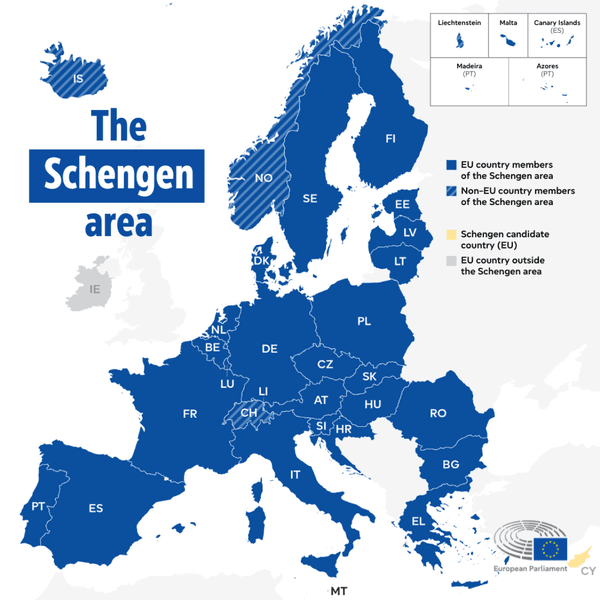
TLScontact is not used by all Schengen countries, and it is not used everywhere. Whether you apply through TLScontact depends on two factors only: the Schengen country you are applying to and the country where you legally reside. This explains why two applicants requesting the same visa may follow different procedures.
Schengen country | Uses TLScontact? | Notes |
|---|---|---|
🇫🇷 France | ✅ Yes | Used in many countries (UK, Africa, Middle East, Asia) |
🇩🇪 Germany | ✅ Yes | Selected regions only |
🇧🇪 Belgium | ✅ Yes | Depends on residence country |
🇨🇭 Switzerland | ✅ Yes | Multiple regions worldwide |
🇦🇹 Austria | ✅ Yes | Limited countries |
🇩🇰 Denmark | ✅ Yes | Selected locations |
🇨🇿 Czech Republic | ✅ Yes | Region-dependent |
🇱🇺 Luxembourg | ✅ Yes | Limited regions |
🇳🇴 Norway | ✅ Yes | Selected countries |
🇱🇹 Lithuania | ✅ Yes | Specific regions |
🇳🇱 Netherlands | ⚠️ Mixed | TLScontact or another VAC depending on country |
🇮🇹 Italy | ⚠️ Rare | Mostly handled by other providers |
Schengen states choose their visa service providers through public tenders and administrative decisions. As a result, TLScontact may be used in some countries or regions, while others rely on different providers (such as VFS or local visa centres). These contracts can change over time.
No. Nationality is not the determining factor. What matters is where you legally reside.
For example, a French national living in the UK may need to apply through TLScontact, while the same person applying from France would follow a completely different process.
How do you create a TLScontact account?
Creating a TLScontact account is mandatory before booking any visa appointment. The process is straightforward, but it must be done on the correct country portal, which is where most mistakes happen.
Steps to create a TLScontact account:
- Go to the official TLScontact website for the Schengen country you are applying to (for example, France, Germany or Belgium).
- Select your country of legal residence, as this determines the correct portal and available centres.
- Create an account using a valid email address and choose a password.
- Confirm your email address via the activation link sent by TLScontact.
- Log in and complete your personal profile before attempting to book an appointment.
Important rules to remember:
- Only one account per email address is allowed on each country portal.
- Each Schengen country uses a separate TLScontact system.
- An account created for France cannot be reused for Germany, Belgium or Switzerland.
A very common mistake is registering on the wrong country portal. Even if the visa type is identical, an application for France must be started on the France TLScontact website — using another country’s portal will usually block access to appointments.
Why does TLScontact login often fail (and how can you fix it)?
Most TLScontact login issues are technical or portal-related, not account errors. In many cases, they can be solved without contacting support.
🚩 Issue | What usually works |
|---|---|
📧 Email not recognised | Make sure you are on the correct country portal |
🔒 Account blocked | Wait 24 hours after too many login attempts |
🌐 Page not loading | Change browser or disable VPN |
In practice, simply switching portals, clearing cookies or waiting a short period is often enough to restore access — without losing your account or any booked appointment.
How do TLScontact appointments work and why are slots so hard to find?
For most applicants, getting an appointment is the hardest step. Not because they are ineligible, but because demand is much higher than capacity.
- TLScontact centres work with daily quotas set by consulates, not by TLScontact.
- In peak periods (spring, summer, holidays), slots can disappear for weeks.
- New appointments are released in batches, often without warning.
- There is no official release hour, despite common rumours.
Booking the earliest available slot does not improve visa approval.
It only determines how early your file is sent to the consulate.
Using another TLScontact centre or city can seem tempting, but it comes with risks:
- appointments are usually tied to residence rules
- applying outside your authorised area may lead to rejection at the counter
- in some cases, the file is delayed or returned before review
In practice, finding the right centre and timing matters more than refreshing endlessly.
How can you reschedule or cancel a TLScontact appointment safely?
🔁 TLScontact rescheduling rules (what is usually allowed)
Rescheduling is possible, but it comes with strict limits.
- The number of changes is limited (often a few attempts only).
- If you cancel before securing a new slot, you may lose the appointment entirely.
- In many centres, once an appointment is cancelled, there is no guarantee that another slot will appear quickly.
Practical rule: if you need to change the date, try to reschedule first, not cancel. Cancelling without a backup is the most common mistake and often leads to long delays.
💸 TLScontact refunds: what is refundable and what is not?
Refund rules vary slightly by country and centre, but the patterns below are consistent across most TLScontact policies.
Situation | Refundable |
|---|---|
Cancellation ≥ 72h before | Sometimes ✅ |
No-show or late arrival ⏰ | ❌ |
Prime Time / Premium services ⭐ | ❌ |
Visa refusal | ❌ |
Important to know:
- Refunds usually apply only to service fees, not to consular visa fees.
- Paid add-ons (Prime Time, Premium Lounge, SMS) are almost always non-refundable.
- A visa refusal does not justify a refund, as TLScontact only provides administrative services.
Before cancelling, always check the local TLScontact refund policy linked in your account — once an appointment is lost, recovering it is often harder than expected.
Which TLScontact centres exist and where does the appointment take place?
A TLScontact appointment never takes place in the Schengen country you are travelling to.
It always takes place in the country where you legally reside, at a centre assigned by the consulate.
📍 Where do you physically go for your TLScontact appointment?
Country of legal residence | Schengen country applied for | TLScontact appointment location |
|---|---|---|
France 🇫🇷 | UK (London, Manchester, Leeds, Cardiff, Belfast) | |
Morocco 🇲🇦 | Belgium 🇧🇪 | Morocco (Rabat, Casablanca, Fes, Tangier) |
Turkey 🇹🇷 | Germany 🇩🇪 | Turkey (Istanbul, Ankara) |
India 🇮🇳 | Switzerland 🇨🇭 | India (New Delhi, Mumbai, Chennai) |
United Arab Emirates 🇦🇪 | France 🇫🇷 | UAE (Dubai, Abu Dhabi) |
Nigeria 🇳🇬 | Germany 🇩🇪 | Nigeria (Abuja, Lagos) |
South Africa 🇿🇦 | Belgium 🇧🇪 | South Africa (Pretoria, Cape Town) |
Algeria 🇩🇿 | France 🇫🇷 | Algeria (Algiers, Oran, Annaba) |
Tunisia 🇹🇳 | Italy 🇮🇹 | Tunisia (Tunis) |
Pakistan 🇵🇰 | Germany 🇩🇪 | Pakistan (Islamabad, Lahore) |
👉 The destination country does not determine where you apply.
Only your country of legal residence does.
🧭 How is the correct TLScontact centre chosen?
TLScontact centres follow consular territorial rules, not applicant preference.
- Allocation is based on legal residence, not nationality
- Applying in another country to access more availability is not allowed
- Files submitted outside the authorised area may be rejected or delayed
Example:
A Pakistani national legally residing in the UAE must apply through a UAE-based TLScontact centre, not in Pakistan, even when applying for a Schengen visa.
Sometimes, yes — within the same country of residence only.
Changing cities (e.g. Lagos → Abuja, London → Manchester) may be allowedChanging countries is not allowedEligibility always depends on consular rules
What documents does TLScontact check at the appointment?
TLScontact does not assess whether your trip is justified. Its role is to ensure your file is complete, readable and compliant in form before it is sent to the consulate.
Document | What TLScontact usually checks | Typical pitfalls |
|---|---|---|
🛂 Passport | Original present, valid, good condition, data page readable | Damaged passport, no blank pages |
📝 Visa application form | Printed, completed and signed | Missing signature, wrong form |
📅 Appointment confirmation | Printed or visible on phone (centre-dependent) | Wrong centre or missing confirmation |
📸 Photo(s) | Wrong size, background or lighting | |
🏠 Proof of legal residence | Valid permit/visa + required copies | Expired or incorrect residence proof |
Dates and destination consistent | Dates conflict with other documents | |
🛫 Flight reservation | Present and coherent | Inconsistent route or dates |
🏨 Accommodation proof | Booking or host invitation | Missing address or dates |
🛡️ Travel medical insurance | Coverage meets Schengen rules | Wrong dates or missing wording |
💶 Proof of funds | Recent statements, complete pages | Statements too old or incomplete |
🏢 Employment / study proof | Employer or school letter | Unsigned or undated letters |
✉️ Cover letter (if required) | Coherent explanation | Contradictions in travel purpose |
📄 Photocopies set | Copies of key documents | Not enough copies |
Exact requirements may vary by consulate and applicant profile.
Being turned away at the TLScontact counter is not a visa refusal, but it often means losing the appointment. Preparing the file carefully — including extra photocopies — helps avoid unnecessary delays.
How does TLScontact handle biometrics and personal data?
Biometrics are a standard part of the Schengen visa process. During your TLScontact appointment, your fingerprints and facial photo are collected unless a valid exemption applies.
Once captured, biometric data are stored in the EU Visa Information System (VIS). In most cases, these biometrics remain valid for up to 5 years. This means that repeat applicants may not need to give fingerprints again if their previous data are still valid and usable.
However, biometrics may be requested again if:
- your previous fingerprints are no longer readable
- your last Schengen visa was issued more than 5 years ago
- the consulate requires a new capture for security reasons
TLScontact follows consular instructions and cannot waive biometric collection on its own.
TLScontact and Schengen authorities do not store data for the same duration, which often causes confusion.
TLScontact retains personal data only for a short operational period, strictly necessary to process and transfer the application to the consulate. Once the file is handed over, TLScontact does not keep biometric data.The VIS, managed by EU authorities, stores visa application data — including biometrics — for up to 5 years, in line with European regulations.
In practice, this means TLScontact acts as a secure collection point, while long-term storage and reuse of biometrics are handled at EU level, not by the visa centre itself.
How does TLScontact tracking work and what do the statuses mean?
📦 TLScontact tracking statuses explained
TLScontact tracking only shows where your file is in the administrative chain. It does not reflect the consulate’s decision.
Status | What it really means |
|---|---|
Application transferred | Your file has been sent to the consulate |
In process | The consulate is reviewing the application |
Dispatched | Your passport has been sent back to the TLScontact centre or courier |
A status update usually appears hours or days after an internal step happens. Small delays or temporary “no change” periods are normal, especially during peak seasons.
❓ Can tracking tell you if your visa is approved?
No. There is no reliable indicator in TLScontact tracking that confirms approval or refusal before your passport is returned.
- “In process” does not mean a problem
- “Dispatched” does not mean approval
- Colour changes or timing patterns have no official meaning
The only moment you know the outcome is when you receive your passport and check the visa sticker (or refusal letter).
How long does TLScontact processing and passport return take?
Once your file is submitted at TLScontact and transferred to the consulate, processing times depend mainly on consular workload, not on TLScontact itself.
For a short-stay Schengen visa, applicants typically observe:
- 7 to 15 working days in standard periods
- longer delays before summer, Christmas and major holidays
- additional waiting time if the consulate requests extra checks or documents
These timelines are counted from the day the consulate receives the file, not from the appointment date. Booking an early appointment helps with planning, but it does not shorten the review itself.
When tracking shows “dispatched”, it means the passport has left the consulate — not that it has been delivered.
Common situations include:
- a delay between “dispatched” and courier tracking activation
- no tracking number visible for several days
- delivery attempts during working hours only
These delays are frequent and usually operational. In most cases, the passport arrives within a few days after dispatch. If nothing changes after several working days, checking the courier section of your TLScontact account is more effective than contacting the consulate directly.
How can you contact TLScontact customer support effectively?
TLScontact does not provide a single global support line.
Phone numbers and emails depend on your country of residence, because each TLScontact centre operates locally.
Country of residence | Phone number | Email address | Notes |
|---|---|---|---|
United Kingdom 🇬🇧 | +44 (0)203 538 1515 | uk.support@tlscontact.com | For France, Germany, Belgium visas from the UK |
Morocco 🇲🇦 | +212 (0)5 20 18 11 11 | morocco@tlscontact.com | Casablanca, Rabat, regional centres |
Algeria 🇩🇿 | +213 (0)21 98 41 41 | algeria@tlscontact.com | Algiers, Oran, Annaba |
Tunisia 🇹🇳 | +216 70 03 33 66 | tunisia@tlscontact.com | Tunis centre |
Turkey 🇹🇷 | +90 (212) 373 58 08 | turkey@tlscontact.com | Istanbul, Ankara |
India 🇮🇳 | +91 (22) 6786 6000 | india@tlscontact.com | New Delhi, Mumbai, Chennai |
United Arab Emirates 🇦🇪 | +971 (0)4 313 06 00 | uae@tlscontact.com | Dubai, Abu Dhabi |
Nigeria 🇳🇬 | +234 (0)1 343 22 66 | nigeria@tlscontact.com | Lagos, Abuja |
South Africa 🇿🇦 | +27 (0)12 425 3000 | southafrica@tlscontact.com | Pretoria, Cape Town |
Always check the “Contact us” section of the TLScontact portal for your country of residence.
What are the Schengen travel insurance rules when applying via TLScontact?
What matters at application stage is not the policy wording you received by email, but the insurance certificate you include in the file. TLScontact will usually check that a certificate is present and readable; the consulate checks whether it contains the required elements.
What must appear on the certificate | What it means in practice | Common reason for rejection |
|---|---|---|
🧑💼 Insured person’s full name | Must match your passport exactly | Name spelling differs from passport |
🛂 Passport number (recommended) | Not always mandatory, but strongly expected | Certificate not clearly tied to applicant |
📅 Coverage dates | Must cover the intended trip dates | Coverage starts after entry / ends before exit |
🌍 Territorial validity: “Schengen” / “all Schengen countries” | Coverage must be valid across the whole Schengen area | “Europe excluding…” or country-limited coverage |
💶 Minimum medical coverage: €30,000 | Must be explicitly stated | Amount missing or below €30,000 |
🏥 Emergency medical care + hospitalisation | Must be included, not optional | Only outpatient care covered |
🚑 Repatriation for medical reasons | Required element in practice | Repatriation not mentioned |
⚰️ Repatriation of remains / funeral expenses | Usually required under Schengen rules | Death coverage absent or unclear |
✅ Insurer name + policy/certificate number | The certificate must be traceable | No policy reference, unclear issuer |
📍 Issuer contact details | Email/phone/address of insurer | Missing contact details / unverifiable certificate |
If your certificate is not crystal clear on €30,000, Schengen-wide validity, and repatriation, it is often safer to request a corrected certificate before your appointment.
📌 Single vs multiple-entry: how the certificate dates should be set
- Single-entry or double-entry visa : Your insurance certificate must cover the entire planned trip, from the entry date to the exit date shown in your itinerary.
- Multiple-entry (MULT) visa : Your insurance certificate only needs to cover the first intended stay. It does not need to match the full validity of the visa, even if it is issued for one year or more.
This distinction is often misunderstood. Many applicants confuse visa validity (for example, 12 months) with insurance duration. For a MULT application, the certificate is only expected to cover the first trip declared in the application, nothing more.
What are the most common myths about TLScontact?
Many problems around TLScontact come from assumptions that simply are not true. These myths often lead applicants to spend more money, panic unnecessarily or take risky decisions.
Myth | Reality |
|---|---|
🏛️ “TLScontact decides visas” | TLScontact only handles administration. All visa decisions are made by the consulate. |
⭐ “Premium services increase approval chances” | Paid services affect comfort or logistics only. They have no impact on approval or refusal. |
🎨 “Tracking colour or timing means approval” | Tracking statuses show file movement, not the decision outcome. |
⏰ “Earlier appointment = better visa” | Appointment date affects timing only. All applications are assessed the same way. |
Understanding these points helps avoid unnecessary stress, extra costs and unrealistic expectations during the application process.
TLScontact is a visa application centre (VAC) appointed by certain Schengen countries to manage the administrative part of visa applications. It collects documents, biometrics and fees, then transfers files to the consulate. It does not decide visas.
You must log in on the correct country portal (France, Germany, Belgium, etc.).
Each portal requires a separate account. Use the email you registered with and make sure you selected the right country of application and country of residence.
Appointment slots are limited because consulates set daily quotas. During peak periods (spring, summer, holidays), demand exceeds capacity. New slots are usually released in batches, without a fixed schedule.
No. Prime Time and other paid services do not influence visa approval or refusal. They only affect appointment timing or comfort. The consulate applies the same assessment criteria to all applications.
For short-stay Schengen visas, applicants typically receive their passports 7 to 15 working days after the file reaches the consulate, excluding courier time. Delays are common during busy periods.
No. TLScontact tracking shows process stages only (file transferred, in process, dispatched). The decision is known only when you receive your passport and check the visa sticker or refusal letter.
Yes. Travel medical insurance is mandatory for all Schengen visa applications. TLScontact checks that an insurance certificate is included, while the consulate verifies that it meets Schengen requirements (coverage, amount, validity).
On the same topic

Schengen visa sticker explained 2026: read every field
Oct 20, 2026

Sponsorship letter sample for visa: complete guide for Schengen applications
Oct 11, 2026
Schengen Visa via BLS International: Process, Appointments, Documents and Key Tips
Oct 11, 2026