How to get a Schengen visa from the UK (Step-by-step guide for UK residents)
- 100% Schengen visa compliant
- Instant certificate (PDF) accepted by TLS/VFS
- Refund if your visa is refused
 A. FruchardCo-Founder & Travel Insurance ExpertLast updated: September 22, 2026
Living in the UK does not automatically mean you can travel freely across Europe. Each year, hundreds of thousands of UK residents holding non-EU passports — international students, Skilled Workers, dependants, spouses and long-term residents — must apply for a Schengen visa to visit France, Spain, Italy, Germany or other Schengen countries. In 2024 alone, more than 470,000 Schengen visa applications were submitted through consulates located in London, Manchester and Edinburgh, often under tight appointment conditions and unclear administrative rules.
One of the most common points of confusion is where and how to apply. For Schengen visas, your place of legal residence matters more than your nationality: if you live legally in the UK with a BRP or digital e-Visa, you normally apply from the UK, even if you hold an Indian, Nigerian, Turkish or Pakistani passport. Understanding which consulate is competent, what documents are checked first, how much the visa really costs, and how long processing takes can make the difference between a smooth approval and weeks of delays.
- Residence matters: non-EU nationals legally living in the UK (BRP / e-Visa holders) usually apply for a Schengen visa from the UK, not from their home country.
- High demand: over 470,000 applications were filed in the UK in 2024, mainly via TLScontact, VFS Global and BLS Spain, making appointments competitive.
- Standard fees: the Schengen visa fee is €90 (≈ £77) for adults and €45 (≈ £38) for children aged 6–11, plus visa centre service fees of £25–£35 (TLScontact, VFS Global or BLS Spain). Mandatory travel insurance typically costs £15–£40 for a short stay, depending on trip length and coverage.
- Processing time: most applications are processed within 15 calendar days, but delays are common during peak travel periods.
- Mandatory documents: Schengen travel insurance (legally required), proof of funds, accommodation, flight itinerary and UK residence status are checked before your file reaches the consulate.
- One visa, 29 countries: a Schengen visa allows travel across all Schengen states, regardless of the country where you apply.
What is a Schengen visa and which type do you need?
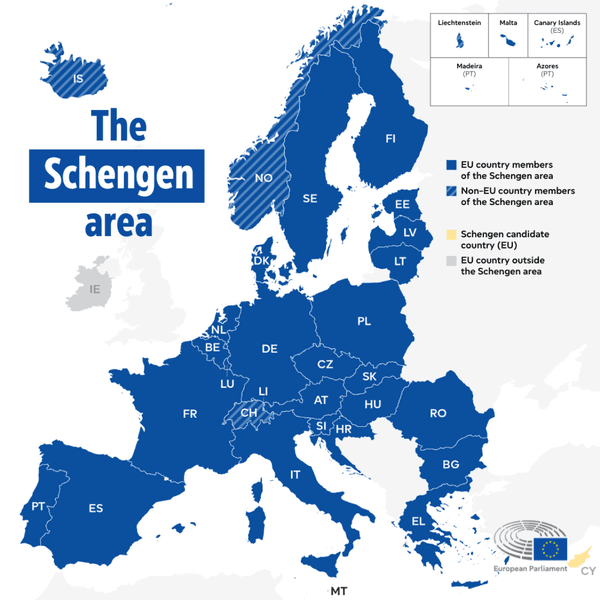
A Schengen visa allows non-EU travellers to enter and move freely within the Schengen Area, which currently includes 29 European countries. Depending on the purpose and duration of your trip, different types of Schengen visas apply — and choosing the wrong one is a common source of refusal or delays.
🛂 Visa type | ⏱️ Duration | 🎯 Main purpose | 📌 Typical cases from the UK |
|---|---|---|---|
Type C – Short-stay Schengen visa | Up to 90 days within any 180-day period | Tourism, family visits, business trips, conferences | Most UK-based applicants (students, workers, dependants) |
Type A – Airport Transit Visa (ATV) | Transit only | Changing planes in a Schengen airport without entering the territory | Certain nationalities transiting via Paris, Frankfurt, Amsterdam |
Type D – National long-stay visa | Over 90 days | Study, work or family residence in one country | Long-term stays in France, Spain, Germany, etc. |
Limited Territorial Validity (LTV) | Varies | Exceptional or humanitarian cases | Rare, country-specific permissions |
For most people applying from the UK, the relevant option is the Type C Schengen visa, used for holidays, short business travel and family visits. This visa allows travel across all Schengen countries, regardless of the consulate where you apply — as long as your itinerary is coherent and your documents are compliant.
Who needs a Schengen visa from the UK? (Nationality vs residence)
Understanding whether you need a Schengen visa — and where you must apply from — depends on two separate factors: your nationality and your place of legal residence. These two criteria are often confused, especially by UK residents holding foreign passports.
👤 Profile | 🛂 Schengen visa required? | 📍 Where to apply |
|---|---|---|
UK citizens | ❌ No | Visa-free travel (90 days within any 180-day period) |
EU / EEA citizens | ❌ No | Visa-free travel |
Non-EU nationals living in the UK (BRP / e-Visa holders) | ✅ Yes | From the UK (via TLScontact, VFS Global or BLS Spain) |
Visitors in the UK (tourist or short stay, no residence status) | ❌ Usually no | Home country or country of legal residence |
How the rule works in practice
- Nationality determines whether a Schengen visa is required.If your passport is from a country that requires a Schengen visa (e.g. India, Pakistan, Nigeria, Turkey, China), you must apply for one.
- Legal residence determines where you apply.If you live legally in the UK with a BRP or digital e-Visa, your Schengen visa application is normally submitted from the UK, even if your nationality is non-EU.
This distinction is essential: applicants who try to apply from the wrong country risk having their file rejected or redirected, causing significant delays — especially given the high demand at UK visa centres.
What are the Schengen visa requirements from the UK? (2025 checklist)
Applying for a Schengen visa from the UK requires a complete and well-structured file. Regardless of the consulate (France, Spain, Italy, Germany, Netherlands, etc.), visa centres check the same core documents before forwarding your application for a decision. Missing or inconsistent paperwork is one of the most common reasons for delays.
📄 Document | ✔️ Mandatory | 🔍 Notes checked by visa centres |
|---|---|---|
Schengen visa application form | ✅ | Completed online or PDF, signed |
Passport | ✅ | Issued less than 10 years ago and valid at least 3 months after return |
UK residence proof (BRP / e-Visa) | ✅ | Digital status accepted; share code often requested |
Travel insurance | ✅ | Minimum €30,000 medical cover + repatriation, valid in all Schengen countries |
Proof of accommodation | ✅ | Hotel booking or invitation letter (attestation d’accueil) |
Flight or travel itinerary | ✅ | Reservation only — no paid ticket required |
Bank statements | ✅ | Usually last 3 months, showing sufficient funds |
✅ | Explains travel purpose, itinerary and ties to the UK | |
✅ | EU/Schengen format (35×45 mm, light background) |
Travel insurance for a Schengen visa from the UK (mandatory document)
Travel insurance is not optional for most Schengen visa applications submitted from the UK. It is a legal requirement under the Schengen Visa Code, and one of the very first documents checked by visa centres before your file is sent to the consulate.
What Schengen travel insurance must include
- 🩺 At least €30,000 in emergency medical cover
- ✈️ Medical evacuation and repatriation
- 🌍 Validity in all Schengen countries
- 📅 Coverage for the full duration of your stay
- ❌ No deductible for mandatory medical benefits
Visa centres such as TLScontact, VFS Global and BLS Spain verify these points before anything else. If the certificate is missing, unclear or incorrectly worded, your application may be put on hold or sent back for correction, even if the rest of your file is strong.
To avoid this risk, many UK-based applicants use HelloSafe to secure their insurance early:
- 🔍 Compare Schengen-compliant policies online
- ⚡ Receive an instant PDF certificate ready for upload or printing
- 🔄 Adjust travel dates if your appointment or itinerary changes
- 💸 Get a refund if your visa is refused (on selected plans)
Because insurance is one of the few documents you can control fully, getting it right from the start helps keep your Schengen visa application smooth, compliant and stress-free.

Get your Schengen travel insurance certificate in 2 minutes
How to apply for a Schengen visa from the UK (step by step)
Applying from the UK follows a clear sequence, but mistakes usually happen at two stages: choosing the wrong consulate and booking the appointment too late. Below is the practical, UK-specific process used by applicants in London, Manchester and Edinburgh.
Step 1: choose the correct Schengen consulate
You must apply to the consulate that is legally responsible for your trip. This is not optional.
How consulates are determined
- Main destination rule: apply to the country where you will spend the most nights.
- Longest stay unclear? Apply to the country of first entry into the Schengen Area.
- Single-country trip: apply to that country’s consulate.
Applying to the wrong consulate can lead to redirection or refusal, even if the rest of your file is strong.
Step 2: complete the Schengen visa application form
Before booking an appointment, you must complete the official Schengen visa application form. The format of this form depends on the Schengen country you are applying to, which is a frequent source of confusion for UK-based applicants.
🇪🇺 Schengen country | 📝 Application form type | 🔍 What UK applicants should know |
|---|---|---|
🇫🇷 France | Online form (France-Visas) | Mandatory online submission before booking TLScontact |
🇩🇪 Germany | Online form | Some categories still require printing and signing |
🇳🇱 Netherlands | Online form | Linked directly to VFS Global UK |
🇪🇸 Spain | PDF form | Printed and signed form required for BLS Spain |
🇮🇹 Italy | PDF form | Handwritten signature required |
🇵🇹 Portugal | PDF or online (varies) | Depends on consulate and category |
🇨🇭 Switzerland | Online / PDF | Varies by location and applicant profile |
You will typically be asked to provide:
- Personal details and passport information
- UK residence details (BRP or digital e-Visa, often with a share code)
- Travel dates and itinerary
- Accommodation and proof of funding
Any inconsistency between the application form and your supporting documents — especially dates, destination or residence status — can lead to delays or correction requests later in the process.
Step 3: gather all required documents
Once the form is completed, you must prepare a complete supporting file, including:
- passport and UK residence proof
- travel insurance (mandatory)
- accommodation and flight itinerary
- bank statements
- cover letter explaining your trip
Many applicants start collecting documents before securing an appointment, as some items take time (bank statements, employer letters).
Step 4: book your Schengen visa appointment (TLS, VFS, BLS)
After identifying the correct consulate and completing the application form, you must book your appointment through the official visa centre website. This step is often the most competitive part of the process for applicants based in the UK.
🏢 Visa centre | 🌍 Countries handled | 📍 UK cities | 🔗 Official booking website |
|---|---|---|---|
TLScontact | France, Switzerland, Germany (some categories) | London, Manchester, Edinburgh | https://www.tlscontact.com |
VFS Global | Italy, Netherlands, Portugal, Greece, others | London, Manchester, Edinburgh | https://visa.vfsglobal.com |
BLS Spain | Spain | London, Manchester | https://uk.blsspainvisa.com |
Appointments can open and disappear within minutes, especially before summer holidays, Christmas and UK school breaks. Availability also varies significantly between London, Manchester and Edinburgh, with London being the most saturated.
Once you secure an appointment, finalise all documents immediately. Many applicants prepare key items (such as travel insurance, bank statements and accommodation) in advance, so they can submit a complete file even when an appointment becomes available at short notice.
Step 5: attend the appointment and submit biometrics
On the day of your appointment, the visa centre performs a technical check before sending your file to the consulate.
What happens on site:
- Biometrics: fingerprints and photo (unless exempt). Read more on Schengen Visa Photo Size Requirements.
- Document verification: insurance, finances, accommodation, UK residence status
- Passport submission: your passport is kept during processing
If a document is missing or unclear, the centre may pause your application and request corrections.
Step 6: wait for processing and passport return
Once submitted, your application is reviewed by the consulate:
- typical processing time: 10–15 days off-peak, 20–30 days during peak periods
- legal maximum: up to 45 days
Your passport is returned by courier or collected in person, depending on the service chosen.
How long does it take to get a Schengen visa from the UK? (Processing times)
Schengen visa processing times from the UK depend on two factors: the official EU timeframe and the level of demand at UK visa centres (TLScontact, VFS Global and BLS Spain). While EU rules define a maximum limit, real-world timelines vary significantly by season, destination and appointment availability.
Official processing rule
- Schengen consulates are allowed to take up to 45 calendar days to process a short-stay (Type C) visa.
- This longer timeframe generally applies to peak seasons, additional background checks or complex profiles.
Average processing times in practice (UK-based applications)
- Off-peak periods (January–March, October–November): 10–15 calendar days
- Peak periods (April–September, December): 20–30 days, sometimes longer
Among UK applicants, France is often reported as processing applications relatively fast once the file is submitted. In most cases, the real challenge is securing a TLScontact appointment, not the decision itself. Processing times for Spain, Italy, Germany and the Netherlands tend to fluctuate more depending on city and workload.
When UK visa centres are most crowded
- 🌸 Spring & summer travel: April to July (Easter holidays, summer trips)
- 🎄 End of year: November–December (Christmas and New Year travel)
- 🎓 Student breaks: March–April and July–August
- 🏖️ Bank holiday periods in the UK
- Apply as early as possible once your travel dates are known (up to 6 months in advance).
- Monitor appointment availability daily, especially in London, where demand is highest.
- Prepare all documents before booking your appointment.
- Secure Schengen-compliant travel insurance early, as it can be issued instantly and adjusted if your appointment or travel dates change.
What delays Schengen visa applications from the UK ⏳
- Appointment shortages at TLScontact, VFS Global or BLS Spain
- Incomplete or inconsistent documents (insurance dates, bank statements, residence proof)
- Additional verification requests from the consulate
- Peak travel seasons (summer holidays, Christmas, Easter)
- High-volume centres (especially London)
Expert tip : To reduce risk, applicants often secure controllable documents early — particularly Schengen travel insurance, which can be obtained instantly and adjusted if travel dates change — while monitoring appointment availability.
Which Schengen country is easiest to apply to from the UK, and why do visas get refused?
There is no officially “easy” Schengen country, as all consulates apply the same EU Visa Code. However, UK-based applicants do experience different outcomes in practice, due to appointment availability, application volumes and how consistently documents are checked.
🇪🇺 Schengen country | 📍 Main UK visa centres | 📊 Applicant perception from the UK |
|---|---|---|
🇩🇪 Germany | TLS / VFS (London, Manchester) | Seen as predictable once documents are correct |
🇳🇱 Netherlands | VFS Global | Reputation for longer multi-entry visas with travel history |
🇫🇷 France | TLScontact (London, Manchester, Edinburgh) | Very high demand; mixed outcomes but often fast processing |
🇪🇸 Spain | BLS Spain (London, Manchester) | Perceived as stricter in recent years |
🇮🇹 Italy | VFS Global | Variable outcomes; shorter visa validity reported |
🇨🇭 Switzerland | TLScontact | Moderate volumes; document checks considered thorough |
These perceptions are not official rules, but patterns reported by applicants applying from the UK. In reality, approval depends far more on the quality and consistency of the file than on the country itself.
Why are Schengen visas refused from the UK?
Schengen visa refusals from the UK are relatively limited compared with global averages, but they still affect 5–7% of applications each year. In most cases, refusals are linked to documentary inconsistencies or doubts about travel intentions, rather than the applicant’s legal status in the UK.
❌ Refusal reason | 🧾 How consulates interpret it | ⚠️ How it affects your application |
|---|---|---|
💷 Insufficient proof of funds | Bank statements do not clearly show enough resources for the stay | Doubts about ability to support the trip financially |
🇬🇧 Weak ties to the UK | Employment, studies or residence status not clearly demonstrated | Triggers concerns about return after the trip |
🗺️ Inconsistent itinerary | Flights, accommodation and cover letter do not align | Suggests an unclear or unreliable travel plan |
🛡️ Non-compliant travel insurance | Missing €30,000 cover, repatriation or Schengen-wide validity | Leads to technical refusal or correction request |
📄 Unclear UK residence proof | Expired BRP, missing e-Visa or incorrect share code | Application may be p |
A significant number of refusals are linked to “motive 8”, where consulates doubt whether the applicant will leave the Schengen Area on time. While factors like travel history or personal circumstances are not always adjustable, insurance compliance is. Many UK-based applicants therefore use HelloSafe to secure a Schengen-compliant insurance certificate that meets all consular requirements, is accepted by TLScontact, VFS Global and BLS Spain, and can be downloaded instantly — reducing the risk of avoidable technical refusals and last-minute corrections.
Yes. If you are a non-EU national legally resident in the UK with a BRP or digital e-Visa, you normally apply for a Schengen visa from the UK, regardless of your nationality. Visa centres may ask for your share code to verify your status, especially since physical BRPs are being replaced by digital records.
No. UK passport holders can travel visa-free in the Schengen Area for up to 90 days within any 180-day period. However, non-EU residents living in the UK still need a visa, even if they hold a long-term UK residence status.
Processing times vary by consulate and season:
Off-peak periods: around 10–15 days
Peak travel periods: 20–30 days or moreLegally, consulates can take up to 45 days. In practice, appointment availability — not processing itself — is often the main bottleneck.It depends on your nationality and transit airport. Some non-EU nationals require an Airport Transit Visa (ATV) even if they do not leave the international zone. If you need to exit the airport, change terminals, or stay overnight, a full Schengen visa (Type C) is required — along with Schengen-compliant travel insurance.
Yes. Many UK residents now apply using a digital e-Visa combined with a share code, even if the physical BRP has expired. Visa centres generally accept this, provided your residence status is valid for the entire travel period.
Yes. A Schengen visa allows travel across all Schengen countries. You should apply through the country that is your main destination, but you are not required to enter that country first, as long as your itinerary is coherent.
Minor changes may be possible before your appointment or decision, but once the visa is issued, dates are usually fixed. This is why many applicants choose flexible travel insurance, which can often be adjusted if appointments or flights change.
If your visa is refused, you will receive an official refusal letter explaining the reason. Some costs (such as visa fees) are non-refundable, but many applicants protect themselves by choosing travel insurance that offers a refund in case of refusal. Through HelloSafe, selected insurance plans allow you to request a refund by simply uploading the refusal letter.
On the same topic

Schengen visa sticker explained 2026: read every field
Oct 20, 2026

Sponsorship letter sample for visa: complete guide for Schengen applications
Oct 11, 2026

TLScontact Schengen visa 2026: book, track, fees, contact
Oct 1, 2026